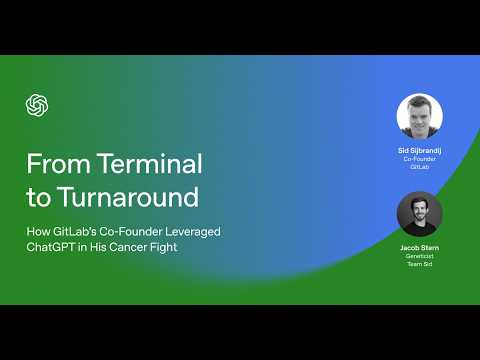
The video features a compelling discussion at the OpenAI forum with Sid Severy, co-founder of GitLab, and Jacob Stern, a geneticist, sharing Sid’s personal journey battling osteosarcoma, a rare and aggressive bone cancer. After traditional treatments failed and the cancer recurred, Sid and Jacob took an entrepreneurial approach, leveraging cutting-edge AI tools and extensive diagnostics to explore personalized medicine options. Their story highlights how AI can transform cancer treatment by enabling rapid data analysis, treatment design, and informed decision-making, offering hope for patients with rare or difficult-to-treat cancers.
Sid recounts his diagnosis and the grueling conventional treatments he underwent, including surgery, radiation, and chemotherapy. When standard options were exhausted, he and Jacob pursued maximal diagnostics, collecting vast amounts of data through technologies like single-cell sequencing to understand the tumor’s biology deeply. This approach led to innovative treatments such as targeted radioactive therapy and personalized immunotherapies. Sid emphasizes the importance of being proactive and resourceful, using AI to sift through complex data and identify potential therapeutic targets that traditional medicine might overlook.
Jacob explains how AI has been instrumental in managing and interpreting the enormous datasets generated from Sid’s diagnostics. He demonstrates how natural language processing models like ChatGPT helped analyze genetic data, generate hypotheses, and facilitate communication with experts across various biomedical fields. AI tools accelerated their understanding of Sid’s cancer and informed the design of personalized treatments, including mRNA vaccines and engineered T-cell therapies. Jacob also highlights the democratizing effect of AI, enabling non-specialists to engage deeply with complex scientific information and collaborate effectively with medical professionals.
The discussion also touches on systemic challenges in cancer treatment, such as the high cost and slow pace of clinical trials, regulatory hurdles, and the misalignment of incentives between doctors and patients. Sid and Jacob advocate for patient empowerment through data literacy and AI-assisted research to push for more aggressive and personalized treatment strategies. They are working to scale their approach by founding companies that streamline diagnostics and treatment development, aiming to make these advanced therapies accessible to more patients beyond their own case.
In closing, the speakers express optimism about the future of personalized medicine powered by AI, envisioning a world where treatments are tailored to individual patients’ unique tumor profiles and where AI helps overcome current bottlenecks in drug development and clinical trials. They encourage patients to take agency in their care, use AI tools to inform discussions with their doctors, and advocate for systemic changes to accelerate innovation. The forum ends with a call to action for the community to continue exploring AI’s potential to revolutionize healthcare and improve outcomes for cancer patients worldwide.