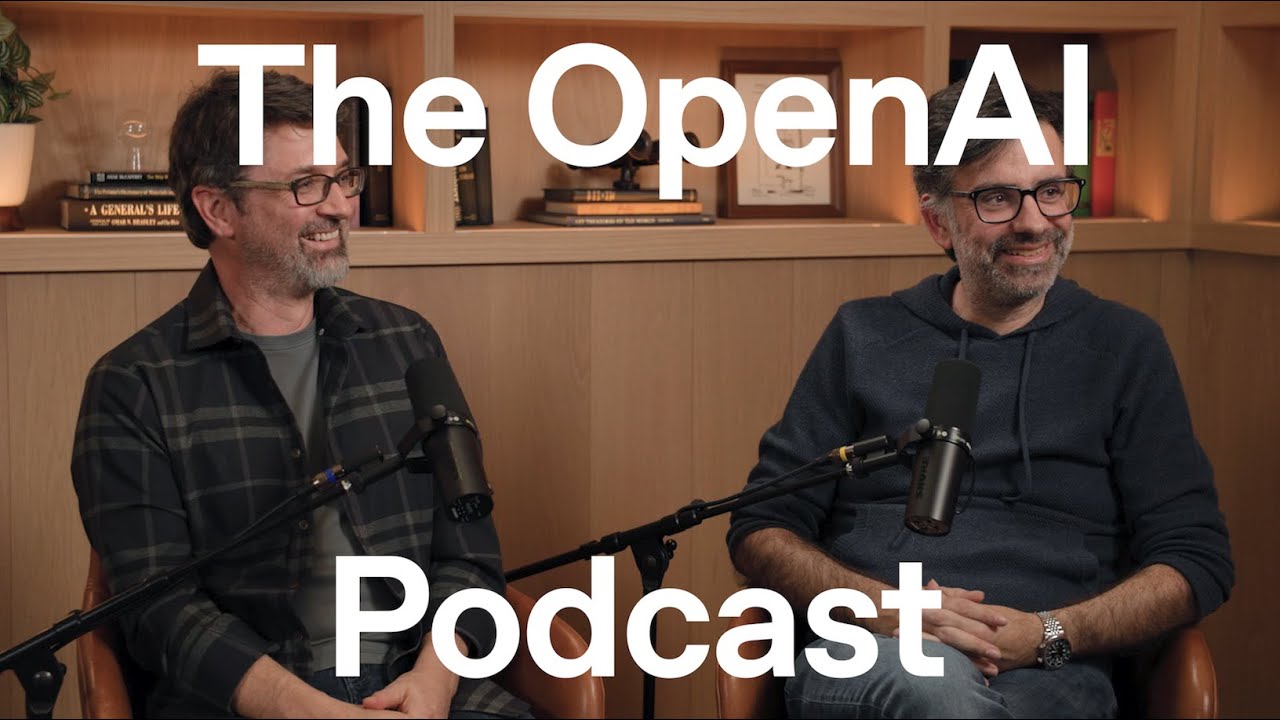
In this episode of the OpenAI Podcast, Andrew Mayne interviews Ben Goodger and Darin Fisher, the team behind ChatGPT Atlas, a new AI-powered web browser designed to transform how people interact with the internet. Atlas integrates ChatGPT deeply into the browsing experience, allowing users to communicate with the browser in natural language to accomplish tasks ranging from shopping to solving complex problems. Unlike traditional browsers or simple ChatGPT extensions, Atlas places the AI assistant at the core of the browser, enabling personalized, long-term task management and seamless interaction with web content.
The hosts discuss the evolution of web browsers over the past 30 years, highlighting how browsers have become essential tools for productivity and information access. Despite incremental changes over time, the integration of AI represents a significant leap forward. Ben and Darin emphasize the durability and openness of the web platform, noting that Chromium was chosen as the foundation for Atlas due to its widespread compatibility and support for extensions. They also explain the technical architecture of Atlas, which separates the Chromium rendering engine (OWL) from the main application to improve stability and performance.
A key innovation in Atlas is the concept of agent mode, where the AI assistant can autonomously perform tasks on behalf of the user by opening and managing its own set of tabs. This agent workspace allows users to delegate complex or repetitive tasks, such as creating charts or managing emails, while maintaining control and oversight. The browser also features a ChatGPT sidebar that provides contextual assistance, such as summarizing pages or translating text, making AI support readily accessible throughout the browsing experience.
The team shares personal anecdotes about how AI tools like Codex and ChatGPT have accelerated their productivity, enabling engineers, designers, and product managers alike to contribute code and features more efficiently. They also discuss the challenges and opportunities of bringing AI-powered browsing to mobile devices, acknowledging the need for thoughtful design to accommodate smaller screens while preserving the core capabilities of Atlas. Looking ahead, they envision a future where users interact with computing systems primarily through natural language, delegating routine tasks to intelligent agents and focusing on higher-level decision-making.
Finally, Ben and Darin reflect on the broader implications for content creators and publishers, emphasizing that the open web will remain a vital platform for sharing information. They encourage users to explore Atlas’s features, such as scrolling tabs and integrated AI assistance, and invite feedback to help shape the browser’s ongoing development. The conversation underscores OpenAI’s commitment to making advanced AI tools accessible and beneficial to all, marking Atlas as a long-term investment in the future of web browsing.