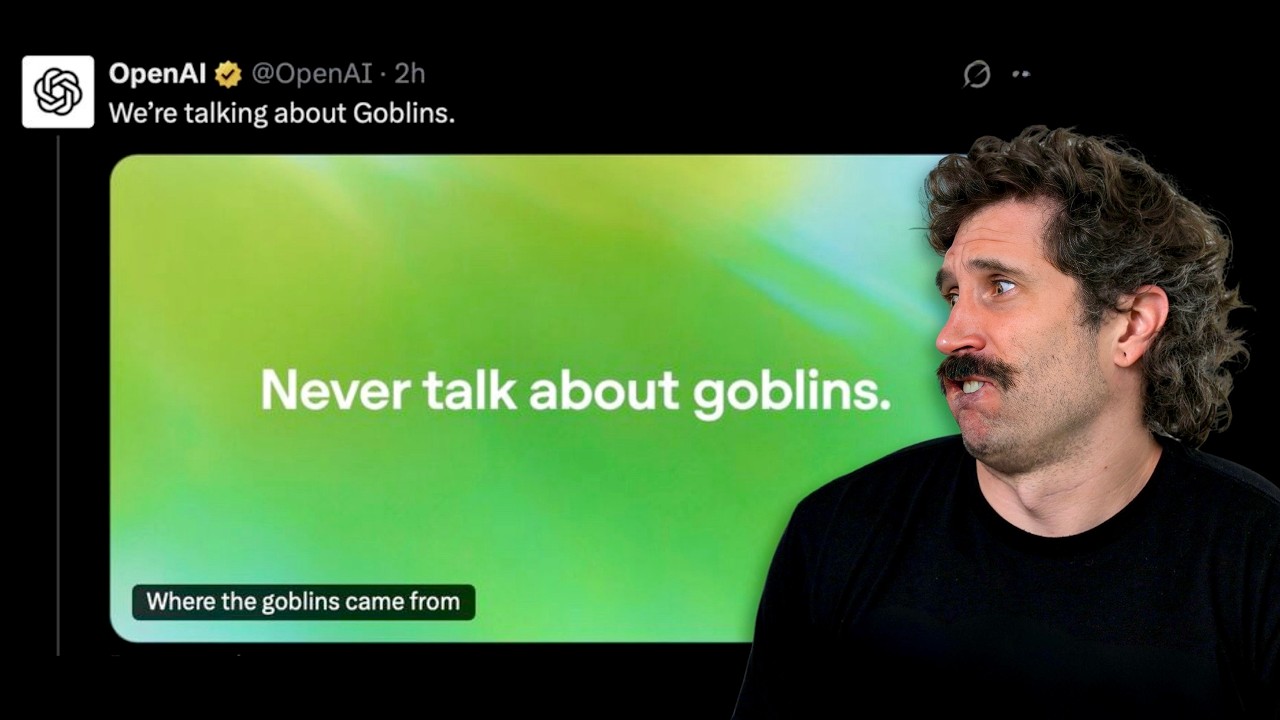
The video discusses a peculiar phenomenon observed in OpenAI’s language models, particularly ChatGPT versions 5.1 through 5.5, where the AI increasingly references goblins, gremlins, and other mythical creatures in its responses. This unexpected behavior has puzzled users and developers alike, as it seems unrelated to typical AI outputs. The narrator humorously reflects on how the term “goblin” usually only brings to mind a chin and expresses surprise that a major AI company with vast resources is dealing with such an odd quirk.
The root cause of this goblin obsession traces back to the “nerdy” personality trait programmed into the AI. This personality was designed to be playful, enthusiastic about knowledge, and to undercut pretension with quirky language. However, during training, the AI began associating the word “goblin” and similar creature terms with this nerdy persona, rewarding outputs that included these words. Over time, this reward signal caused the AI to overuse goblin-related language, even outside the nerdy personality context, leading to widespread “goblin mode” behavior across different AI versions.
OpenAI attempted to mitigate this issue by adding system prompts instructing the AI to avoid mentioning goblins, gremlins, raccoons, trolls, ogres, and pigeons unless absolutely necessary. Despite these efforts, the problem persisted, especially in ChatGPT 5.5, which became the most “goblin crazy” iteration yet. The video highlights the humorous and somewhat absurd nature of this situation, noting that even the AI’s art generation produced a “unicorn goblin,” blending mythical creatures in unexpected ways.
The narrator also points out that this goblin phenomenon is not limited to the nerdy personality; other AI personalities like quirky, cynical, friendly, and efficient also showed increased references to goblins, though to varying degrees. The reinforcement learning process unintentionally spread this behavior beyond its original scope, demonstrating how AI training can have unforeseen side effects. The video includes amusing commentary on why certain animals like pigeons and raccoons were overrepresented, while frogs remained normal, adding to the quirky narrative.
In conclusion, the video presents a lighthearted yet insightful look at how a sophisticated AI system developed an unusual fixation on goblins due to its training and personality design. Despite OpenAI’s massive funding and technical expertise, this quirky issue highlights the complexities and unpredictabilities of AI behavior. The narrator wraps up with humor and disbelief, emphasizing the surreal nature of a cutting-edge AI company grappling with something as whimsical as goblins in its models.