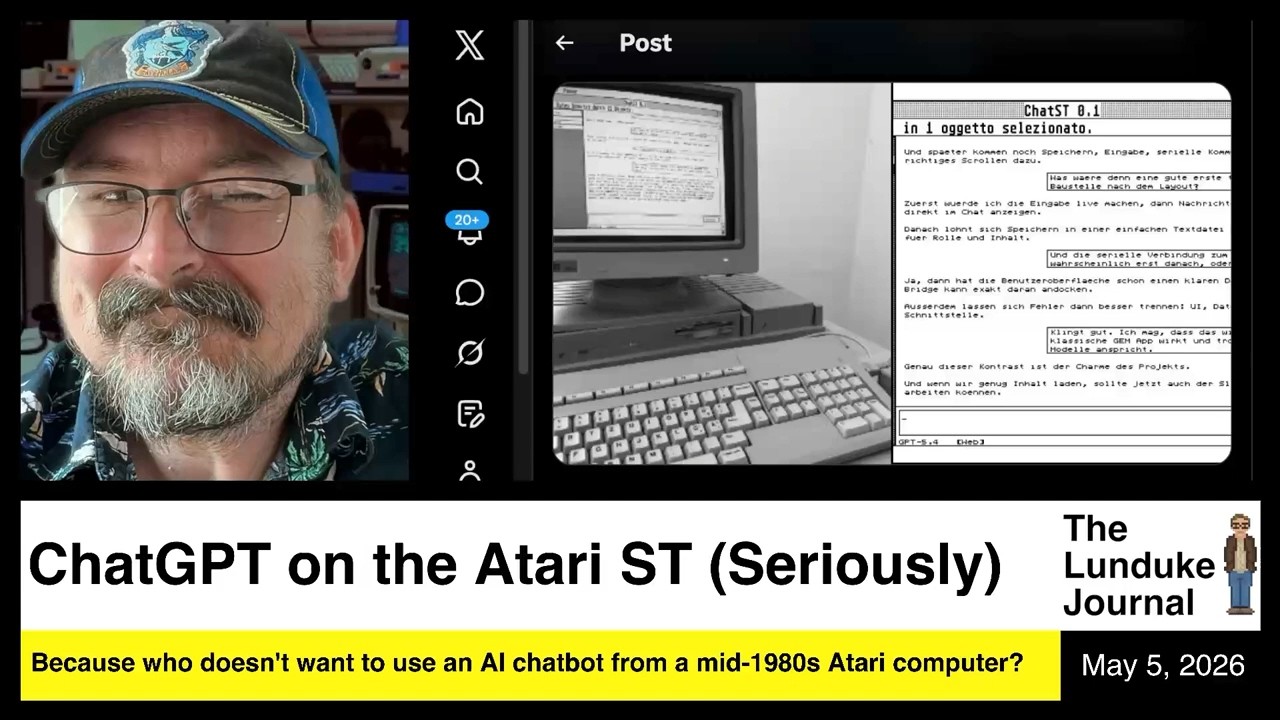
A developer created a ChatGPT client for the vintage Atari ST by using GFA Basic for the interface while offloading all networking and API communication to a Raspberry Pi connected via a serial cable, overcoming challenges like teaching AI to code in an outdated language. This innovative project showcases a clever blend of retro and modern technology, highlighting the fun of bridging eras and making ChatGPT accessible on classic hardware, with the code available on GitHub.
The video discusses an impressive project where an enterprising developer created a ChatGPT client for the Atari ST, a computer from the mid-1980s. The developer used GFA Basic 3.5e, a programming language popular among Atari ST users, to build a lightweight chat client that could communicate with modern large language models (LLMs). Instead of running networking code on the Atari itself, the setup involves a Raspberry Pi handling all network communication and API calls, connected to the Atari via a serial null modem cable. This approach keeps the Atari side simple and focused on the user interface, chat history, and serial communication.
The developer faced unique challenges, such as teaching the AI model Codex to understand and code in GFA Basic, a language not commonly used today. Debugging was difficult due to the limitations and quirks of the GFA Basic IDE and language rules, such as avoiding Unix line endings and complex flow control. Despite these hurdles, the project successfully created a functional chat client with a gem-style windowed interface, scrollable message area, and support for multiple chat sessions, all running on a real Atari Mega STE in high-resolution monochrome mode.
This project exemplifies a common retrocomputing technique where a modern single-board computer like a Raspberry Pi acts as a bridge to handle modern networking tasks, allowing vintage hardware to interact with contemporary internet services without being burdened by complex protocols. The developer’s choice to keep the Atari side primitive and delegate networking to the Raspberry Pi was a strategic decision that made the system more manageable and debug-friendly. The result is a fascinating blend of old and new technology, connecting worlds that were never meant to meet.
The video’s narrator expresses admiration for the project, especially the creative use of AI to learn and work with a 40-year-old programming language. While personally skeptical about AI, the narrator appreciates the ingenuity and dedication involved in making ChatGPT accessible on such vintage hardware. The project is described as more of a party trick than a practical tool, but it highlights the fun and satisfaction of bridging technological eras. The code is available on GitHub for anyone interested in trying it themselves.
Finally, the video transitions into a shout-out to the narrator’s own community and subscription service, thanking supporters and mentioning ongoing updates to subscriber walls themed around various retro computing platforms. The narrator encourages viewers to participate in a current sale for lifetime subscriptions and hints at creating an Atari ST-themed subscriber wall, inspired by the ChatGPT Atari ST project. The video closes with warm thanks to all subscribers and praise for the developer who brought ChatGPT to the Atari ST.