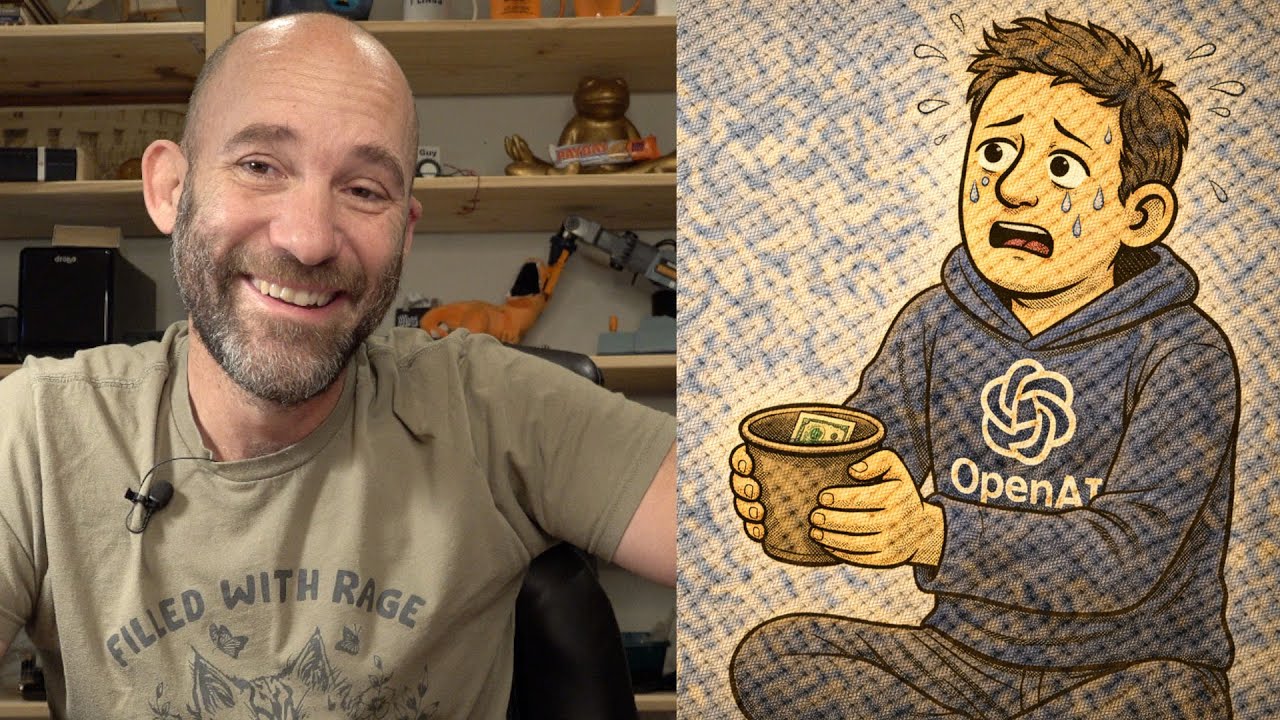
Eli, the Computer Guy, discusses OpenAI’s decision to introduce ads into ChatGPT as a sign of financial desperation and questions the sustainability and ethics of advertising-driven business models in AI. He warns that this shift could erode user trust and reflects broader issues in the tech industry, while also sharing updates on his own tech education initiatives.
Eli, the Computer Guy, opens the video with updates about his recent activities teaching technology classes in North Carolina, particularly focusing on Python for AI application development. He discusses the challenges and successes of running in-person classes, noting the difference in attendance and engagement between locations like Asheville and Durham. Eli emphasizes the importance of adapting to geographic realities when building a tech education initiative, sharing his experiences with Silicon Dojo and his ongoing efforts to expand its reach and impact.
The main topic of the video centers on OpenAI’s recent announcement to introduce advertising into ChatGPT, particularly for free and lower-cost subscription tiers. Eli expresses skepticism about this move, interpreting it as a sign of OpenAI’s desperation for revenue due to the massive costs and financial commitments the company has undertaken. He points out that while AI technologies like large language models are valuable, the scale of investment and the resulting business models often seem disconnected from the actual utility and willingness of users to pay for these services.
Eli critiques the broader AI industry’s tendency to overhype the potential of artificial intelligence, referencing OpenAI’s enormous contracts and speculative valuations. He argues that much of the promised value—such as curing cancer—has not materialized, and instead, the most lucrative uses so far have been far less transformative. He draws a parallel to other tech companies that have relied on advertising as a fallback when direct monetization fails, warning that this can lead to ethical compromises and a decline in user trust.
The video also delves into the potential dangers of advertising within AI platforms, such as the risk of “dark patterns” and micro-influencing users through subtle, repeated exposure to certain information or products. Eli is particularly concerned about how advertising models can erode the integrity of platforms over time, especially as companies face pressure to demonstrate revenue growth to investors. He references the evolution of Google’s advertising practices as an example of how initial promises of ethical behavior can give way to more manipulative tactics.
In conclusion, Eli questions the sustainability of advertising-driven business models in tech, especially if the broader economy falters and advertising budgets shrink. He suggests that OpenAI’s move to ads may indicate a lack of a compelling product that users are willing to pay for directly. Throughout, he maintains a critical stance toward the motivations of tech leaders and the long-term implications for users, while also promoting his own educational mission with Silicon Dojo and encouraging viewers to reflect on the future of AI and digital business models.