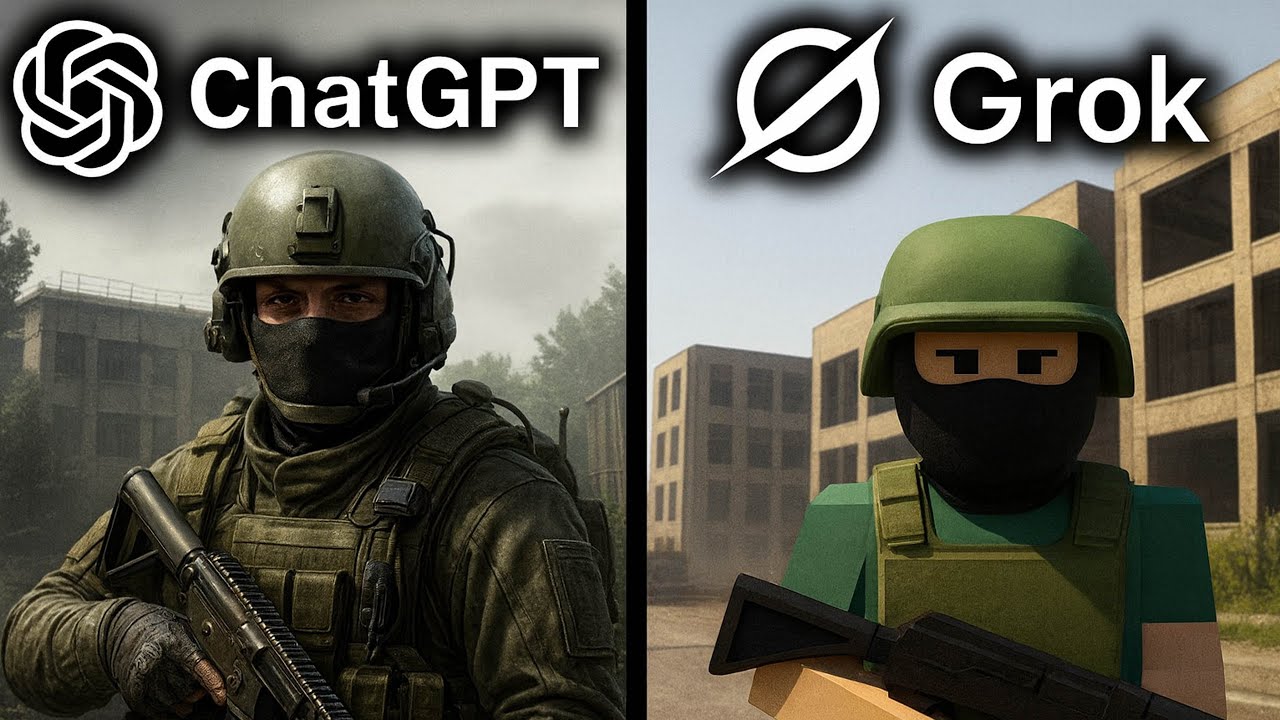
The video explores the ambitious idea of remaking the complex game Escape from Tarkov using AI tools within Unreal Engine 5.7, aiming to complete the task in under 10 minutes. The creator introduces a custom plugin called the Revolt Unreal plugin, which enables AI to have deep control over Unreal Engine projects, allowing it to edit and generate content directly inside the engine. The process begins by downloading Unreal Engine 5.7 and starting with the FirstPerson Shooter C++ template, then importing it into Visual Studio to prepare for AI-assisted development.
The AI, specifically Grok in this case, is first fed the documentation for the Revolt plugin to understand how to interact with Unreal Engine through it. After switching the AI to agent mode, it communicates with the plugin to gather comprehensive information about the project, including blueprints, levels, and assets. This rapid analysis capability is highlighted as a major advantage, enabling the AI to quickly grasp the structure and components of an Unreal Engine project, which traditionally would take developers significant time to understand.
Following the assessment, the AI demonstrates its ability to create and modify game elements. It generates a test game mode with all necessary files and folders, and then proceeds to duplicate and rename existing levels to serve as a home base and a raid level for the extraction shooter concept. The AI further analyzes these levels in detail, identifying all actors, spawn points, and environmental elements. Using this knowledge, it writes Python scripts to clean up the levels by removing unnecessary assets, showcasing how AI can automate tedious tasks and create utilities to streamline development.
The video also showcases the AI’s capability to write C++ classes, exemplified by creating a placeable fire effect actor. This highlights the flexibility of AI-assisted development in Unreal Engine, where AI can generate anything from particle effects to complex game mechanics. The creator emphasizes the benefits for both beginners and experienced developers, as AI can accelerate the creation of game ingredients and tools, making the development process more efficient and accessible.
Finally, the AI is tasked with building the core gameplay loop of an extraction shooter. It creates two C++ classes: an extraction point and a procedural level generator. The AI uses existing assets to procedurally generate levels and implements logic to transport players between the raid and home base levels, completing the game loop. The video concludes with a successful demonstration of the game loop in action, illustrating that with the right tools and AI assistance, complex game development tasks can be dramatically accelerated. The creator invites viewers to join their community and explore the Revolt plugin for their own projects.