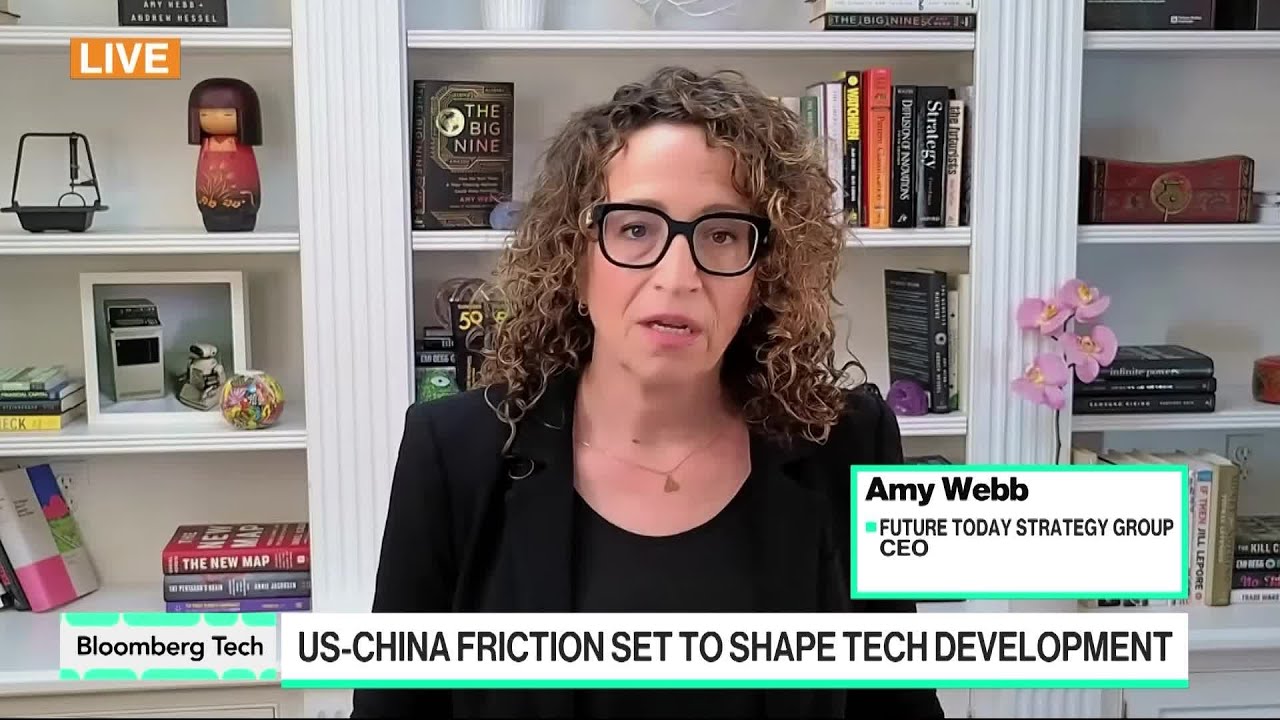
In the discussion about the evolving relationship between the United States and China, particularly in the context of technology and AI, the potential agreement involving TikTok is seen as a positive step. It helps to alleviate some of the concerns that were prominent during the Trump administration. Oracle’s unexpected role as a major tech disruptor in 2025 is highlighted, despite the company not being at the forefront of innovation. The importance of relationships in business and diplomacy is emphasized, with Larry Ellison’s friendship with Donald Trump serving as an example. China, similarly, places great importance on relationships, which will influence the development of AI and other critical technologies.
Looking ahead to 2026, the conversation centers on the ongoing race between the US and China in technology. While there are gestures of cooperation, such as the TikTok agreement, there remain significant efforts to restrict technology transfer to China. China is simultaneously building its own chip supply chain and technological resilience, aiming to reduce dependence on the US. The speaker controversially asserts that China is currently winning this race, attributing this to China’s long-term investments in infrastructure, in contrast to the US’s more fragmented innovation approach. China’s annual Five-Year Plan exemplifies its coordinated and strategic development efforts, something the US lacks.
The stakes in this technological race are high, extending beyond mere business competition to national security, international competitiveness, and geopolitical influence. The discussion highlights the critical role of hardware, such as chipsets, which impact a wide range of industries including pharmaceuticals and robotics. China has made significant advances in telecommunications hardware and is expanding its influence globally, particularly in Africa. Meanwhile, the US is perceived as retreating from the global stage, which could lead to substantial challenges as technology becomes increasingly integral to all aspects of life.
Quantum computing is identified as another frontier where breakthroughs in 2025 have moved the field from theoretical research to practical applications. Major companies like Google and Microsoft have made significant progress, suggesting that quantum computing will become more accessible and relevant in the near future. However, similar to AI and other technologies, the US lacks a cohesive national strategy to marshal resources and investments effectively. This absence of coordinated policy and planning contrasts sharply with China’s approach.
In conclusion, the discussion underscores the need for the US to develop a more unified and strategic approach to technology development and innovation. While not advocating for state control, the speaker calls for policy certainty, structured investment, and collaborative efforts to maintain competitiveness. The evolving technological landscape, marked by AI, chip development, telecommunications, and quantum computing, demands a coordinated response to ensure the US remains a global leader and addresses the multifaceted challenges posed by China’s rapid advancements.