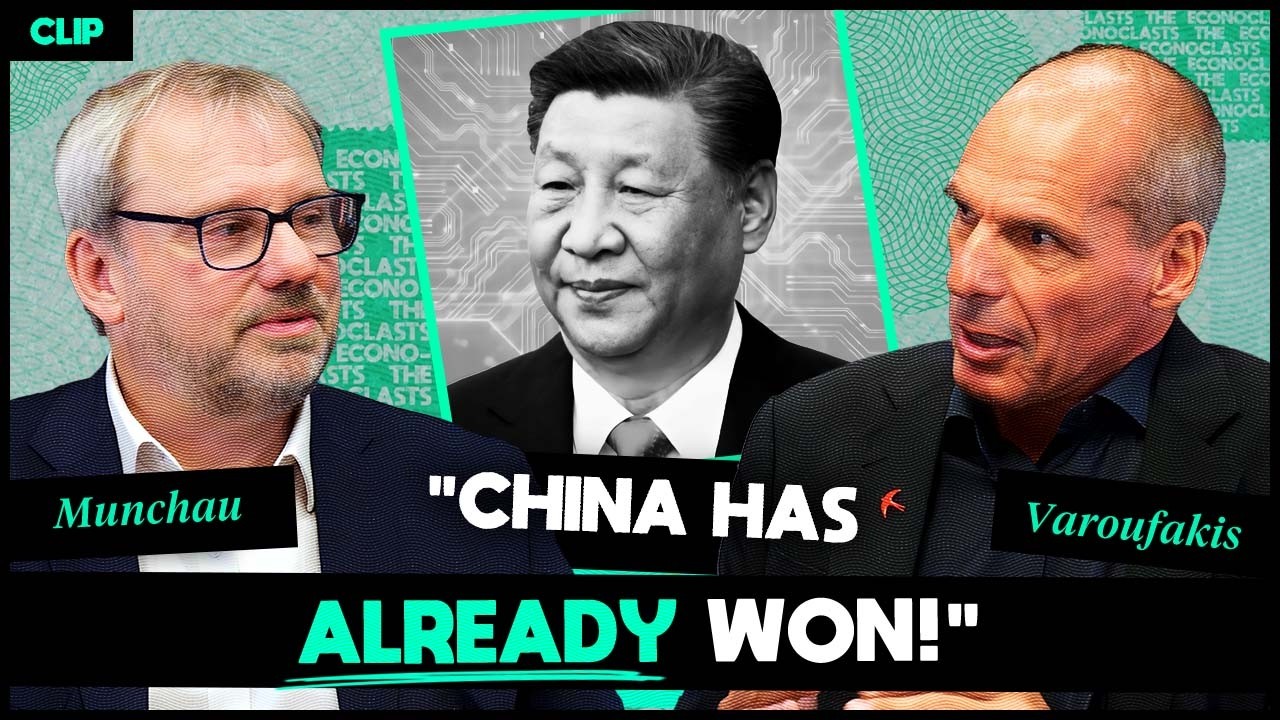
In this episode of The Econoclasts, Yanis Varoufakis and Wolfgang Munchau critique the myth of free-market capitalism, highlighting how both Western and Chinese models involve significant state-business collaboration that often fosters monopolies rather than genuine competition. They discuss the implications for AI and monopoly power, with Munchau cautiously optimistic about AI’s potential to enhance competition, while Varoufakis warns of its use by tech giants to entrench dominance, ultimately calling for a reevaluation of economic orthodoxies amid growing technocratic control.
In this episode of The Econoclasts, Yanis Varoufakis and Wolfgang Munchau challenge the widely held belief that capitalism is synonymous with free markets and that there is an ongoing battle between the state and private businesses. Varoufakis argues that capitalism has historically thrived through a close collaboration between the state and big business, where both work together to maintain monopolistic markets rather than fostering genuine competition. He highlights that privatization was never truly about liberating markets or increasing efficiency but rather about consolidating power within a professional class that moves seamlessly between government and corporate roles, shaping decisions outside of market mechanisms.
Wolfgang Munchau adds nuance by discussing China’s unique model of state capitalism, where the government actively invests in industries and fosters brutal competition to determine which companies survive. He points out that China’s approach, while state-guided, involves more competitive market activity than the West, which often operates under oligopolistic or monopolistic conditions. Munchau also reflects on privatization efforts in the West, noting mixed results: while some sectors like telecommunications and council house sales had political and economic impacts, others like water companies and railways suffered from poor implementation and lack of competition.
The conversation then shifts to the role of monopoly power in capitalism, with Varoufakis referencing Peter Thiel’s famous assertion that “competition is for losers.” They critique the idea that monopolies inherently benefit society by driving innovation, arguing instead that dominant tech companies like Google stifle competition by investing in startups only to channel their services through their own platforms, thereby maintaining control and extracting rents. This dynamic, they suggest, leads to economic stagnation and political unrest as monopoly power grows unchecked.
Regarding artificial intelligence (AI), Munchau expresses cautious optimism, noting that AI technologies are largely open and replicable, which could reduce monopoly power and foster competition. He believes China is well-positioned to benefit the most from AI due to its willingness to collect data and leverage public algorithms. Varoufakis, however, is more skeptical, warning that AI will be weaponized by big tech conglomerates to manipulate consumer behavior and consolidate their dominance, rather than democratizing access or fostering true market competition.
The episode concludes with reflections on the unsustainability of the current state-capitalist model, especially in the West, where political leaders sometimes personally profit from market manipulations. Both hosts agree that while the system is deeply flawed and prone to crises—such as those potentially triggered by financial instruments like stablecoins—it is unlikely to change quickly. They emphasize that decisions about how people live and work are increasingly made by a technocratic elite operating beyond traditional market forces, underscoring the need to rethink orthodox economic narratives about capitalism and free markets.