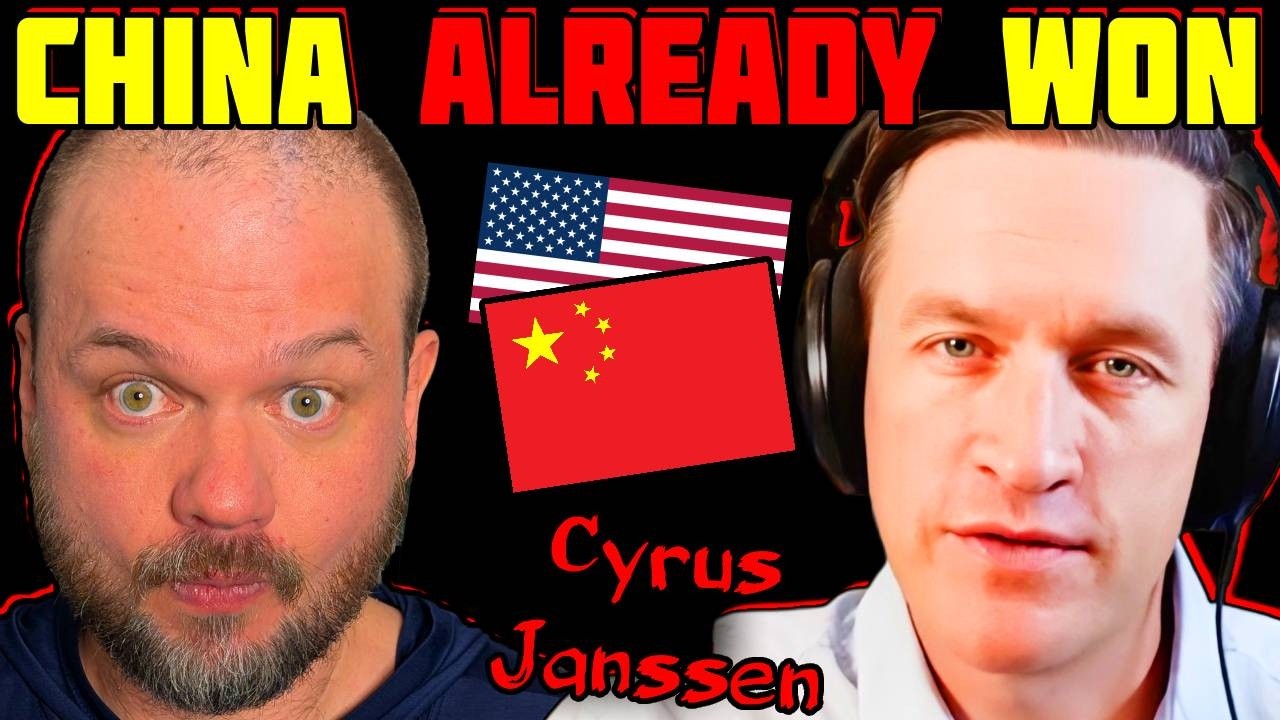
The video features a detailed discussion with Cyrus Janssen, a geopolitical analyst specializing in China, about the ongoing AI competition between the United States and China. Janssen emphasizes that China should not be underestimated due to its vast number of STEM graduates and its government’s strong support for AI development. Unlike the U.S., which he describes as being run by lawyers, China is governed by engineers, enabling it to move quickly and efficiently in prioritizing industries like AI. Major Chinese tech companies such as Alibaba, Tencent, and Huawei are heavily involved in AI, with Huawei playing a role similar to NVIDIA in chip development. Janssen highlights that when the Chinese government backs a sector, companies in that field receive significant support, allowing rapid progress.
Janssen discusses the chip manufacturing race, noting that while the U.S. currently leads with companies like NVIDIA and TSMC, China is rapidly closing the gap. He explains how China has adapted to U.S. export restrictions by purchasing subpar chips in large quantities and developing domestic alternatives, particularly through Huawei. This strategy has led China to reduce its dependence on U.S. technology, with the government even banning the purchase of certain U.S. chips to boost local innovation. Janssen stresses that China’s chip industry has advanced from being years behind to being only nanoseconds behind, challenging the notion that the U.S. lead is insurmountable.
The conversation also covers China’s approach to funding and innovation, which is decentralized across provinces that compete to attract businesses with tax incentives and local support. This competitive environment fosters a large number of startups, especially in AI and electric vehicles, where companies like BYD have become global leaders. Janssen contrasts this with the U.S., where bureaucracy and political cycles hinder long-term infrastructure projects and innovation. He also notes China’s significant investments in renewable energy and infrastructure, such as massive hydroelectric dams and nuclear power plants, which support its growing energy needs for AI and data centers.
On social media and data policies, Janssen clarifies that China’s ban on Western platforms like Facebook and Twitter is due to data localization laws requiring user data to be stored domestically, a policy mirrored by the U.S. for platforms like TikTok. He explains that Chinese social media apps are tailored to local preferences and culture, making direct Western imports ineffective. Janssen also highlights China’s strict regulations on youth social media use, such as limiting screen time to 60 minutes per day for minors, which many parents find beneficial despite debates about freedom. He praises China’s technological advancements showcased at events like the World AI Conference, where robotics and AI applications in industries like aviation and elder care are prominently featured.
Finally, Janssen reflects on the broader geopolitical landscape, describing a multipolar world where China and the U.S. are both superpowers with global influence, especially in the Global South regions like Africa, Latin America, and the Middle East. He advocates for understanding and collaboration rather than conflict, emphasizing that China’s rise is peaceful and interconnected with the global economy. Janssen encourages viewers to educate themselves about China’s advancements and culture, suggesting that firsthand experience can challenge misconceptions. He concludes by underscoring the importance of recognizing China’s role in shaping the future of AI and technology, urging a balanced and informed perspective on this critical global competition.