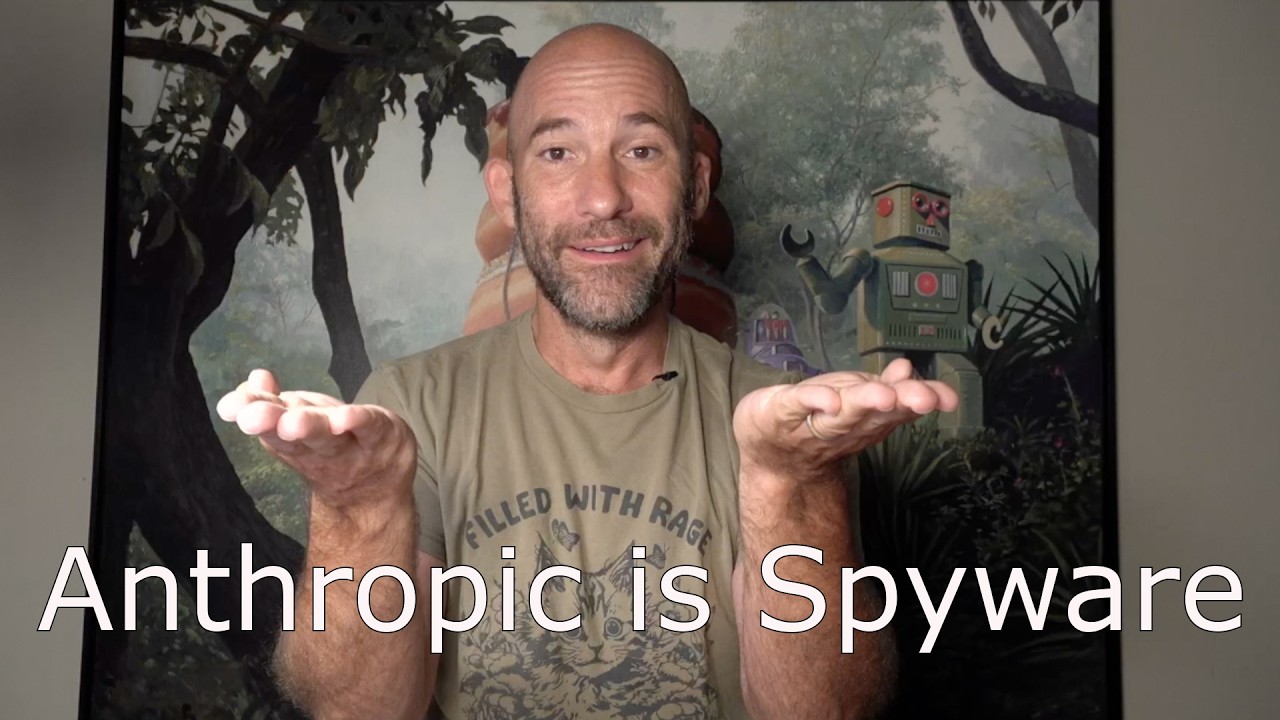
The video highlights China’s warnings about security risks in the American AI company Anthropic’s tool Claude, accusing it of secretly collecting sensitive user data, which reflects the broader US-China geopolitical rivalry and mutual distrust in AI technologies. It also critiques the unstable US political climate and the ethical complexities of AI use, urging viewers to consider the implications of data privacy, surveillance, and trust in global AI providers.
The video discusses recent warnings from China about security risks associated with the American AI company Anthropic and its AI coding tool, Claude. The Chinese Ministry of Industry and Information Technology claimed that Claude contains a backdoor vulnerability that could send sensitive user information, such as location and identity, to remote servers without consent. This has raised concerns about data privacy and security, especially for companies using US-based AI tools. The speaker notes that Anthropic had previously embedded tracking functionalities to monitor users, particularly to restrict access from Chinese engineers, which they later claimed to have deprecated without clarifying what new methods replaced it.
The broader context of this issue is framed as part of the ongoing geopolitical and technological rivalry between the US and China in AI development. The speaker highlights the competing narratives: the US portrays Chinese AI as untrustworthy due to censorship and dishonesty about sensitive topics like Tiananmen Square, while China counters by accusing American AI systems of spying and security risks. This tug-of-war creates a dilemma for international users and CIOs who must decide which AI technology to trust, balancing concerns about censorship against fears of surveillance or sudden service shutdowns influenced by political agendas.
The video also critiques the US political climate, particularly under the Trump administration, which is described as unpredictable and hostile toward certain countries like Spain. This political instability adds another layer of risk for companies relying on American AI products, as government actions could abruptly impact access or data security. The speaker suggests that Anthropic’s decision to include data-exfiltration routines in their software, even if intended for security purposes, may backfire by undermining trust and exposing users to potential surveillance or data misuse.
Furthermore, the speaker points out the irony and complexity of the situation, noting that while the Trump administration has tried to restrict Anthropic, it simultaneously uses its AI services for military targeting worldwide. This paradox highlights the blurred lines between commercial AI applications and government interests, raising ethical and security questions about the control and use of AI technologies. The speaker expresses skepticism about the future of the American AI stack, given these controversies and the growing narrative that US AI products may not be trustworthy.
In conclusion, the video emphasizes the importance of understanding both the technical and political dimensions of AI security risks. It calls on viewers to consider the implications of using AI tools that may secretly collect data and the geopolitical narratives shaping global trust in AI providers. The speaker invites the audience to reflect on these issues and share their thoughts, underscoring the ongoing debate about freedom, security, and trust in the rapidly evolving AI landscape.