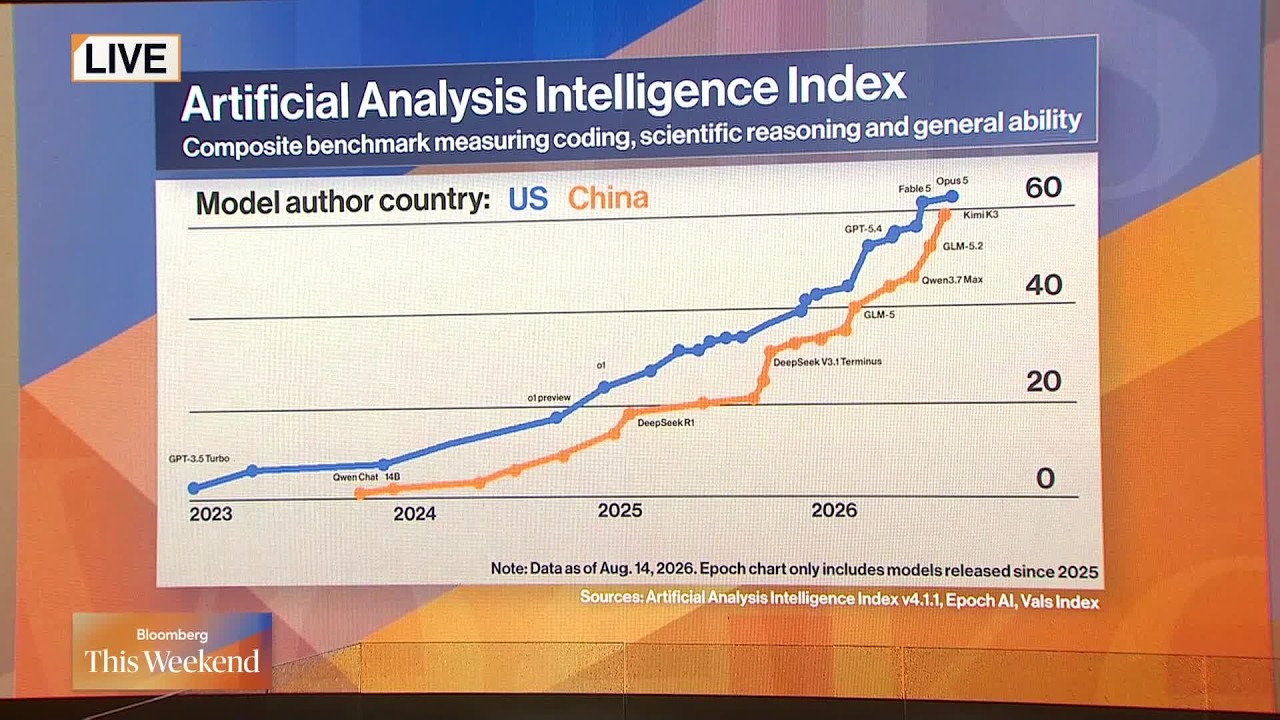
The competition between China and the United States for AI dominance is intensifying, with China making significant strides in terms of usage and cost efficiency. Recent data shows that the gap between the top AI models from both countries has narrowed considerably, especially following the release of China’s Moonshot KM K3 model in July. Usage of Chinese AI models has surged globally, surpassing U.S. models on major platforms like Open Router, where Chinese models accounted for over 60% of usage in July. Notably, many Chinese models are open-weight, allowing them to be downloaded, modified, and deployed anywhere, including in U.S. data centers, which facilitates their widespread adoption.
To better understand the practical differences between these AI models, Bloomberg’s team tested them by asking each to create a fictional e-commerce website for a coffee shop. The results showed that most leading models, regardless of origin, could build functional websites without much difficulty. However, the cost differences were stark. For instance, the U.S.-based Anthropic’s Fable 5 model produced a sophisticated site for about $50, while China’s KM K3 model could deliver a similar product for just a quarter of that price. More budget-conscious options from Chinese models could produce acceptable websites for under $5, albeit with some compromises in design and speed.
Chinese AI models are particularly excelling in certain sectors such as finance, where they dominate several top rankings. While U.S. models still lead in some categories, the affordability and sufficient capability of Chinese models make them highly attractive to many companies. This cost advantage has led to adoption by major U.S. tech firms like Airbnb, DoorDash, and Coinbase, who are leveraging these models for various applications. The combination of competitive performance and lower prices is making Chinese AI increasingly irresistible in both domestic and international markets.
From a business and financial perspective, the race to be the best AI model provider is crucial, especially for companies like Anthropic and OpenAI, which are preparing for IPOs. Currently, OpenAI and Anthropic are still considered the most capable and profitable in the market, attracting significant investment. However, the global AI usage landscape is broader than what any single platform can capture, and many smaller companies or those in developing countries may find the high prices of U.S. models prohibitive. This creates a substantial market opportunity for Chinese models, which offer more affordable and flexible solutions.
In summary, while U.S. AI companies maintain a technological edge in some respects, Chinese AI models are rapidly closing the gap by offering competitive capabilities at much lower costs. Their open-weight nature and adaptability have facilitated widespread global adoption, including in the U.S. market. This dynamic is reshaping the AI landscape, with Chinese models gaining ground in usage, affordability, and sector-specific performance, posing a significant challenge to U.S. dominance in the AI industry.