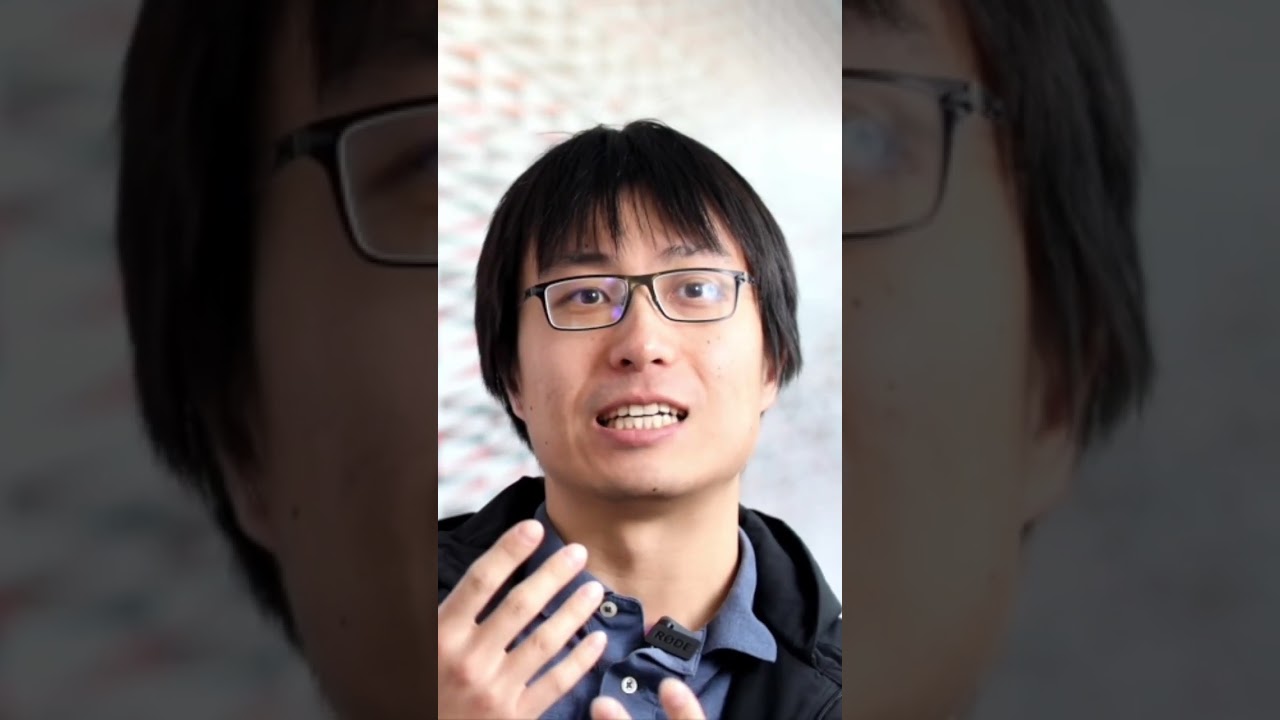
Chong Wang explores how quantum mechanics governs the interactions of many-body systems, revealing new and unexpected phases of matter that persist at macroscopic scales. His work bridges the gap between microscopic quantum laws and everyday phenomena, driven by a passion for uncovering the elegant and beautiful complexities of the quantum world.
Chong Wang, a theoretical physicist at Perimeter Institute, focuses on understanding many-body quantum systems, such as electrons and atoms in solids or quantum devices. His work revolves around how these particles interact quantum mechanically and how these interactions give rise to various phases of matter. Wang aims to derive elegant and beautiful results that deepen our understanding of the complex behaviors emerging from quantum interactions.
He emphasizes the challenge of bridging the gap between microscopic quantum laws and the macroscopic behaviors we observe in everyday life. While individual electrons or atoms exhibit quantum behavior, humans typically experience the collective behavior of billions of particles, which often obscures the underlying quantum mechanics. Traditionally, quantum effects were thought to vanish at larger scales, but recent discoveries show that quantum mechanics can persist and influence macroscopic phenomena.
Wang highlights the importance of embracing quantum mechanics as the fundamental framework to understand these emergent materials and phenomena. This approach allows physicists to uncover new phases of matter that were previously unimagined. The persistence of quantum effects at larger scales challenges conventional wisdom and opens up exciting possibilities for discovering novel material properties.
He reflects on the historical context of matter, noting that while humans have long understood basic states like solids, liquids, and gases, and have known about magnets for thousands of years, the discovery of new phases of matter continues to surprise and inspire. These ongoing discoveries provide a sense of satisfaction and motivation for researchers like him, as they reveal the richness and complexity of the quantum world.
Ultimately, Wang expresses a deep passion for physics driven by the pursuit of elegance and beauty in scientific results. He sees his work as contributing to a broader understanding of the universe, uncovering hidden layers of reality through the lens of quantum mechanics. This sense of wonder and discovery is what fuels his dedication to the field.