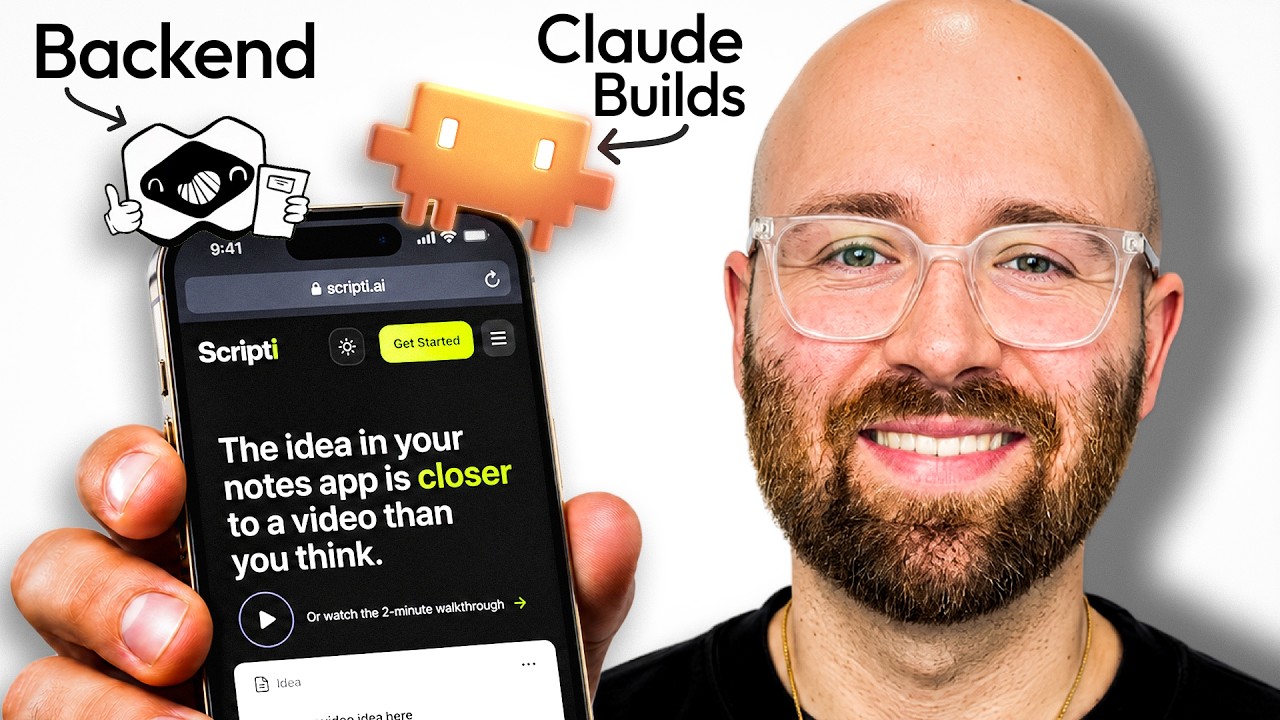
The video demonstrates how to build and run an application using Claude, an AI that can write code but lacks the ability to host or run applications independently. The presenter explains that while Claude can generate the application, it cannot provide a persistent server, database, or domain to share with others. To solve this, the video introduces Macaly, a cloud platform that acts as the infrastructure to host, run, and manage applications created by Claude. By connecting Claude to Macaly through a simple connector, users gain access to a real database, hosting environment, and domain publishing capabilities, enabling fully functional and persistent applications.
The presenter walks through setting up the integration between Claude and Macaly, showing how to install the MCP server, which acts as a communication channel between the AI and external services. Once connected, Claude can use Macaly’s infrastructure to build a YouTube video idea board application. This board stores data persistently, allowing users to add, edit, and move ideas in real time. The presenter highlights how this setup solves common issues like data loss when closing the laptop or lack of real-time updates, which were problems experienced by others trying to use Claude alone.
Macaly’s platform offers a user-friendly interface where users can see Claude’s chat, code, database, and analytics all in one place. It supports features like test mode for databases, easy customization, and domain management. The presenter demonstrates adding new fields to the application, such as links to scripts, and shows how changes are instantly reflected in the live app. This seamless integration between Claude’s AI capabilities and Macaly’s infrastructure creates a powerful environment for building and managing stateful web applications without complex setup.
Security and domain customization are also covered in the video. The presenter shows how to change the app’s domain to a more memorable one and how to secure the application with login authentication, including password protection. This ensures that only authorized users can access or edit the data, addressing privacy concerns. The login system is tested successfully, and the presenter emphasizes the ease of managing users and permissions either through Macaly’s interface or directly via the cloud, making the app both secure and collaborative.
In conclusion, the video highlights the synergy between Claude as the AI “brain” that designs and codes applications, and Macaly as the cloud infrastructure that runs and manages them. This combination allows users to create fully functional, persistent, and secure web applications with minimal friction. The presenter encourages viewers to try Macaly using a provided link that offers credits, suggesting starting with a small project to experience the platform’s capabilities. Overall, the video showcases a practical solution for turning AI-generated code into real-world applications accessible via the web.