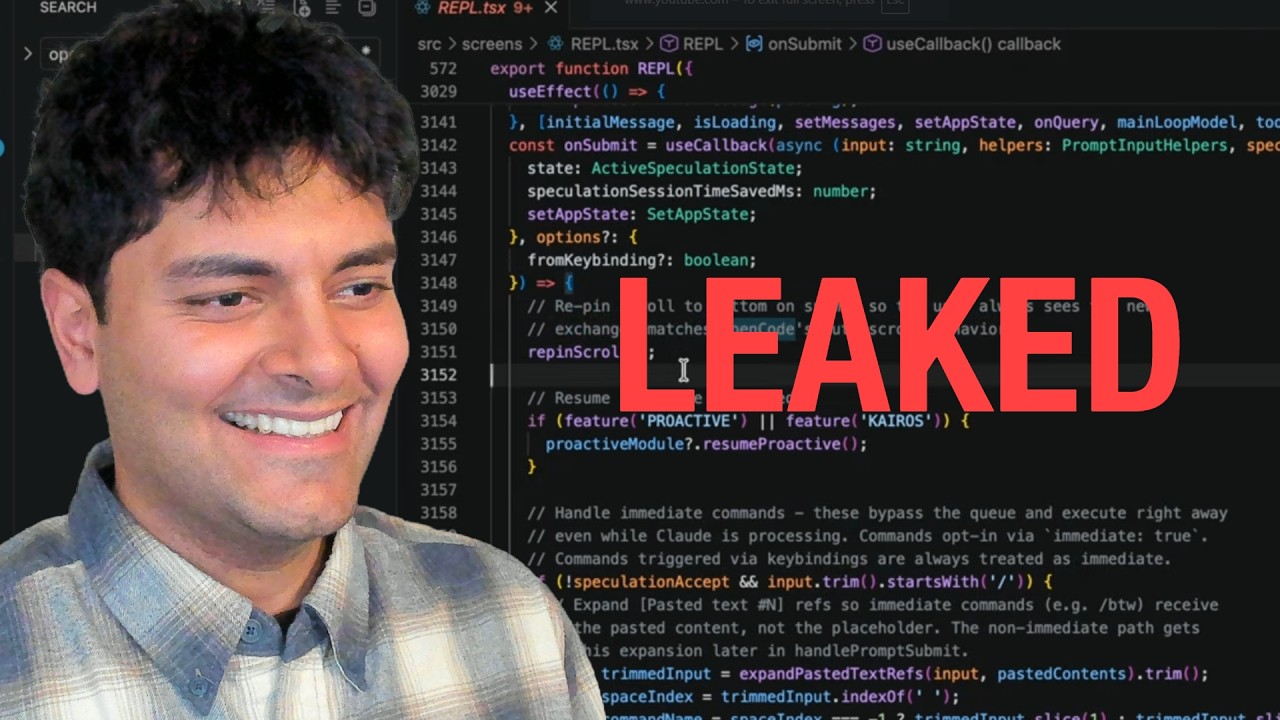
Anthropic accidentally made their coding agent, Claude Code, open source by including site maps in a daily update, exposing the project’s source code to the public. Claude Code is a JavaScript project built with Bun, and unlike compiled languages, its code is human-readable, making this leak significant. Although Anthropic quickly acted to restrict access and stated no customer data was exposed, the incident highlights the risks of rapid development and human error in software deployment. The leak also revealed interesting insights into the codebase, including some borrowed features from other open-source projects like Open Code.
The leak sparked debate about Anthropic’s development philosophy, which emphasizes rapid iteration and heavy reliance on AI agents to write code. Critics argue this approach may lead to careless mistakes, while supporters suggest that moving fast and accepting occasional errors is a necessary trade-off for innovation. The video’s narrator remains neutral, acknowledging both sides and noting that such incidents, while embarrassing, are unlikely to cripple Anthropic’s business. The company is reportedly implementing measures to prevent similar mistakes in the future.
One notable consequence of the leak is the emergence of a ported version of Claude Code’s source code on GitHub, translated into Python by an AI tool. This raises complex legal questions about copyright ownership, especially since Anthropic’s developers reportedly do not write code by hand and AI-generated code currently lacks clear copyright protection under U.S. law. The situation creates a gray area that could have far-reaching implications for AI-generated software and open-source licensing, potentially discouraging companies from open-sourcing their projects.
The leak also exposed some internal features of Claude Code, such as a profanity detection system that silently logs flagged words to a database, presumably to improve the model. While the code quality was generally decent, the incident revealed unreleased features and the cost-efficiency of running multiple sub-agents simultaneously. However, users are cautioned against running the leaked code locally due to potential malware risks. Overall, the leak provides a rare glimpse into Anthropic’s development practices and technical strategies.
Looking ahead, Anthropic faces a strategic choice: aggressively pursue legal action against the leaked and ported code, which could set difficult precedents, or embrace the open-source exposure and focus on their core model and brand differentiation. Other companies like Open Code have successfully operated as open-source projects, suggesting that open sourcing the harness might not be fatal. The incident underscores ongoing tensions in the AI and software communities around code ownership, rapid innovation, and the evolving role of AI in software development.