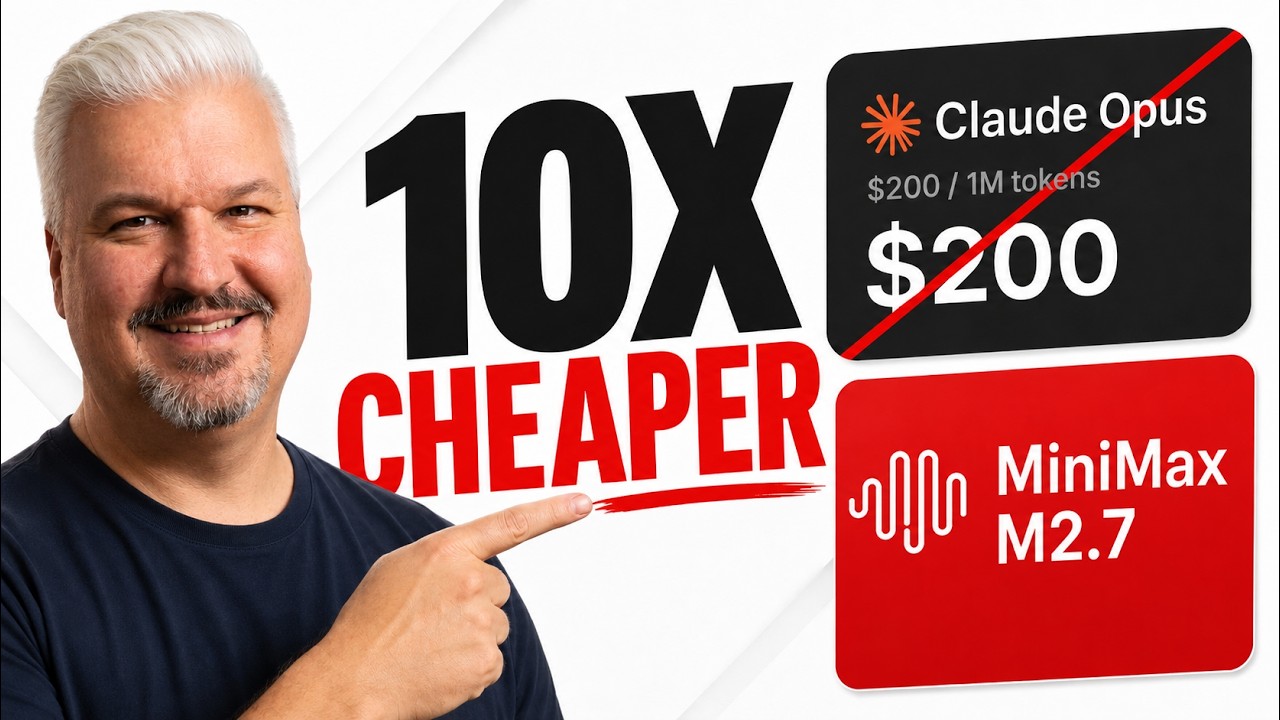
In this video, Leon introduces Minimax M2.7, an open-weight AI coding model that offers a cost-effective alternative to Claude Opus. He demonstrates purchasing a Reddit clone app built using Minimax, highlighting that it is nearly as capable as Claude Opus but at a fraction of the cost—about ten times cheaper. The app is feature-complete, including user authentication, and Leon emphasizes that integrating Minimax into his existing workflow was seamless, requiring minimal changes. He also compares Minimax to an older generation Opus model, noting its competitive performance and significant price advantage.
Leon then walks through the setup process for using Minimax with Claude code. He explains how to configure the settings.json file to point to the Minimax API endpoint and authenticate using an API key obtained from Minimax.io. He outlines the available pricing plans, focusing on the token-based system where users get a set number of requests every five hours rather than paying per token. This pricing model encourages detailed prompts to maximize value. Leon also mentions that the API key grants access to various AI capabilities beyond coding, such as image, video, and speech generation.
Next, Leon demonstrates building the Reddit clone app using Claude code powered by Minimax. He shows how the model quickly generates a project plan and efficiently sets up the tech stack and essential skills like front-end design and automated testing. The agent runs multiple subagents in parallel to implement features, and it even uses a browser skill to test the app end-to-end. Leon also sets up a loop command to have the agent periodically review the UI against the design system, showcasing the model’s ability to manage complex workflows and maintain quality.
Despite some challenges, such as the agent getting stuck on the authentication system, Leon resolves these by installing additional skills and providing detailed documentation. After about 30 minutes, the app is fully functional, allowing users to sign up, view posts, and leave comments. Leon highlights the efficiency of Minimax, noting that all this was achieved on a $20 plan using only 11% of the allotted requests. This demonstrates the model’s practicality for real-world development tasks while keeping costs low.
Finally, Leon shares fascinating insights into how Minimax trained the M2.7 model. The previous version of the model actively participated in training its successor, effectively helping to build itself. This innovative approach led to impressive performance, with M2.7 ranking second only to Opus and GPT 5.4 in machine learning competitions. Leon encourages viewers to try Minimax themselves, offering a 12% discount through his affiliate link, and concludes by inviting developers to build projects using this powerful and affordable AI coding model.