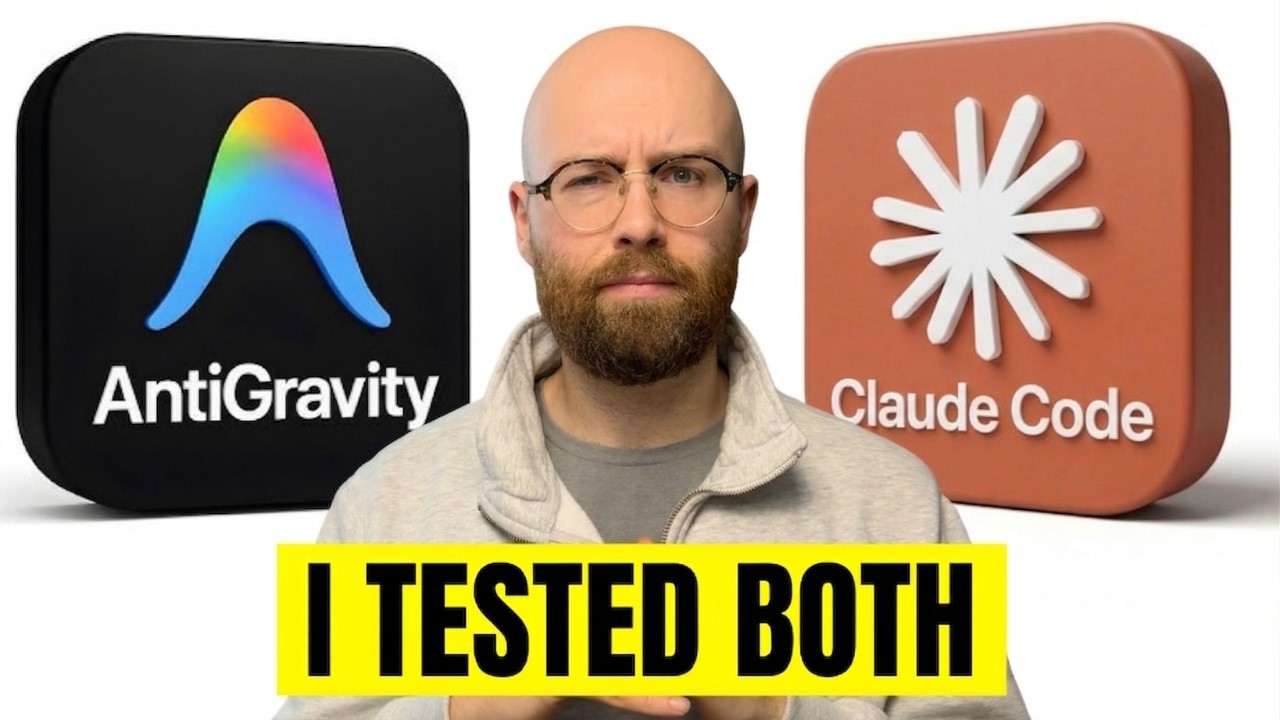
The video compares two AI-powered coding tools, Claude Code and AntiGravity, by testing them side-by-side on identical prompts involving mobile app design, landing page creation, and backend API development. AntiGravity is described as an integrated development environment (IDE) that supports multiple AI agents simultaneously, offering a multi-agent management system within a VS Code fork. Claude Code, in contrast, is a terminal-first single-agent tool focused on delivering high-quality results for one task at a time, with a desktop app that combines chat, collaboration, and coding functionalities.
Setting up both tools is straightforward, requiring just a download of their respective apps. AntiGravity supports seven built-in models, including Gemini flagship models and Claude models, but does not allow users to bring their own API keys. Claude Code exclusively uses Claude models but offers flexibility through third-party providers. Pricing structures differ: AntiGravity offers free and tiered paid plans with credit-based usage, while Claude Code requires a $20 monthly pro subscription with moderate usage limits and no free tier for coding.
A standout feature in Claude Code is the introduction of “skills,” which are instruction sets that enhance the agent’s capabilities for specific tasks like mobile app design (Sleek), front-end design, and React best practices. Installing these skills enables Claude Code to produce more refined and context-aware outputs. AntiGravity’s multi-agent workflow encourages users to manage several tasks simultaneously, but the video’s creator personally prefers Claude Code for its coding focus, pricing flexibility, and terminal power.
In practical tests, both tools struggled with prompt engineering, often providing insufficient input to the Sleek design tool, resulting in generic app mockups that did not accurately reflect the provided URLs. AntiGravity took longer to generate results but offered a more visual presentation of app screens. For landing page design, AntiGravity demonstrated faster and more interactive capabilities, including opening a browser to preview the page in real-time, while Claude Code lagged behind. However, both produced imperfect landing pages with inaccurate pricing information.
The final backend API test clearly favored Claude Code, which generated a more comprehensive and functional FastAPI backend with user registration, login, and protected endpoints. Claude Code’s implementation included detailed user profiles and working buttons, whereas AntiGravity’s version was less complete and had non-functional UI elements. Despite some context management challenges, Claude Code’s output was more robust and reliable, leading the presenter to conclude that Claude Code is the better choice overall for coding tasks, while encouraging viewers to leverage tools like Sleek for rapid mobile app design.