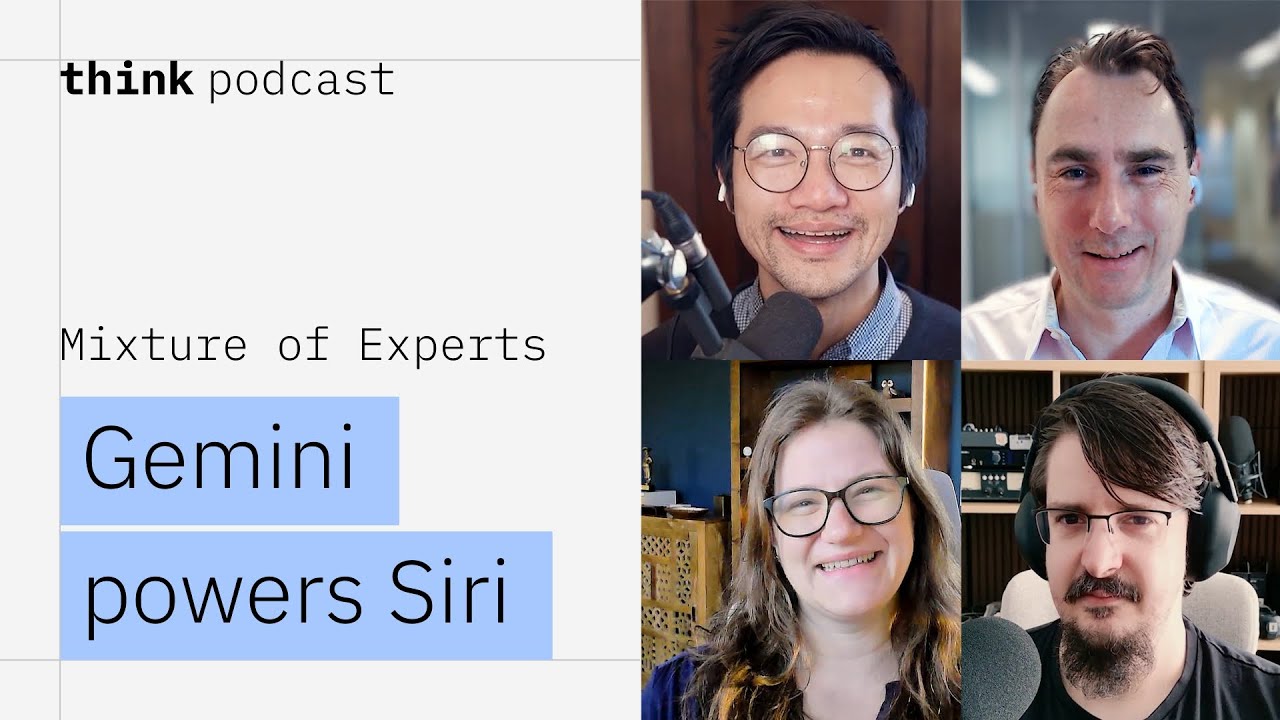
The 90th episode of “Mixture of Experts” brings together a panel of AI industry veterans—Vulkmar Ulig, Olivia Bjek, and Mihi Cre—to discuss recent developments in artificial intelligence. The episode opens with a focus on Anthropic’s new Claude Co-work feature, which expands the capabilities of Claude Code beyond programming to general productivity tasks like document generation and file organization. The panelists agree that this move makes powerful AI tools more accessible to non-technical users, removing the need for command-line expertise and complex setup. However, they also note that while the user experience is smoother, there are still rough edges and limitations, especially for users unfamiliar with AI’s quirks and potential errors.
A key point of discussion is the trust and reliability of agentic AI systems for everyday users. While developers are accustomed to “babysitting” AI and correcting its mistakes, the average user may not notice subtle errors or odd behaviors, such as misplaced files or lost metadata. The panelists share personal anecdotes, like using Claude Co-work to organize massive downloads folders, highlighting both the impressive automation and the need for vigilance. They caution that while these tools are useful, they are not yet foolproof, and users must be aware of the risks, such as accidental data loss or security vulnerabilities.
The conversation then shifts to the broader implications of integrating AI agents into operating systems and applications. Vulkmar draws a parallel to the evolution of self-driving cars, suggesting that consumers are willing to accept imperfect automation as long as it provides utility. He predicts a future where AI-driven interfaces replace traditional app icons, with operating system vendors being pushed to integrate AI agents (like MCP servers) into all applications. The panelists agree that while this trend is accelerating in the consumer space, enterprise adoption will require much higher reliability and security standards.
The episode also covers the significant news that Apple has chosen Google’s Gemini AI models for the next generation of Siri, moving away from previous plans to use OpenAI. The panelists are not surprised, given Siri’s lagging performance and Apple’s close relationship with Google. They discuss the technical and economic challenges of running advanced AI models on-device versus in the cloud, noting that while Apple has made strides in edge AI for privacy, current hardware and model limitations make cloud-based solutions more practical for complex tasks. The panelists express some disappointment that Apple is prioritizing business deals over engineering innovation, especially given Apple’s potential to lead in on-device AI.
Finally, the show touches on the cultural impact of AI coding tools, referencing Linus Torvalds’ recent use of AI agents for a personal project. The panelists observe that AI is democratizing software development, enabling even non-coders to build applications and small businesses. While these tools are not yet suitable for large-scale, secure, or highly maintainable software, they dramatically lower the barrier to experimentation and product-market fit. The hosts predict a surge in creative, small-scale projects, likening the current moment to the early days of the web, while cautioning that security and quality will remain challenges as adoption spreads.