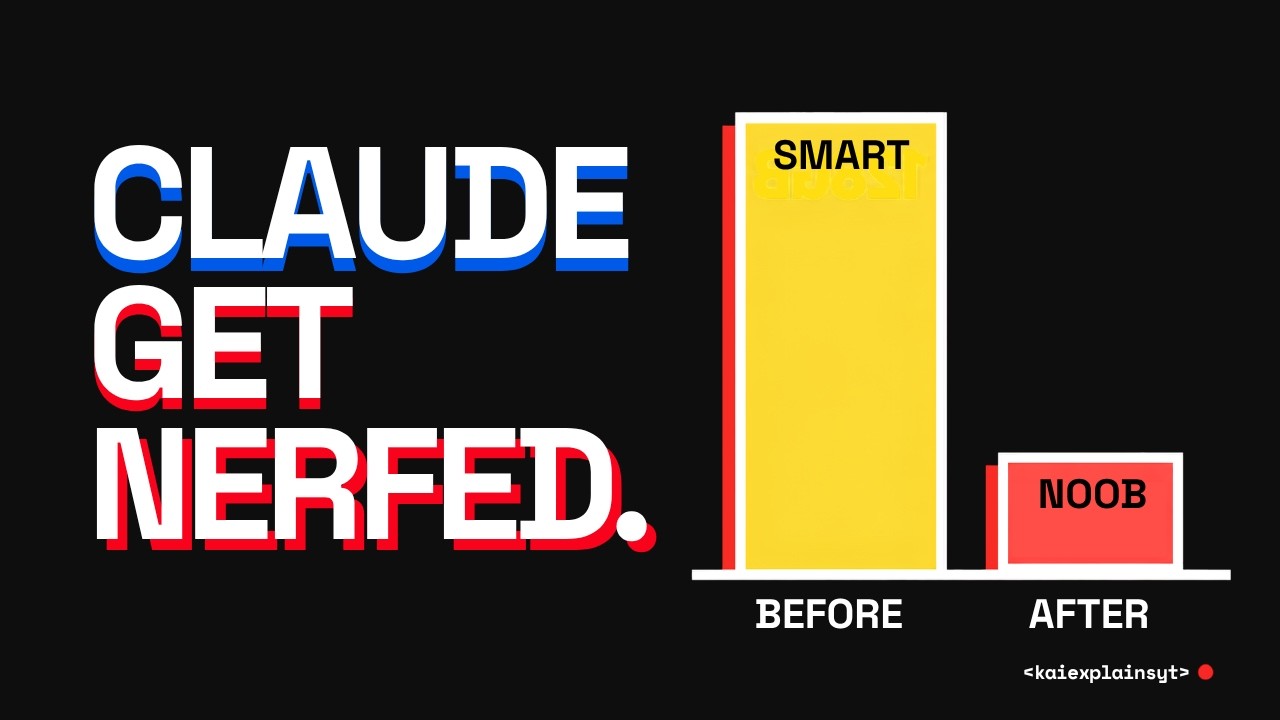
The video explores the common experience among users of AI models like Claude and GPT, where initial excitement about a new model launch fades as the model’s responses seem to become shorter, less detailed, and “dumber” over time. Many users suspect that the AI labs have deliberately “nerfed” or downgraded their models after launch, a belief fueled by viral social media posts comparing launch-day outputs to those weeks later. However, the video reveals that this perceived decline is not due to changes in the model’s underlying intelligence or weights but rather to adjustments in how the model is instructed to allocate its “effort” during response generation.
Central to the explanation is the concept of “adaptive thinking,” where models like Claude Opus 5.5 can vary the amount of internal processing time before producing an answer. The model’s “effort” setting controls this thinking time, with levels ranging from low to max. Importantly, while benchmark scores are reported using the max effort setting, the default setting for users and API calls is medium, which is two notches lower. This difference means that users experience less thoughtful and shorter responses by default, which accounts for much of the perceived drop in quality. The labs have been transparent about this in documentation footnotes, but most users miss these details, leading to confusion and accusations of nerfs.
The video also discusses the financial motivations behind these settings. Running the model at lower effort reduces token usage by about 25%, which lowers costs for the AI provider. While API users can choose to increase effort at a higher token cost, subscription users pay a flat fee and cannot reclaim savings from lower effort defaults, making the change more noticeable to them. Additionally, the video highlights that many reported quality drops are actually due to infrastructure issues, software bugs, or fallback mechanisms that switch users to older models without clear notification, rather than changes to the model itself.
Another important factor is the natural variability in AI responses and the impact of conversation context. Models do not produce identical answers to the same prompt every time, and performance can fluctuate within a normal variance range. Moreover, as conversations grow longer and more complex, models tend to perform worse compared to fresh, single-turn prompts. This context degradation contributes to the feeling that the model is getting worse, even though it is a known limitation of current AI systems rather than a deliberate nerf.
In conclusion, the video advises users to check and explicitly set their model’s effort level to regain higher-quality responses and to disable automatic fallback to older models for clearer understanding of what is answering them. It encourages tracking token usage, tool calls, and app versions to diagnose changes in performance accurately. Ultimately, the perceived nerf is mostly a result of default settings and surrounding software changes rather than actual reductions in model capability. Understanding these nuances can help users avoid frustration and make informed decisions about how to use AI models effectively.