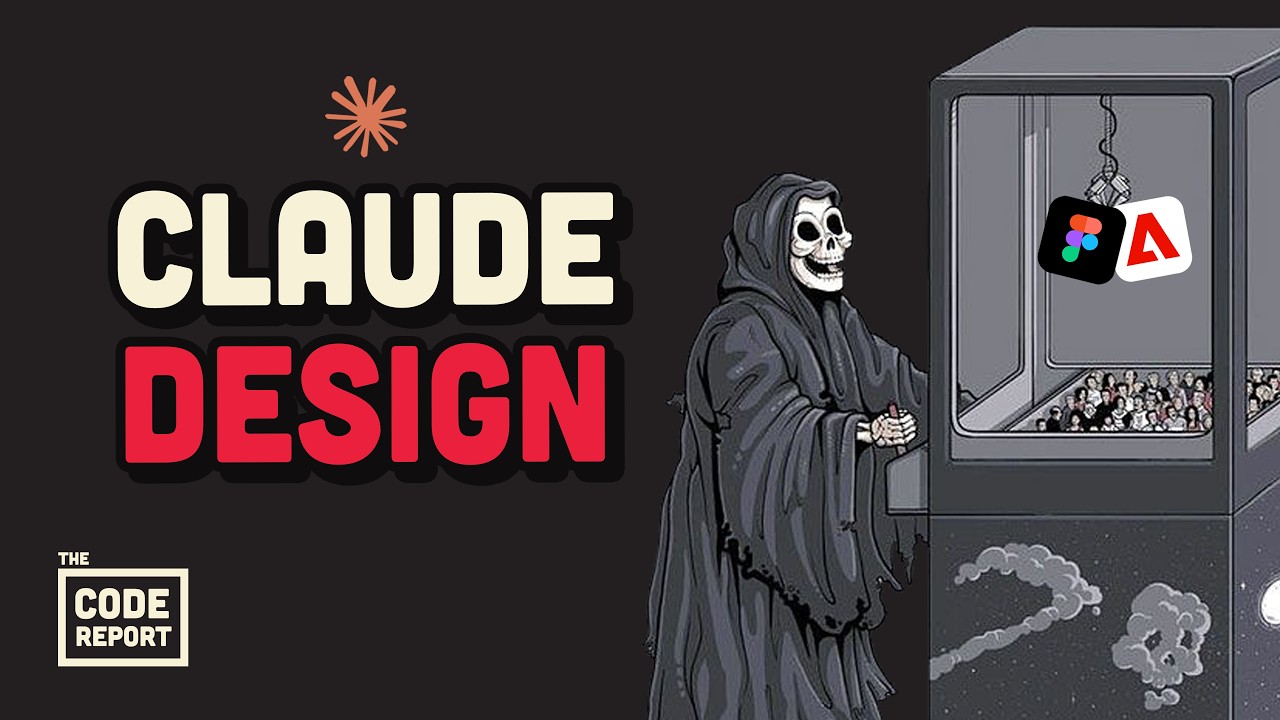
Anthropic has launched Claude Design, a groundbreaking new platform powered by their latest Opus 4.7 model, which transforms rough Figma designs into fully interactive prototypes, pitch decks, and production-ready UIs without needing traditional design tools. This announcement caused a significant market reaction, including a 7% drop in Figma’s stock and turmoil among design professionals and startups. Claude Design’s capabilities have sparked debates about the future of human-led UI/UX design, as it automates many tasks previously requiring extensive manual effort.
The Opus 4.7 model, released just last week, boasts enhanced creativity and tastefulness compared to its predecessor, with the ability to process images at 3.75 megapixels, making it highly suitable for design work. It also achieved impressive software engineering benchmark scores, though some critics argue that the new model is a regression or that Anthropic intentionally downgraded the previous version to make 4.7 appear more advanced. Despite skepticism, the demos of Claude Design showcase remarkable interactive features, including working animations, multiple animation variations, and even shader-based effects that push the boundaries of web development.
Claude Design’s interactivity extends to producing complex animations and full-length video animations, potentially threatening the relevance of video editors. However, these demos are pre-built, so the video’s creator tested the platform by building a project from scratch. Users can upload existing design systems via GitHub or Figma files to maintain consistency across designs. In practice, Claude Design generated a five-screen iOS onboarding flow for a fictional app called Horse Tinder, though the output did not fully adhere to the uploaded design system and had some visual flaws, such as a washed-out logo.
One of Claude Design’s useful features is the ability to draw and comment directly on the design canvas to request fixes or adjustments. However, in the test case, the requested logo fix only resulted in a minor background color change rather than a true correction, indicating that the platform still has limitations and may require further improvements in future versions like Opus 4.8. Despite these shortcomings, Claude Design represents a significant step forward in automating UI/UX design workflows, potentially reducing the workload for designers and developers.
The video concludes by highlighting Google Cloud Run as a complementary tool for backend development, emphasizing its serverless, scalable infrastructure that supports multiple languages and frameworks. Google Cloud Run allows seamless deployment and scaling of applications, including those integrating AI models, with a generous free tier for new users. This combination of advanced AI design tools like Claude Design and robust cloud platforms like Google Cloud Run points toward a future where rapid, integrated development of full-stack applications becomes increasingly accessible and efficient.