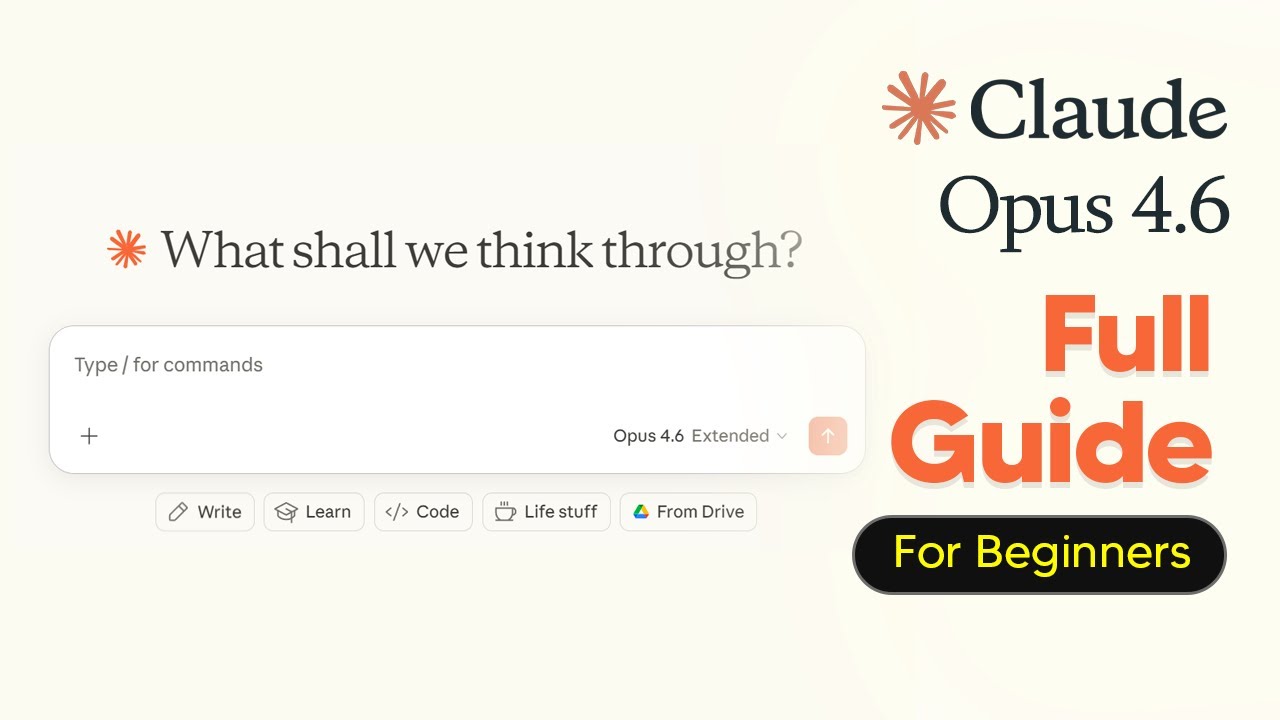
The video introduces Claude Opus 4.6, highlighting it as one of the best large language models (LLMs) currently available, especially for beginners. The presenter starts by explaining how new users can claim $50 in free credits through their Anthropic account settings, a promotion many may not be aware of. The video also clarifies the difference between Opus 4.6 Standard and Opus 4.6 Extended Thinking. While the extended version is more powerful and thorough—ideal for complex tasks like coding, multi-step planning, or legal analysis—it is more expensive and slower, so beginners are advised to use the standard version for everyday tasks.
A key feature of Opus 4.6 is its top ranking on the EQ Bench, which measures emotional intelligence in AI. This means the model excels at understanding emotions, social dynamics, and psychological insight, making it particularly effective for creative writing and professional communication. The presenter emphasizes that Opus 4.6 can draft nuanced emails, help with conflict resolution, and provide perspective for difficult conversations, making it a valuable tool for workplace interactions and advanced storytelling.
For beginners interested in coding, the video recommends using the Lovable platform, which now integrates Opus 4.6. Lovable allows users to turn prompts into live web applications without needing to manage a development environment or understand technical tools like Git. The presenter demonstrates how easy it is to create a landing page using Opus 4.6 on Lovable, highlighting its usefulness for non-technical users who want to quickly build and deploy projects.
The video also covers the new Swarm feature, which enables multiple specialized Claude agents to work together on tasks in parallel, rather than sequentially. This approach significantly speeds up complex projects, as demonstrated in a head-to-head comparison where Swarm mode completed a project in seven minutes versus eighteen minutes in regular mode. The presenter notes that while this feature is more advanced and may not be necessary for beginners, it showcases the efficiency gains possible with coordinated AI agents, especially for coding and project management.
Finally, the video explores Opus 4.6’s integration with Microsoft Excel and PowerPoint. In Excel, Claude can analyze, build, and debug complex spreadsheets, automate updates, and apply professional styling, making advanced data work accessible to non-experts. The PowerPoint integration allows Claude to act as a co-author, generating native slide elements that match existing templates and brand guidelines. This enables users to create and edit professional presentations easily, even pulling in relevant information from the internet. Overall, the video positions Opus 4.6 as a versatile, user-friendly AI tool for beginners across a range of creative, professional, and technical tasks.