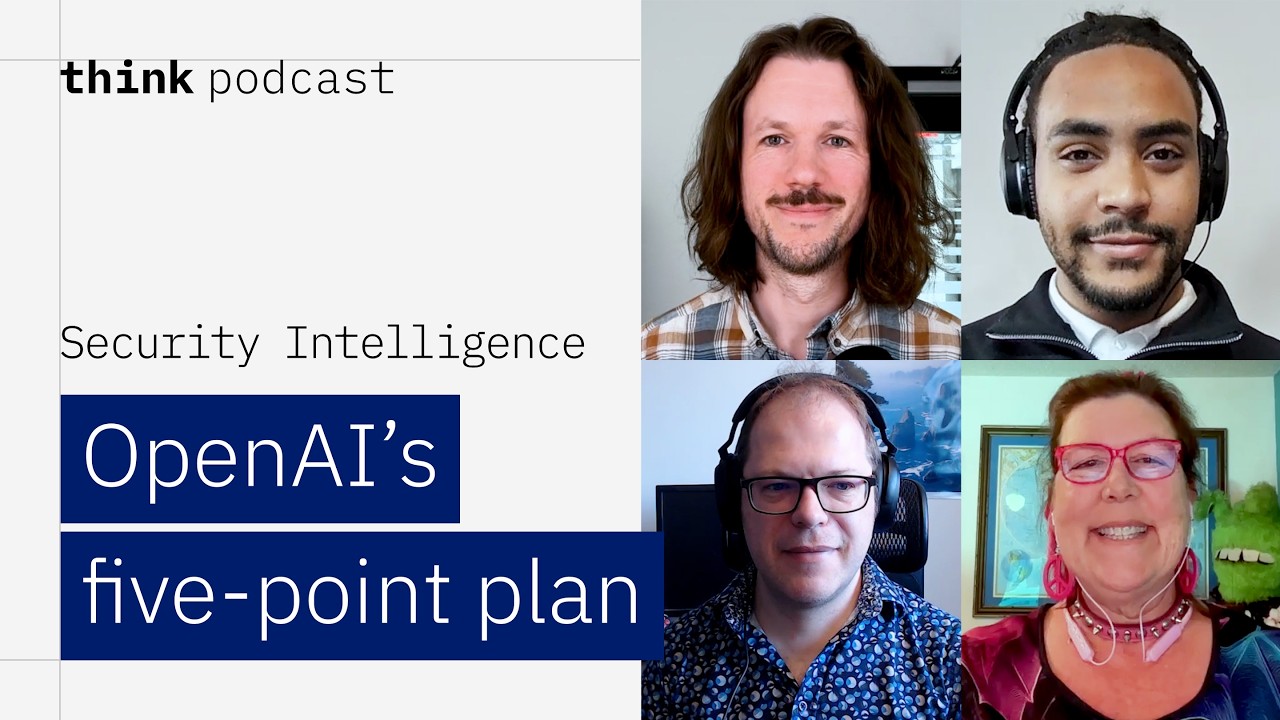
The recent surge in AI development has brought cybersecurity to the forefront for major AI players, marking what CrowdStrike calls “cybersecurity’s Y2K moment.” This moment reflects a growing awareness among executives about the potential risks AI introduces as an expanded attack surface. Industry leaders like Anthropic, OpenAI, IBM, and CrowdStrike are responding with collaborative initiatives such as Anthropic’s Claude Security public beta, OpenAI’s five-point plan for AI-powered cyber defense, and CrowdStrike’s Quilt Works coalition. These efforts emphasize that cybersecurity in the AI era is an ecosystem-wide challenge requiring joint action rather than isolated efforts.
A key focus of these collaborations is the management of AI agent identities and access controls. The Coalition for Secure AI has proposed a framework that treats AI agents as distinct entities, separate from humans and traditional system processes. This framework advocates for unique identities for agents, zero standing privileges, traceable chains of authority, and strict security controls at every interaction point. Panelists highlighted the importance of accountability and traceability, noting that without proper identity management, it becomes difficult to determine responsibility when AI-driven workflows cause issues or security breaches.
The discussion also touched on the evolving nature of zero trust architecture in the context of AI agents. Unlike traditional systems, AI agents often maintain persistent access tokens and can interact with other agents, creating complex chains of authority that complicate security controls. Experts suggested that short-lived, role-based access tokens and revocation mechanisms are essential to prevent unauthorized or unintended actions by AI agents. Some even proposed innovative ideas like using blockchain technology to create immutable logs of AI agent activities to enhance transparency and trust.
The podcast’s final major topic was the discovery of a critical Linux vulnerability dubbed “Copy Fail” (CVE-2026-31431), uncovered by AI-powered vulnerability scanners. This flaw, present in Linux kernels since 2017, allows unprivileged users to gain root access with a simple Python script, affecting virtually all major Linux distributions. The vulnerability’s longevity and ease of exploitation underscore the challenges of securing legacy codebases and the importance of proactive vulnerability research. Panelists stressed the urgency of patching affected systems and increasing staffing for vulnerability detection and defense, especially as AI accelerates the discovery of such critical bugs.
Overall, the episode underscored the dual-edged nature of AI in cybersecurity: while AI tools enhance vulnerability detection and defense capabilities, they also introduce new risks and complexities that demand collaborative, innovative approaches. The experts advocated for increased investment in security teams, rigorous identity and access management for AI agents, and ecosystem-wide cooperation to mitigate emerging threats. Listeners were encouraged to engage with these developments actively and to prioritize patching and research to stay ahead in this rapidly evolving landscape.