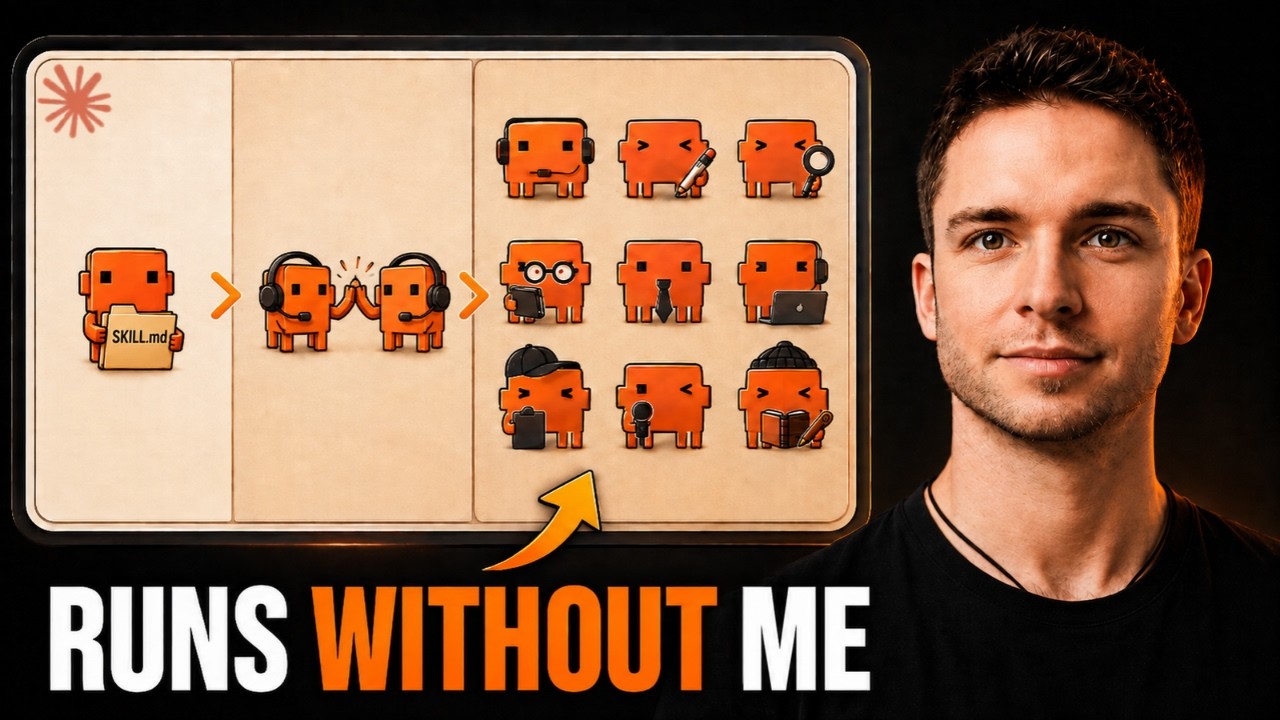
The video begins by clarifying what an AI agent is, distinguishing it from skills and explaining its fundamental operation. An AI agent is essentially a piece of software combined with a model that runs a loop to achieve a specific goal, such as writing a LinkedIn post. This loop involves setting a goal, proposing actions, using tools, evaluating results, and iterating until the goal is met or deemed unattainable. The agent’s capabilities stem from its training, but it can be steered or harnessed by adding context, permissions, and rules to tailor its behavior for specific tasks.
The concept of sub-agents is introduced as smaller, isolated containers spawned by a parent agent to handle specific tasks. These sub-agents can operate with different models or toolsets, providing context isolation and cost management. The parent agent retains ownership of the original goal and final judgment, ensuring coherence and control over the task’s outcome. This hierarchical structure allows for more complex workflows and better resource allocation within AI systems.
Skills are explained as saved methods or handbooks that guide agents on how to perform particular jobs based on human expertise. While agents can operate without skills, skills cannot function without agents. Naming and profiling agents serve purposes such as specialization, isolation, continuity, and ownership. For example, an agent named Harper might be specialized in marketing, equipped with relevant skills and tools, and designed to maintain state and manage tasks autonomously within its domain.
The video then expands on the idea of an AI workforce, which is a coordinated team of agents managing different business functions like acquisition, delivery, support, and operations. This workforce operates on top of an AI operating system (AIOS) that provides foundational elements such as business context, skills, tools, state management, schedules, and permission gates. The workforce enables automation and decision-making delegation, reducing the need for constant human intervention while ensuring critical decisions involving money, public communication, or meaningful system changes require human approval.
Finally, the practical implementation of agents is described as simple markdown files containing configurations like name, description, model choice, skills, boundaries, and system prompts. These files define how agents interact with the underlying infrastructure and enforce rules and permissions. The video emphasizes the importance of building strong foundational systems to support these agents and their workforce effectively. The presenter promises future videos to demonstrate building such systems from scratch and invites viewers to engage with the community for ongoing support.