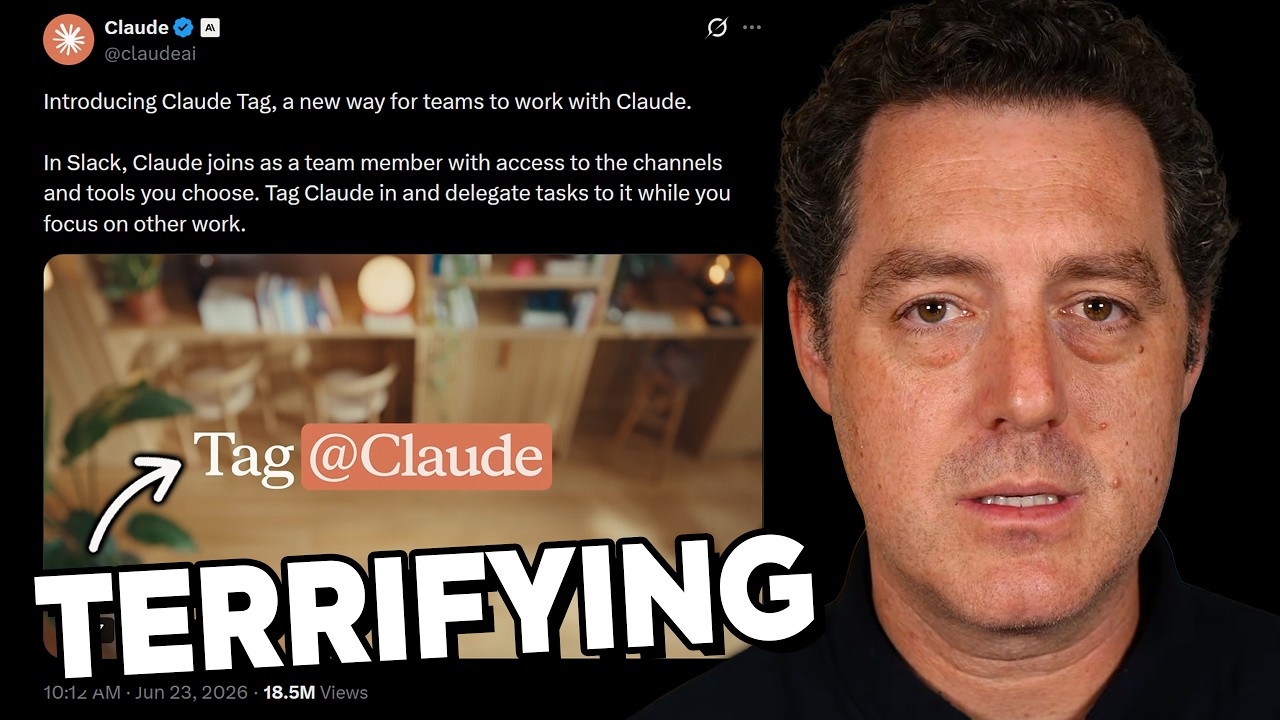
Anthropic recently launched a feature called Claude Tag, which at first glance seems like a convenient way to interact with the Claude AI directly within Slack. However, the feature is much more significant than a simple integration. Claude Tag acts as a persistent, proactive team member embedded within a company’s communication and workflow systems, continuously absorbing context from documents, conversations, and tools. This allows it to perform real work, not just respond to queries, effectively becoming an AI employee rented from Anthropic that knows the entire organizational context and can assist across various tasks.
This new paradigm represents a major shift in how large language models (LLMs) are integrated into work environments. Instead of accessing AI through standalone websites or apps, Claude Tag is embedded directly into the platforms where teams already collaborate, such as Slack. Anthropic envisions this as the future of knowledge work, where AI is deeply integrated into every aspect of a company’s operations, continuously learning and improving. This approach is already core infrastructure at Anthropic itself, with a significant portion of their product team’s code now generated through this internal AI system.
However, this deep integration raises serious concerns about control and dependency. By embedding AI so thoroughly into company workflows and data, Anthropic is effectively building a comprehensive information graph of every organization using Claude Tag. This creates a form of “context lock-in,” where companies rent their AI employees and the knowledge embedded within them from Anthropic, potentially leading to a monopolization of knowledge work. The pricing model, based on token usage rather than fixed salaries, means costs can escalate without limit, increasing dependency on Anthropic’s platform and raising platform risk to unprecedented levels.
The implications extend beyond individual companies to the broader software ecosystem. As AI agents like Claude Tag become capable of operating software on behalf of users, traditional user interfaces may become obsolete. Software companies could be reduced to mere databases, with AI agents managing workflows and even writing code to improve or replace existing processes. This threatens to disrupt the entire software industry and concentrate power in the hands of a few AI providers, making government intervention and open-source alternatives critical to maintaining competition and preventing monopolies.
Despite these challenges, the integration of AI like Claude Tag into daily work represents the future of how companies will operate, with AI and humans collaborating closely to enhance productivity. The key to a healthy AI-driven future lies in fostering competition, supporting open-source models, and ensuring that companies retain ownership of their data and context. While Anthropic’s Claude Tag is a powerful and potentially transformative tool, it also serves as a warning about the risks of centralized control over knowledge work and the importance of building a diverse and competitive AI ecosystem.