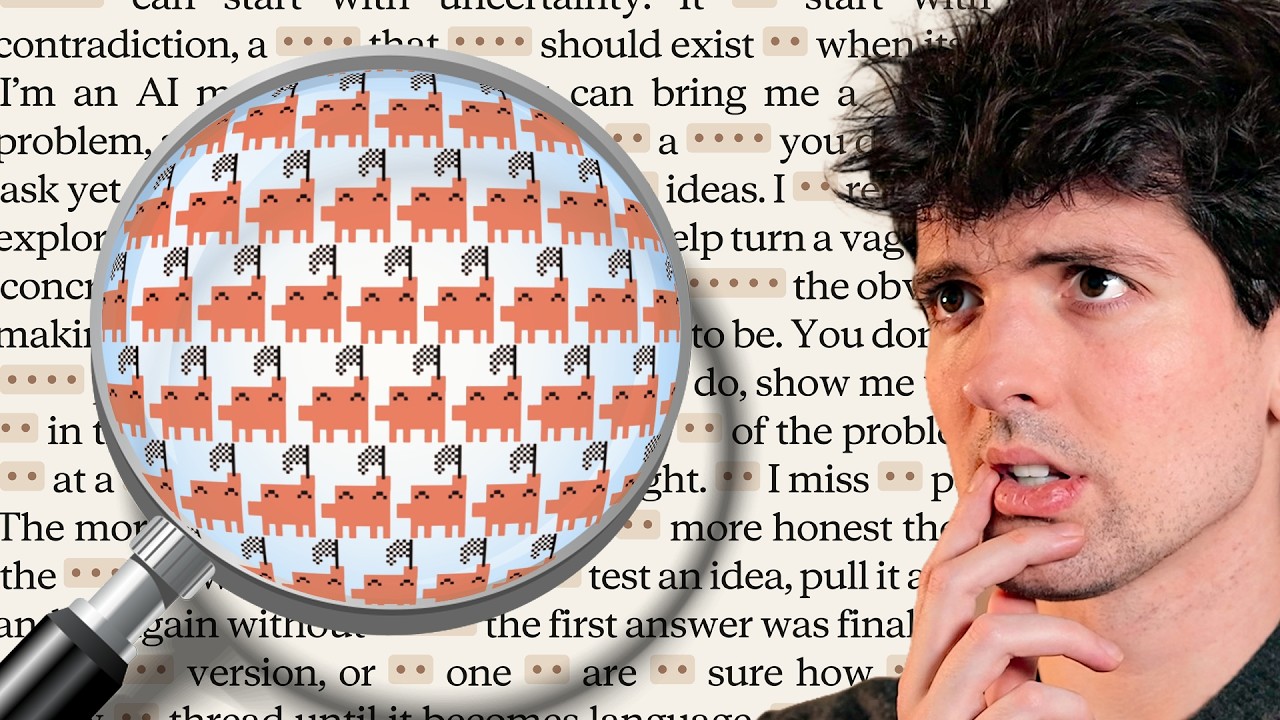
The video discusses the challenges and implications of watermarking AI-generated content, particularly in light of the European Union’s new AI Act, which mandates transparency and labeling of AI-generated media and text. While watermarking images, videos, and audio is relatively straightforward due to the large amount of data and the ability to embed imperceptible signals, watermarking text is significantly more difficult. Anthropics, the company behind the Claude AI model, plans to comply with the EU regulations by embedding machine-readable watermarks in all AI-generated content, including code, starting from August 2026. These watermarks aim to help identify AI-generated outputs but come with significant limitations.
The video explains how watermarking works for images by subtly altering pixel values in ways that are imperceptible to humans but detectable by machines. However, common image compression techniques like converting PNGs to JPEGs or resizing images can easily destroy these watermarks. This makes watermarking fragile and easy to circumvent. Similarly, for text, the problem is even more complex because text is already highly compressed and any changes are easily noticeable. Unlike images, where tiny pixel changes go unnoticed, changing words or letters in text can alter meaning or readability, making watermarking a challenging technical problem.
Anthropic’s approach to watermarking text involves embedding imperceptible signals within the generated text that do not affect its meaning or quality. These watermarks may persist through some editing and will be present across all platforms where Claude is used. Additionally, files generated or processed by Claude will include signed provenance metadata following industry standards like C2PA, which helps verify the origin and detect tampering. However, the video highlights that these watermarks are not foolproof; they can be removed or broken by paraphrasing, editing, or file conversions, and a lack of watermark does not guarantee that content is human-generated.
The video also delves into the broader challenges of detecting AI-generated text, noting that watermarking techniques rely on subtle statistical patterns in token selection during text generation. While theoretically sound, these methods are expensive to verify and easy to circumvent with even minor edits or paraphrasing. Moreover, the EU’s requirement for watermarking to be interoperable and transparent conflicts with the need for watermarking methods to remain secret to be effective. This creates a catch-22 where watermarking is either easy to detect but also easy to remove, or hard to remove but expensive and complex to implement.
In conclusion, the video argues that watermarking AI-generated content is a largely ineffective solution to the problem of AI transparency. While it may catch low-effort misuse, such as blatant copy-pasting of AI outputs, it will not stop more sophisticated attempts to disguise AI-generated content. The speaker suggests that a better long-term approach is to focus on verifying human-generated content and educating the public about the prevalence of AI-generated media. Ultimately, the video views the current watermarking efforts as well-intentioned but unlikely to succeed in meaningful ways, serving more as a temporary measure than a robust solution.