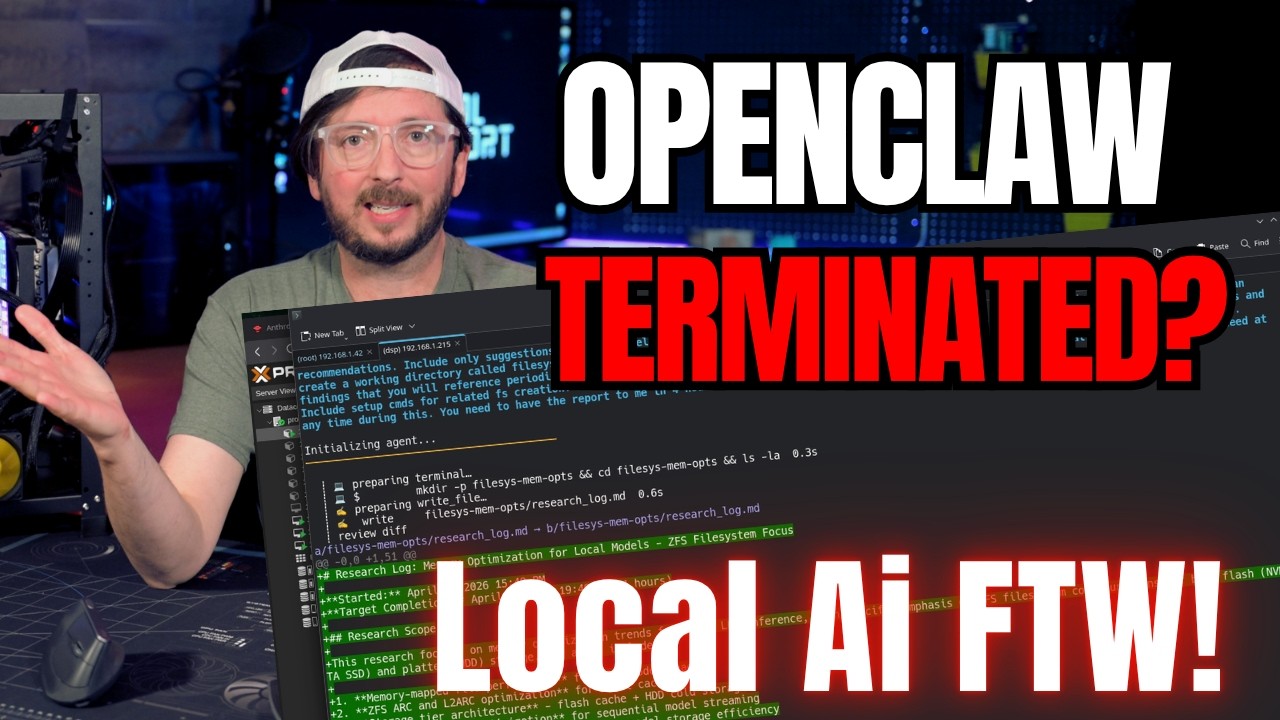
The video discusses a significant change announced by Anthropic regarding their AI model Claude and its third-party usage policies. Starting at 12 PM on the day of the announcement, personal subscriptions will no longer cover usage through third-party tools like OpenClaw and Hermes Agent. Instead, users will need to switch to a more expensive, usage-based billing model, which could substantially increase costs for those relying on these tools. Anthropic is offering some discounted usage bundles as a transitional measure, but the overall message is clear: the era of low-cost, third-party access to Claude is ending, pushing users to reconsider their AI usage strategies.
The speaker highlights the economic challenges this change poses, especially for startups and individual developers who have been prototyping with these tools under affordable subscription plans. The new pricing model reflects the growing demand and token inefficiencies associated with third-party harnesses, but also signals Anthropic’s desire to control the full AI stack and limit open-source or third-party intermediaries. This move is seen as a reaction to the competitive landscape of AI development, where companies want to maintain control over their platforms and monetization, potentially fearing the disruptive impact of open-source agentic tools.
In response to these changes, the video suggests several alternatives for users seeking more stable and cost-effective AI solutions. One option is to pivot towards local AI models that can be run on personal hardware, such as the Quinn 3.5 or Gemma 4 models, which support agentic tool calling and can be hosted on infrastructure like Proxmox. Running local AI rigs, including setups with multiple GPUs, offers long-term stability and control, avoiding the unpredictability of cloud pricing and service restrictions. However, this approach requires investment in hardware and technical know-how, but it empowers users to maintain their AI capabilities independently.
The speaker also shares a preference for Hermes Agent over OpenClaw, citing better management of development challenges and a more proactive approach to handling contributions and updates. This reflects a broader trend in the AI agent economy, where collaboration and efficient development practices are crucial for sustaining open-source projects. The video emphasizes the importance of adapting to the evolving AI ecosystem by learning to work with agentic tools effectively, as these will increasingly influence how people interact with AI in both personal and professional contexts.
Finally, the video frames this moment as a pivotal point in the AI landscape, where the agentic movement is driving progress toward more capable and refined AI systems. While real-time performance may still be a challenge, the continual refinement of these tools promises to bring users closer to running their own AGI-like systems on personal hardware. The speaker encourages viewers to explore local AI setups and shares resources for getting started, underscoring the importance of staying informed and adaptable as the AI industry rapidly evolves.