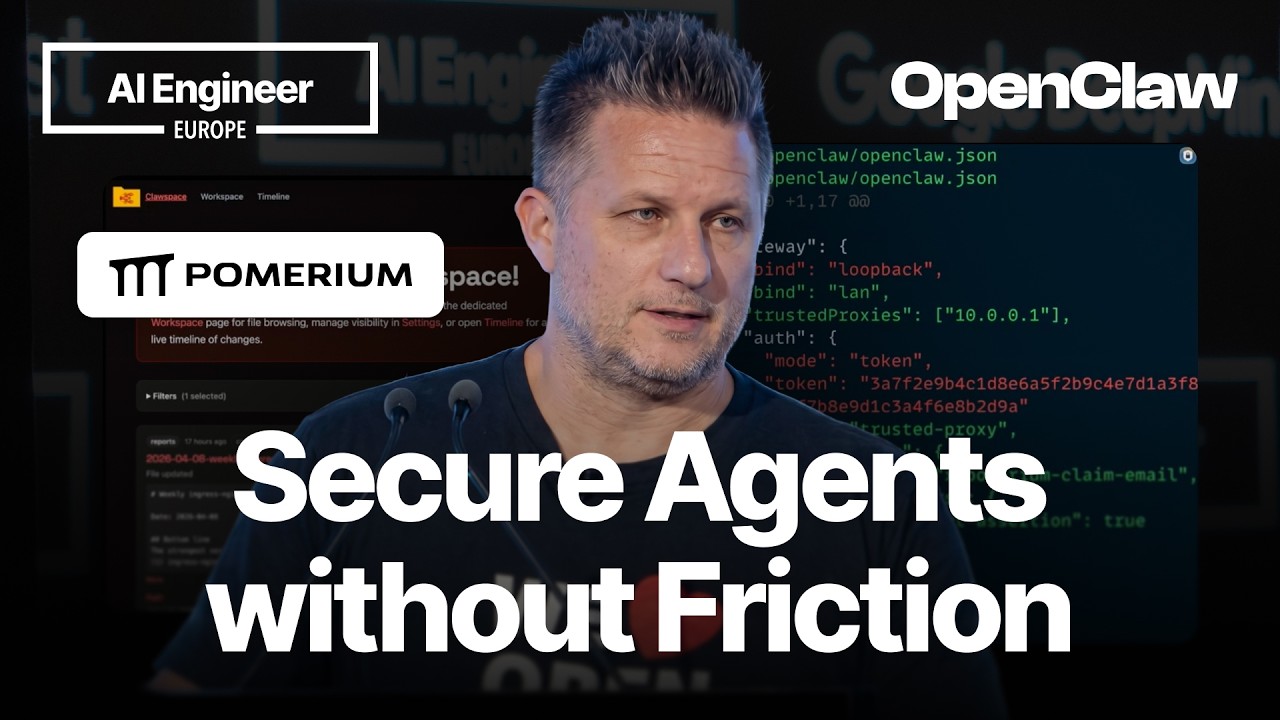
Nick Taylor, a developer advocate at Pomerium, presented on enhancing security and usability in OpenClaw, a tool for remote development. He began by introducing himself and his background, highlighting his contributions to the OpenClaw project, particularly a feature called “trusted proxy auth mode.” This mode improves security by allowing OpenClaw to work seamlessly with identity-aware proxies, such as those used in Google Cloud Platform, eliminating the need for manual token entry and device pairing for web socket connections. This enhancement not only strengthens security but also significantly improves user experience.
Taylor explained the technical details of the trusted proxy auth mode, describing how it changes the configuration by removing the need for tokens and adding trusted proxy settings, including user headers and required headers. This setup leverages policies from identity-aware proxies to control access, simplifying the authentication process. He also acknowledged community contributions that helped fix bugs and improve the feature after its initial release, emphasizing the collaborative nature of open-source development and the rapid growth of the OpenClaw project.
He shared personal insights into his use of OpenClaw, mentioning that he primarily uses it on Discord for secure communication and development. Taylor demonstrated how he used OpenClaw itself to contribute to the project, including a humorous anecdote about accidentally granting full GitHub CLI access prematurely. Inspired by the new feature, he developed a side project called Claw Space, a personal software tool that allows him to edit and manage workspace files directly from his phone, showcasing the flexibility and power of OpenClaw for remote development.
The presentation included a live coding demo where Taylor built an MCP (Modular Chat Plugin) app integrated with ChatGPT, illustrating how OpenClaw enables real-time web development with hot module reloading and seamless updates. He highlighted how the trusted proxy auth mode, combined with Pomerium for secure access, allows him to work efficiently from anywhere, even on a phone, by securely exposing local development environments to the web. This workflow exemplifies the modern approach to personal and remote software development, blending security with convenience.
In conclusion, Taylor encouraged the audience to explore and experiment with OpenClaw and its trusted proxy auth mode, stressing the importance of security while having fun building personalized tools. He noted the risks of misconfiguration but emphasized the benefits of secure, proxy-based access for local development environments. His talk underscored the evolving landscape of developer tools, where open-source collaboration, cloud security, and innovative workflows converge to empower developers to build and secure software in new and exciting ways.