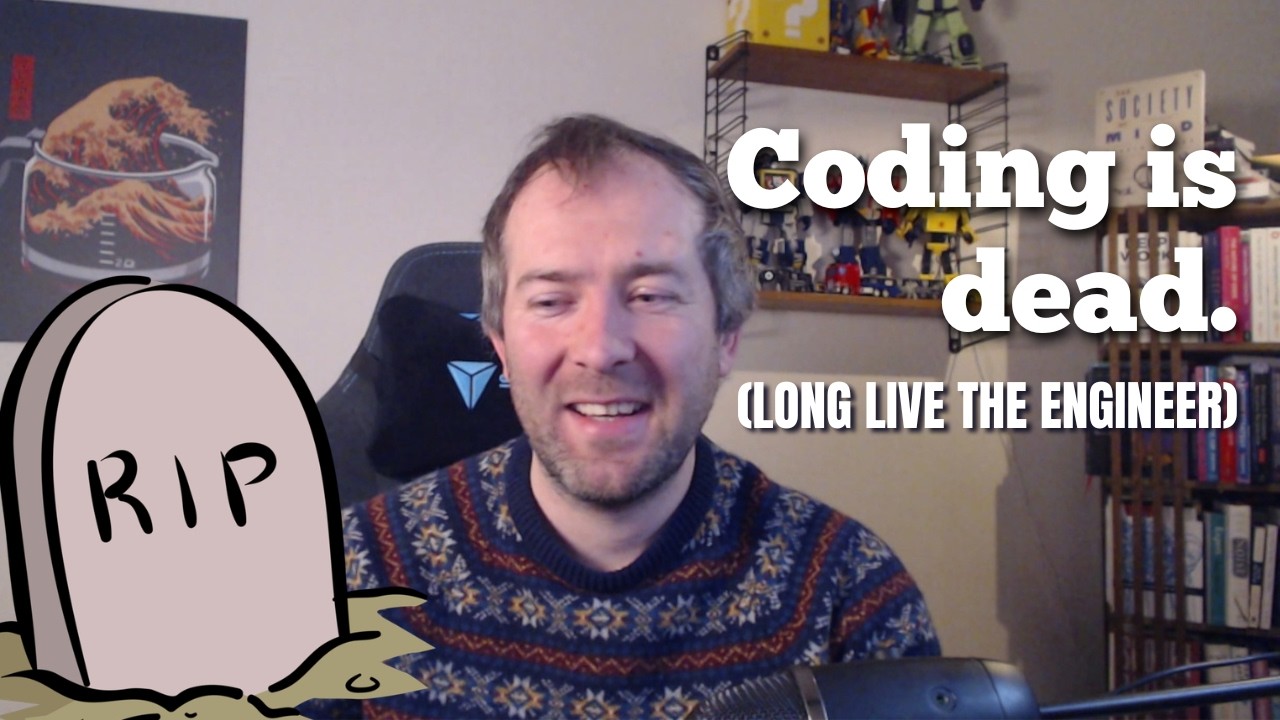
The video argues that traditional programming—manually writing code line by line—is becoming obsolete due to the rapid advancement of AI coding agents and large language models. The presenter observes that the core value of a software engineer is shifting away from typing out code and towards higher-level skills like system design, specification, and architectural decision-making. While the act of coding is now largely automated, the need for thoughtful engineering, understanding trade-offs, and ensuring safety and quality remains crucial. The speaker emphasizes that those who only identify with translating clear specifications into code should broaden their skill set, as this role is quickly disappearing.
A significant portion of the video discusses the evolution of “spec-driven development.” The presenter outlines three levels: a futuristic model where specs alone generate code with no human review; a middle ground where specs guide code generation but engineers still review and care about the code; and the current, practical approach where specs describe incremental changes (deltas) to an existing codebase, and engineers use AI agents to implement these changes. The presenter prefers the latter, treating code as the source of truth and specs as auditable records of intent and change, rather than as the sole artifact.
The speaker stresses the enduring importance of iterative and incremental development, referencing the classic paper “Programming as Theory Building.” The argument is that software is fundamentally a shared mental model among its creators, and that building software in small, understandable increments helps maintain this collective understanding and reduces cognitive debt. The presenter warns against losing track of the system’s mental model, which can happen if code is generated too quickly or in large, opaque chunks, leading to a loss of control and understanding.
Practical examples are provided, ranging from toy projects (like a dog training tracker app) to enterprise-level microservices. The workflow involves creating high-level specs (often just markdown files), breaking them down into subtasks, and using AI agents to implement these tasks—sometimes in parallel. The presenter highlights the importance of maintaining clean, well-structured codebases and versioning specs, as these practices make it easier for AI agents to produce high-quality results and for humans to audit and understand the evolution of the system.
Looking ahead, the presenter predicts that the role of the software engineer will continue to evolve, with less emphasis on manual coding and more on system design, specification, and maintaining a clear mental model of the software. Visualization tools and real-time diagrams will become increasingly important for understanding and reviewing changes. The speaker encourages engineers to adapt by focusing on these higher-level skills, maintaining audit trails of specs, and embracing the productivity gains offered by AI coding agents, while remaining vigilant about preserving the collective understanding of the systems they build.