The video transcript captures a critical and impassioned commentary on the current socio-political and economic landscape, particularly focusing on the disillusionment of college graduates facing an uncertain future dominated by artificial intelligence (AI) and systemic inequalities. The speaker argues that the United States no longer functions as a true democracy but rather as an oligarchy controlled by the wealthy elite, which results in legislation that fails to reflect the needs of the majority. This systemic failure is evident in the lack of universal healthcare, ongoing mass surveillance, and the country’s status as the world’s largest incarcerator, all of which contribute to a society where many feel powerless and disenfranchised.
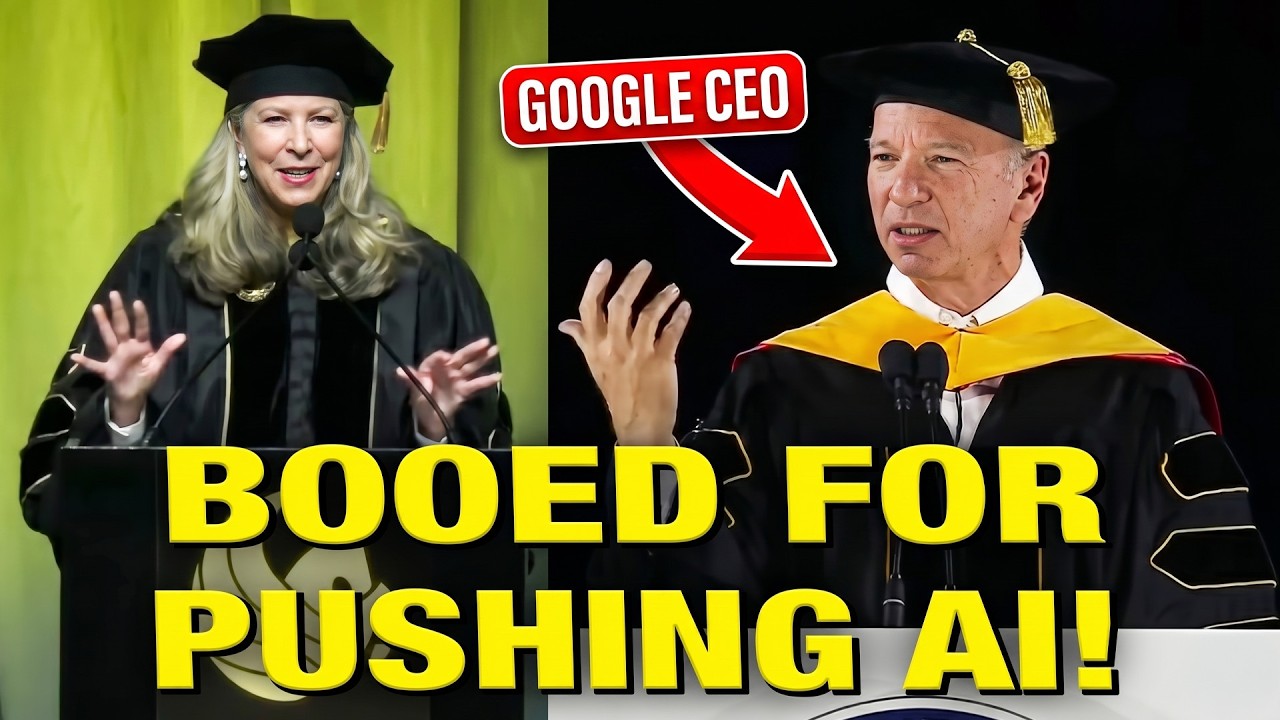
The speaker highlights the growing influence of tech giants like Google, portraying them as extensions of the deep state that prioritize surveillance and control over public welfare. The former CEO of Google, Eric Schmidt, is singled out as emblematic of this elite group, and his recent experience being booed offstage at a college graduation ceremony is used to illustrate the widespread resentment among young people. These graduates, burdened by massive student debt and bleak job prospects, see AI not as a tool for progress but as a threat that will replace their jobs and deepen economic inequality. The speaker sarcastically suggests that instead of attending college, young people should pursue trades like carpentry or plumbing, which are less likely to be automated.
The transcript also includes excerpts from the commencement speeches themselves, where speakers attempted to promote AI as the next industrial revolution and a source of opportunity. However, their messages were met with hostility and skepticism from the audience, who are acutely aware of the economic hardships they face. The disconnect between the speakers’ optimistic rhetoric and the graduates’ lived realities underscores a broader societal tension about the role of technology and who truly benefits from it. The speakers’ failure to acknowledge these concerns only fueled the crowd’s frustration.
Throughout the commentary, there is a recurring theme of distrust toward the political and corporate elite, who are seen as complicit in perpetuating a system that exploits ordinary people. The speaker criticizes the high taxes and poor public services in places like California, despite Democratic leadership, and condemns the inability of individuals to escape crushing debts through bankruptcy. This systemic critique extends to the broader cultural narrative that encourages blind acceptance of technological change without addressing its social consequences. The speaker’s tone is both cynical and defiant, urging listeners to recognize their disenfranchisement and resist the forces that seek to control them.
In conclusion, the video transcript paints a bleak picture of the future for many young Americans, caught between the promises of technological advancement and the harsh realities of economic precarity. It calls into question the value of traditional education in a rapidly changing job market and critiques the corporate and political powers that shape society. The booing of AI proponents at graduation ceremonies symbolizes a broader rejection of a future that seems to prioritize profit and control over human dignity and opportunity. Ultimately, the transcript serves as a rallying cry for awareness, resistance, and a reevaluation of what progress truly means in the age of artificial intelligence.