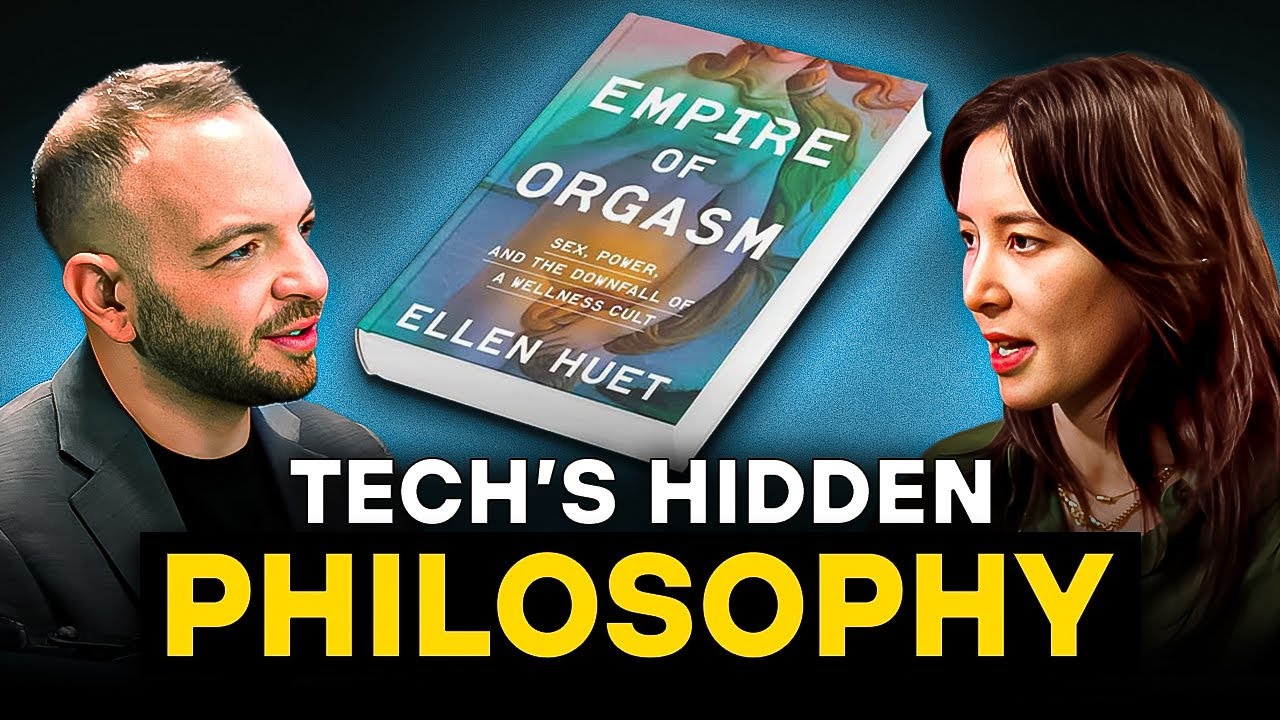
In this episode of the Big Technology Podcast, host Alan and guest Ellen Huet, a features writer at Bloomberg News and author of “Empire of Orgasm: Sex, Power, and the Downfall of a Wellness Cult,” explore the paradox of Silicon Valley as both a hub of innovative, independent thinking and a place prone to groupthink. They discuss how communal living arrangements, or group houses, are central to Silicon Valley’s culture, fostering deep connections and shared ideologies among founders and AI researchers. These houses often serve as incubators for startups and are closely tied to belief systems like effective altruism, which motivate people to start companies with a mission-driven purpose.
Ellen shares her personal experience with communal living in San Francisco and explains how these group houses are more than just living spaces—they are ideological hubs where people bond over shared beliefs and ambitions. Many residents participate in personal development programs such as Landmark or the Hoffman Process, which emphasize agency and radical responsibility. This culture of high agency encourages individuals to take control of their lives and careers, fueling Silicon Valley’s drive for innovation but also sometimes leading to blind spots or vulnerabilities.
The conversation then shifts to Ellen’s book about One Taste, a San Francisco-based company that popularized orgasmic meditation—a practice involving a prescribed form of genital touch intended to promote mindfulness and intimacy. One Taste grew rapidly in the wellness boom of the 2010s, attracting endorsements from celebrities and expanding globally. However, the company later faced serious allegations of cult-like behavior, including financial and sexual exploitation of members, leading to federal charges and convictions of its leaders. Ellen explains how the ideology of radical agency was manipulated within One Taste to pressure members into harmful situations, illustrating how Silicon Valley’s culture of belief and agency can sometimes be exploited.
Drawing parallels between One Taste and the AI community, Ellen discusses how Silicon Valley’s pursuit of artificial general intelligence (AGI) shares similar dynamics of belief, mission, and groupthink. She highlights how some AI safety advocates adopt a doomsday mindset, creating an insular culture with a strong sense of purpose and special knowledge, akin to cult-like devotion. On the other hand, true believers in AGI’s transformative potential also experience a sense of awe and mission that drives massive investment and effort, despite uncertainties. This duality reflects the broader tension in Silicon Valley between visionary ambition and the risks of ideological echo chambers.
Finally, the podcast touches on the evolution of OpenAI, which began as a nonprofit with a strong ideological mission but has since transformed into a major tech company influenced by market forces. Ellen notes that while ideology initially motivates innovation, it can shift as companies grow and face practical challenges. The discussion concludes with reflections on the power of narrative and belief in Silicon Valley, exemplified by stories like Juicero’s overhyped juicer, showing how compelling stories can both inspire success and mask fundamental flaws. Despite these complexities, the combination of valuable ideas and motivating stories continues to drive Silicon Valley’s unique culture and impact.