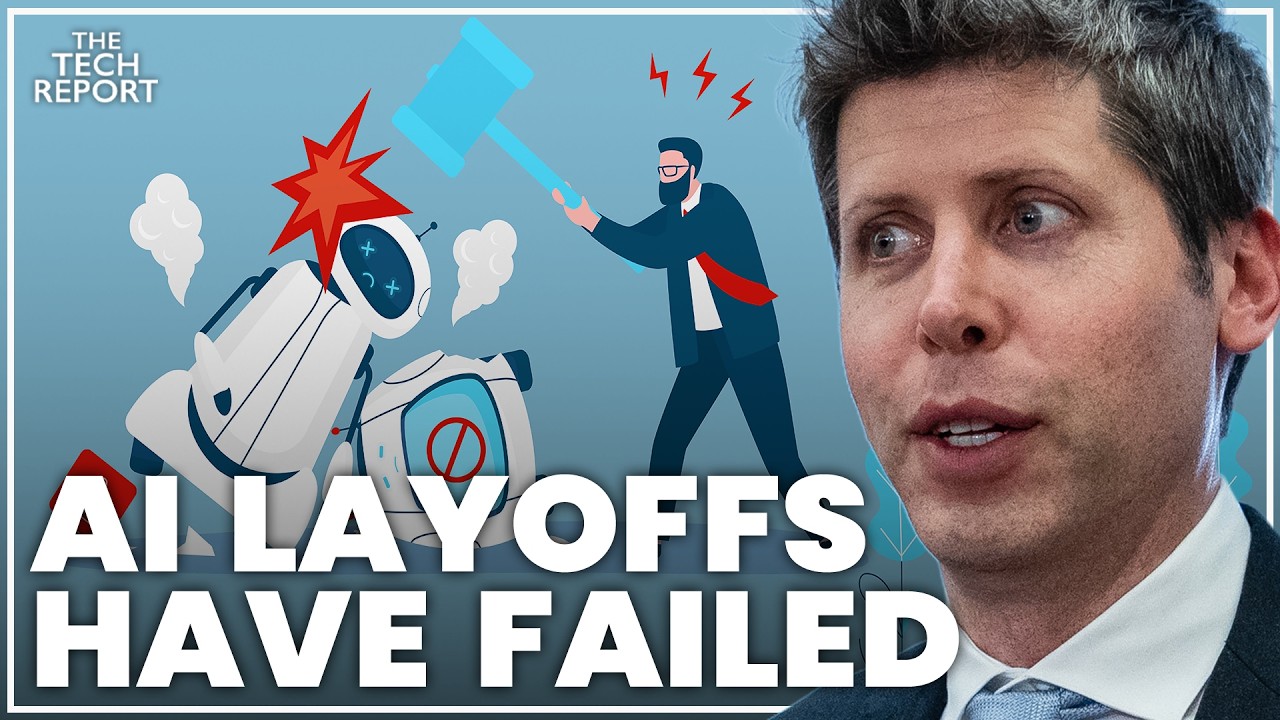
David Gerard argues that the current hype around AI replacing human workers and cutting costs is largely unfounded, as AI-generated outputs are often unreliable, leading companies to rehire skilled engineers to fix costly failures. He predicts an AI investment bubble will burst by 2027 or 2028, causing economic fallout, and advises businesses to temper expectations by focusing AI use on non-critical tasks rather than complex automation.
In the discussion between Isaac and David Gerard, the central argument is that the promises made about AI replacing human workers and drastically cutting costs have proven to be false. Companies like Ford have had to rehire hundreds of software engineers after AI-driven automation led to increased costs and operational failures. Gerard emphasizes that AI, particularly generative AI such as chatbots and code generators, is not yet capable of reliably performing complex, load-bearing tasks. Instead, AI is better suited for menial or filler work that doesn’t require deep understanding or critical thinking.
Gerard highlights that AI-generated code is often buggy, incoherent, and difficult for humans to review, leading to increased workloads rather than savings. The hype around AI has led to many businesses prematurely pushing AI mockups into production, resulting in costly failures and the need for extensive “AI cleanup” efforts. This cleanup involves rehiring skilled engineers to fix the problems caused by AI implementations, a trend that is becoming more common as companies realize the limitations of current AI technologies.
The conversation also touches on the economic implications of the AI hype. Gerard predicts that the AI bubble, heavily fueled by venture capital and corporate subsidies, will burst around 2027 or 2028 when funding dries up and the true costs of AI become apparent. This bubble is compared to other speculative bubbles, with AI investment often detached from practical realities. The fallout from this bubble could have significant economic consequences, potentially exacerbating existing recessionary pressures rather than alleviating them.
Moreover, the impact on the workforce and employer-employee relationships has been damaging. The initial promise that AI would replace human workers created insecurity and mistrust, especially as companies have had to reverse course and rehire staff. This cycle undermines confidence and morale among employees, who face the frustration of managing unreliable AI outputs and increased verification workloads. Gerard notes that businesses generally dislike training new employees, which could lead to skill gaps and challenges in maintaining a competent workforce.
Ultimately, Gerard argues that AI currently offers little real value beyond marketing hype and the illusion of innovation. While AI demos like chatbots are impressive, their practical application in business remains limited and often counterproductive. The best use cases for AI are in non-critical tasks, and companies would benefit from scaling back unrealistic expectations and focusing on producing higher-quality products and services. The discussion concludes with a caution against falling for seductive but misleading promises of AI-driven automation and cost savings.