In this video, the host shares his experience interviewing Sundar Pichai, CEO of Alphabet, at Google I/O. He describes the nervousness and extensive preparation leading up to the interview, highlighting Sundar’s approachable and thoughtful nature. The interview took place in front of 400 people, and despite some on-stage mishaps like nearly knocking over a water bottle, the host felt the event went well. He also reflects on the behind-the-scenes moments, including Sundar’s friendly demeanor before and after the interview, and the support from his own team in preparing for the event.
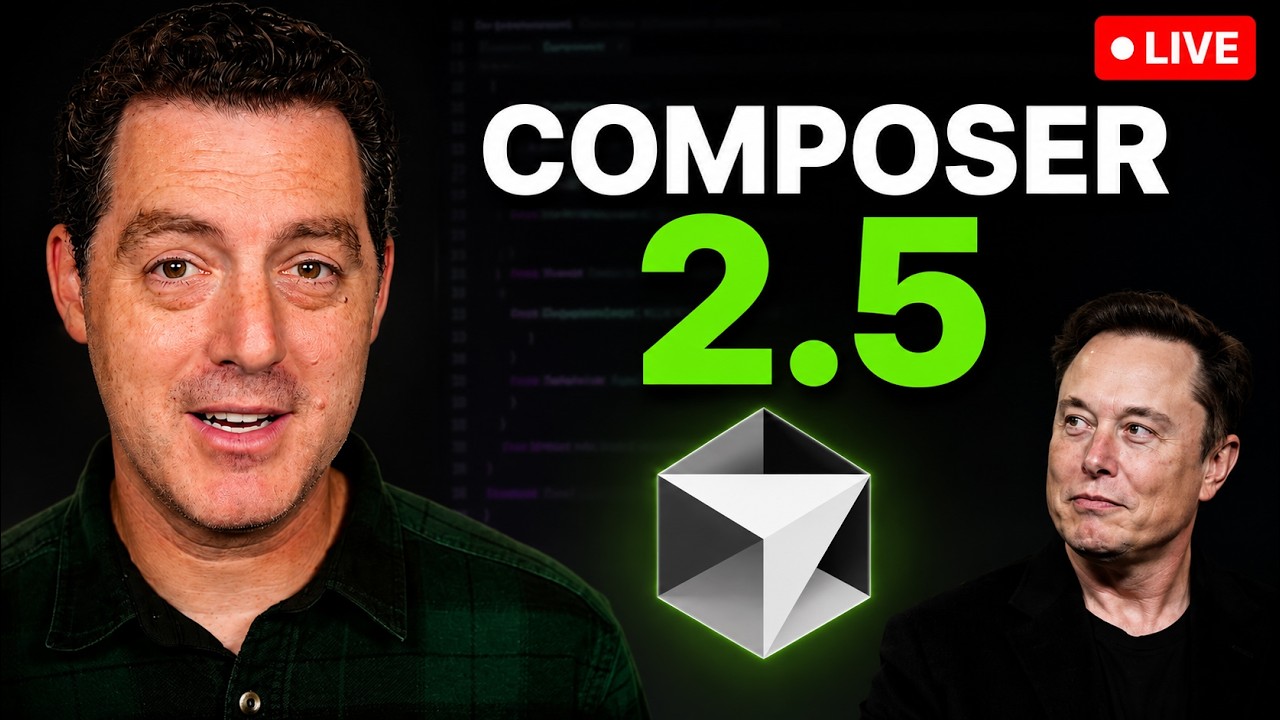
The main focus of the discussion shifts to the release of Composer 2.5, a new coding AI model by Cursor, which the host argues is the best coding model available today in terms of price-to-performance ratio. Composer 2.5 is praised for being nearly as capable as the most advanced models like Opus 4.7 and GPT 5.5 but at a fraction of the cost, making it highly accessible for most users and companies. The model is built on the open-source Kimi K2.5 base and benefits from extensive reinforcement learning and synthetic data, improving its coding abilities significantly.
The host delves into the strategic acquisition of Cursor by SpaceX AI, led by Elon Musk, explaining how this move combines Cursor’s coding expertise and data with SpaceX’s massive compute resources. This acquisition is positioned as a clever workaround to avoid delaying SpaceX AI’s IPO while securing a strong foothold in the AI coding space. Interestingly, SpaceX AI is also providing compute power to Anthropic, a competitor, highlighting the complex and interconnected nature of the AI industry’s compute supply and demand.
The conversation also touches on the challenges and current limitations of personal AI agents. Drawing from his own extensive experience with OpenClaw, an AI agent framework, the host expresses skepticism about the readiness of personal AI assistants for mainstream use. He points out issues such as brittleness, maintenance overhead, and user trust, especially for non-technical users. Despite this, he remains cautiously optimistic about future developments, mentioning companies like Hark that are raising significant funding to tackle these challenges.
Finally, the host answers audience questions about the interview and shares candid reflections on the experience, including his nervousness, the makeup session, and the importance of respect over likability in interviews. He emphasizes Sundar Pichai’s genuine engagement and the value of the conversation, particularly around topics like the use of Chinese AI models by U.S. enterprises. The video ends with a lighthearted recount of the water bottle incident on stage and a call to viewers to check out related content and continue following the channel.