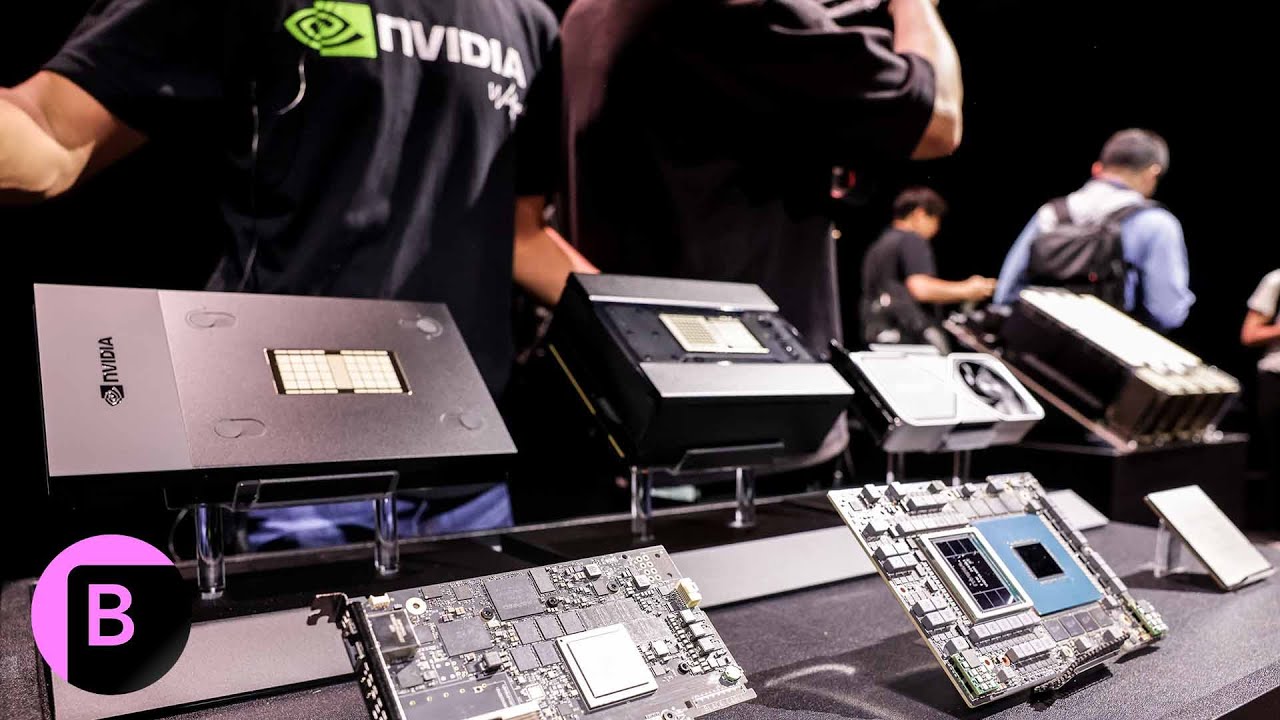
In the discussion about the rivalry between Google and Nvidia in the chip market, the focus is on the differences between CPUs and GPUs, and the rising importance of Tensor Processing Units (TPUs). TPUs are specialized chips designed specifically for AI tasks such as deep learning, training, and inference. They offer advantages over GPUs in terms of power efficiency and lower total costs. Google has been developing TPUs for several years, making them highly efficient and integrated within their cloud infrastructure, which provides a competitive edge in AI computing.
Google’s approach is notable for its vertical integration, often described as a “chip to app” stack, which allows for massive efficiencies of scale. This full-stack capability contrasts with companies that rely on components from multiple suppliers. Despite earlier perceptions that Alphabet was lagging behind in AI chip development, Google has made significant strides, positioning itself as a major player in the AI hardware space. This vertical integration also supports diversification in the supply chain, reducing reliance on Nvidia and offering alternatives for AI training and inference workloads.
The market demand for AI chips is enormous, with projections estimating a $7 trillion market cap by 2030. This growth means that the competition between Nvidia, Google, AMD, and others is not zero-sum; there is room for multiple players to thrive. Companies and hyperscalers that do not directly compete with Google are likely to explore Google’s TPU offerings as part of their diversification strategies. Additionally, sectors such as pharmaceuticals, energy, and government are increasingly adopting AI chips to support their AI initiatives, emphasizing the need for reliable and diverse chip sources.
Regarding AI models, Google’s Gemini 3 large language model is gaining traction and is competitive with other leading models like OpenAI’s ChatGPT, Anthropic’s Claude, and Perplexity. Gemini’s integration with Google’s full stack gives it an advantage in various use cases, especially in general-purpose AI and software development. Meanwhile, open-source and regional models, particularly from China, continue to hold significant positions in the AI landscape, catering to specialized needs and smaller-scale applications.
Finally, the discussion touches on the broader chip manufacturing ecosystem, including suppliers like Samsung and SK Hynix, and the role of TSMC in producing advanced chips. While Nvidia remains dominant, especially with innovations like high-bandwidth memory, the market is evolving with increasing demand for speed and compute power. Despite recent stock price volatility for Nvidia, driven by market concerns and scrutiny, the long-term outlook remains strong, with expectations of substantial growth fueled by sovereign AI initiatives and physical AI infrastructure development projected to drive the market through 2026 and beyond.