The video begins with the streamer attempting to solve a LeetCode problem involving implementing an iterator for an in-order traversal of a binary search tree. Initially, there are technical difficulties with the stream visibility, leading to some embarrassment as the streamer realizes viewers couldn’t see the coding process. Despite this, the problem is solved using a stack-based depth-first search approach, pushing the leftmost elements onto the stack and then iterating through the tree while managing the current node’s value. The streamer reflects that this problem was relatively straightforward, likely an easy-medium level, and not commonly asked in interviews.
Next, the streamer briefly considers another problem involving coefficients but decides to skip it due to its complexity and personal unfamiliarity with the topic, especially while trying to regain proficiency in C++. Instead, the focus shifts to a more approachable problem: finding the maximum number of consecutive ones in a binary array when allowed to flip at most k zeros. The streamer sets the tone with some light-hearted distractions and motivational energy, emphasizing the importance of understanding the problem prompt thoroughly before coding.
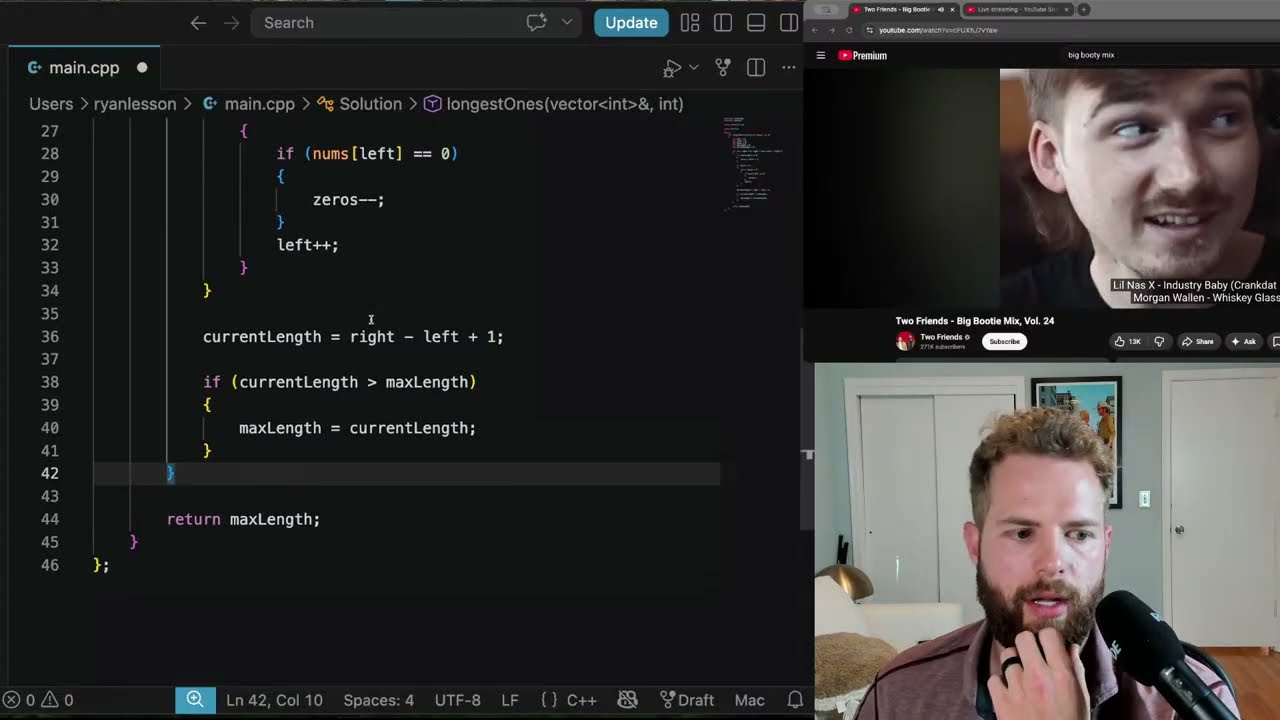
The core of the video is dedicated to solving the “max consecutive ones” problem using a sliding window technique. The streamer explains the approach in detail, maintaining two pointers (left and right) to represent the current window and tracking the number of zeros flipped within that window. When the count of zeros exceeds k, the left pointer moves forward to shrink the window, ensuring the condition is met. The maximum window size encountered during this process is recorded and returned as the result. The explanation includes code snippets and a step-by-step walkthrough of the logic, highlighting the efficiency of the O(n) solution.
Throughout the stream, the streamer shares personal anecdotes about working at Walmart, discussing job stability, relocation challenges, and the tech environment there. These reflections provide context and a human element to the coding session, showing the streamer’s background and experiences beyond programming. The streamer also comments on the nature of front-end development, expressing some frustration with large, complex pull requests and the overuse of JavaScript, which contrasts with the enjoyment found in working with C++ and algorithmic problems.
The video concludes with the streamer acknowledging the imperfections of the stream, such as camera issues and distractions, but expressing enthusiasm for continuing to code and share these sessions. There is a mention of future plans to tackle harder problems and possibly discuss broader tech topics like AI and visa issues. Overall, the stream is portrayed as a fun, educational experience focused on improving C++ skills through practical problem-solving on LeetCode, with a candid and relatable presentation style.