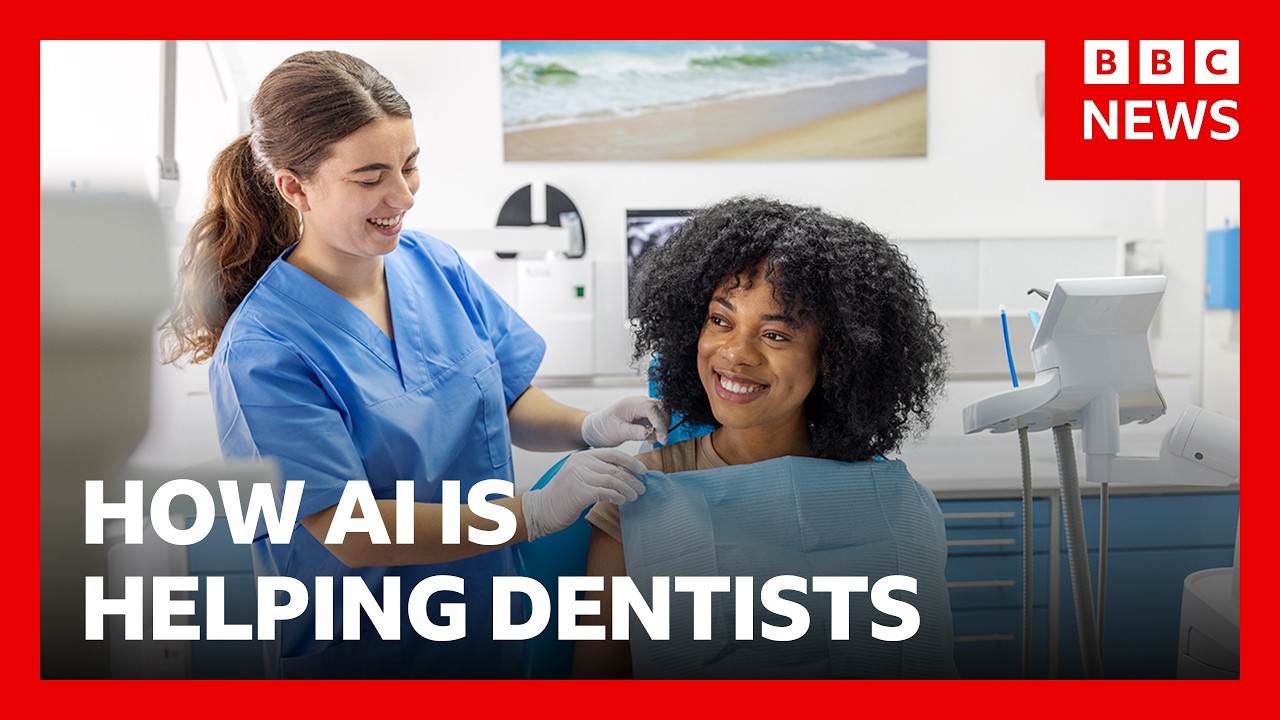
The video highlights how AI is revolutionizing dentistry by enhancing diagnostic accuracy, streamlining administrative tasks, and improving patient care through advanced imaging and digital modeling technologies. While AI supports dental professionals by increasing efficiency and precision, experts emphasize that it serves as a complementary tool rather than a replacement for human expertise.
The video explores the growing role of artificial intelligence (AI) in dentistry, highlighting its potential to improve patient experiences and clinical efficiency. At a major dentistry event in Birmingham, AI is a prominent topic alongside other technologies like 3D printing and digital scanners. The event showcases innovations designed to enhance various dental roles, from nurses to technicians, emphasizing how AI can streamline workflows and improve patient care.
One key application of AI discussed is the creation of detailed digital models of patients’ heads by combining data from X-rays, facial scans, and intraoral scanners. This integration allows dentists to virtually examine soft tissues and bone structures, aiding in diagnosis and treatment planning. Such advanced imaging technology represents a significant leap forward in dental care, offering a more comprehensive understanding of patients’ oral health.
AI is also being used to improve patient engagement and administrative tasks. For example, AI-powered receptionists can interact with patients online, helping them identify their dental needs and book appointments more efficiently. This technology aims to reduce the burden on front desk staff, allowing them to focus on providing a more personal and human connection with patients, while AI handles routine inquiries and scheduling.
Another innovation highlighted is a highly advanced scanner capable of capturing up to half a billion data points with extreme precision. This scanner uses AI to remove obstructions like fingers during scanning, ensuring cleaner and more accurate digital models. The level of detail achieved is crucial for detecting tiny issues such as bacteria causing tooth decay, demonstrating how AI enhances diagnostic capabilities in dentistry.
Despite the enthusiasm for AI, experts caution that it is not infallible and should be viewed as a tool to support, not replace, qualified dental professionals. While AI can improve efficiency and assist in designing dental treatments, final decisions and approvals remain the responsibility of dentists and patients. Overall, AI is poised to transform dental clinics by making processes more efficient and improving patient outcomes, though its full potential is still unfolding.