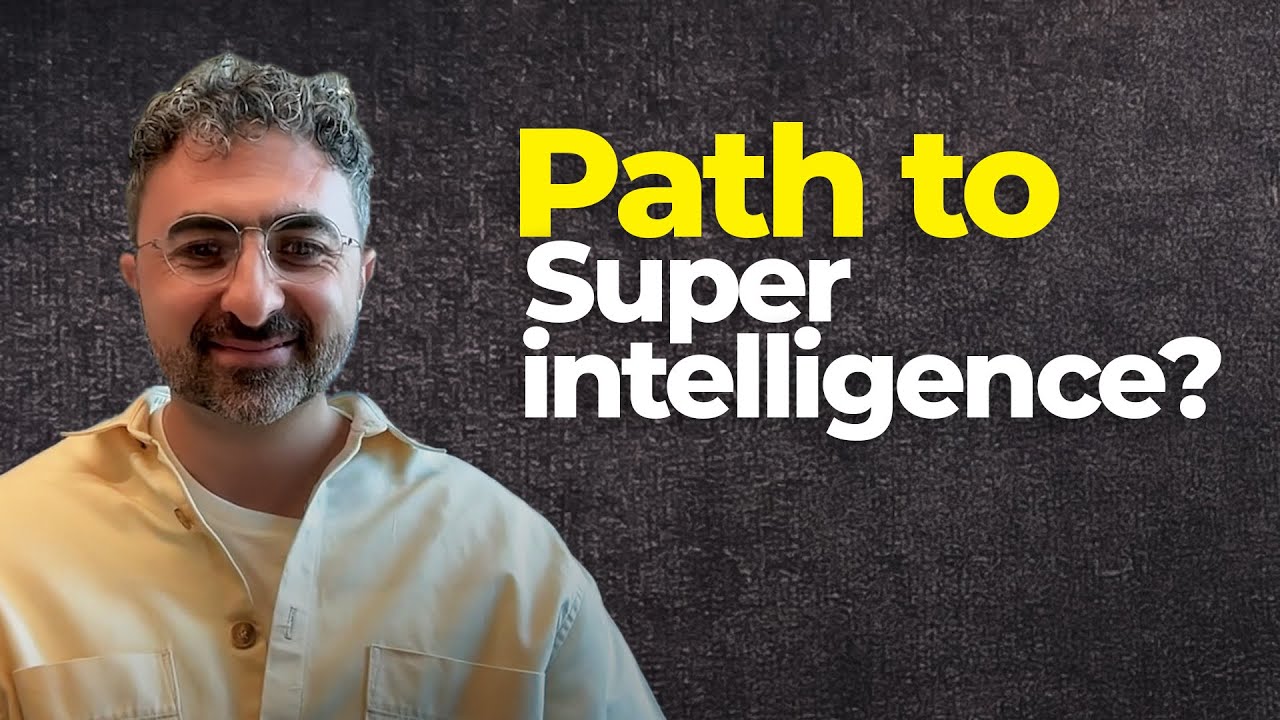
In this insightful conversation with Mustafa Suleyman, CEO of Microsoft AI and head of the company’s new super intelligence team, the discussion centers on Microsoft’s ambitious push towards what he terms “humanist super intelligence.” Suleyman clarifies that super intelligence and AGI (Artificial General Intelligence) are goals rather than specific methods, aiming to achieve superhuman performance across various human tasks such as medical diagnosis, legal advice, financial guidance, emotional support, and software engineering. He emphasizes that the development of these technologies must always serve humanity, improving civilization while keeping humans in control, countering the notion that AI will inevitably surpass and replace human capabilities.
Suleyman explains that super intelligence may not manifest as a single, broad intelligence but rather as domain-specific models optimized for particular verticals. For example, a model designed for medical super intelligence would excel in healthcare but not necessarily in software engineering or physics. This verticalization approach helps maintain control and alignment with human interests, reducing risks associated with overly general AI systems. However, he also notes that true super intelligence requires generalist reasoning capabilities and the ability to transfer knowledge across domains, which presents significant challenges in containment and alignment.
Addressing concerns about the limitations of current large language models (LLMs), Suleyman remains optimistic about their potential. He acknowledges power and data constraints but argues that these are not fundamental barriers. Instead, he highlights ongoing innovations such as fine-tuning, multimodal models, reasoning enhancements, and improvements in memory and task horizon length that will drive rapid progress. He believes that the transformer architecture underlying LLMs continues to be a robust foundation, with new methods and breakthroughs expected to sustain momentum toward super intelligence.
The conversation also delves into the practical and strategic aspects of Microsoft’s AI efforts, particularly in light of its partnership with OpenAI. Suleyman reveals that recent changes in their agreement now allow Microsoft to pursue building super intelligence independently, removing previous limitations based on computational thresholds. This shift reflects Microsoft’s commitment to AI self-sufficiency, given its scale and the critical role AI plays across its vast ecosystem. Suleyman underscores the importance of building proprietary models to maintain control and leadership in the evolving AI landscape, despite the availability of open-source alternatives and APIs from other providers.
Finally, Suleyman discusses the broader societal implications of AI, including the emergence of personalized AI companions with distinct personalities and the potential impact on human relationships and expectations. He acknowledges that AI will raise the bar for human interaction by providing immediate, high-quality information and emotional support, which may alter what it means to be human. Despite these challenges, he remains optimistic about the role of science and technology in advancing human civilization, citing historical progress in health and communication. Suleyman envisions AI as a tool for abundant intelligence that enhances productivity and creativity, ultimately contributing to a prosperous future for humanity and the environment.