In this video, the creator addresses common misconceptions about running AI models locally, emphasizing that you do not need an expensive $50,000 computer to effectively run AI like GLM52. They explain that many users can fulfill most of their AI needs, especially for general Q&A and coding tasks, with more affordable GPUs such as the RTX 4090 or 3090. The creator shares insights from benchmarking various quantizations of GLM52, noting that 2-bit and 4-bit versions perform comparably well, making it feasible to run powerful models on modest hardware. They also discuss the importance of context length and how having a large context window can benefit multitasking and batch processing.
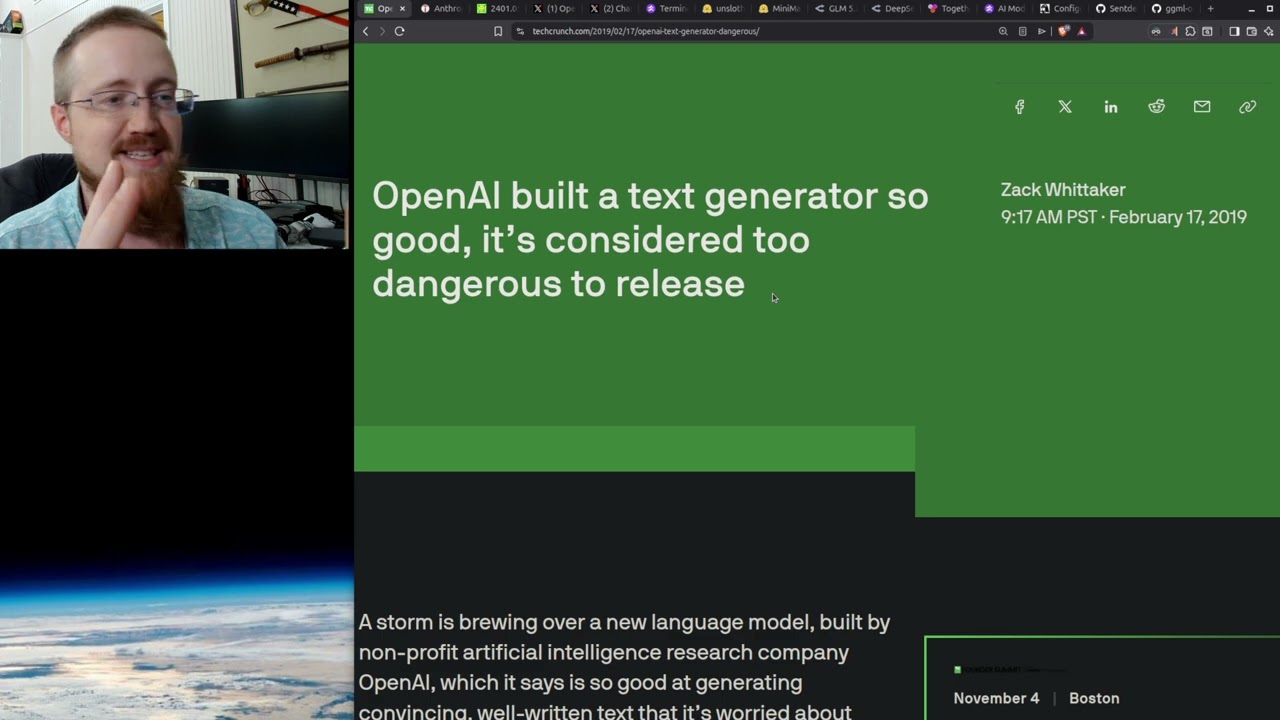
The video then shifts focus to the lobbying efforts by companies like Anthropic, which are pushing for regulations or bans on open-source AI, citing safety and security concerns. The creator critiques these claims, particularly debunking sensational stories about AI hacking government systems, clarifying that such incidents were controlled tests involving tool calls rather than autonomous hacking by AI. They highlight that many fears around AI, including misinformation and deceptive behaviors, have been recurring themes since early AI developments and often serve as fear-mongering tactics rather than grounded threats.
Further, the creator discusses the potential risks of banning open-source AI, drawing parallels to past restrictions on encryption technology. They warn that such bans could stifle innovation and impose legal consequences on developers, despite the community’s willingness to continue open-source work. The video stresses that the general public’s misunderstanding and fear of AI could influence policymakers, making it crucial for the AI community to advocate against restrictive legislation. The creator encourages viewers to stop financially supporting companies like Anthropic that lobby against open-source AI.
On the practical side, the creator reviews various AI models suitable for local deployment, such as Quen 36 35B, Miniax M3, and DeepSeek V4 Flash, highlighting their performance and resource requirements. They recommend combining local models for everyday tasks with cloud APIs for more demanding needs, offering a cost-effective and flexible approach. The video also covers different software frameworks like Hermes and Minion for managing AI agents, noting their strengths and use cases, especially for coding and general-purpose tasks. The creator shares personal experiences with these tools, emphasizing ease of setup and the benefits of running AI locally.
In conclusion, the video advocates for democratizing AI access by promoting affordable local AI setups and resisting efforts to ban open-source AI. The creator encourages viewers to experiment with local models, leverage hybrid cloud-local workflows, and remain vigilant against fear-driven policies. They express optimism about the future of AI running on accessible hardware and urge the community to support open-source initiatives rather than proprietary companies that may hinder progress. The video ends with a call to action to stop funding entities lobbying against open-source AI and a promise to provide further guides on running local AI models.