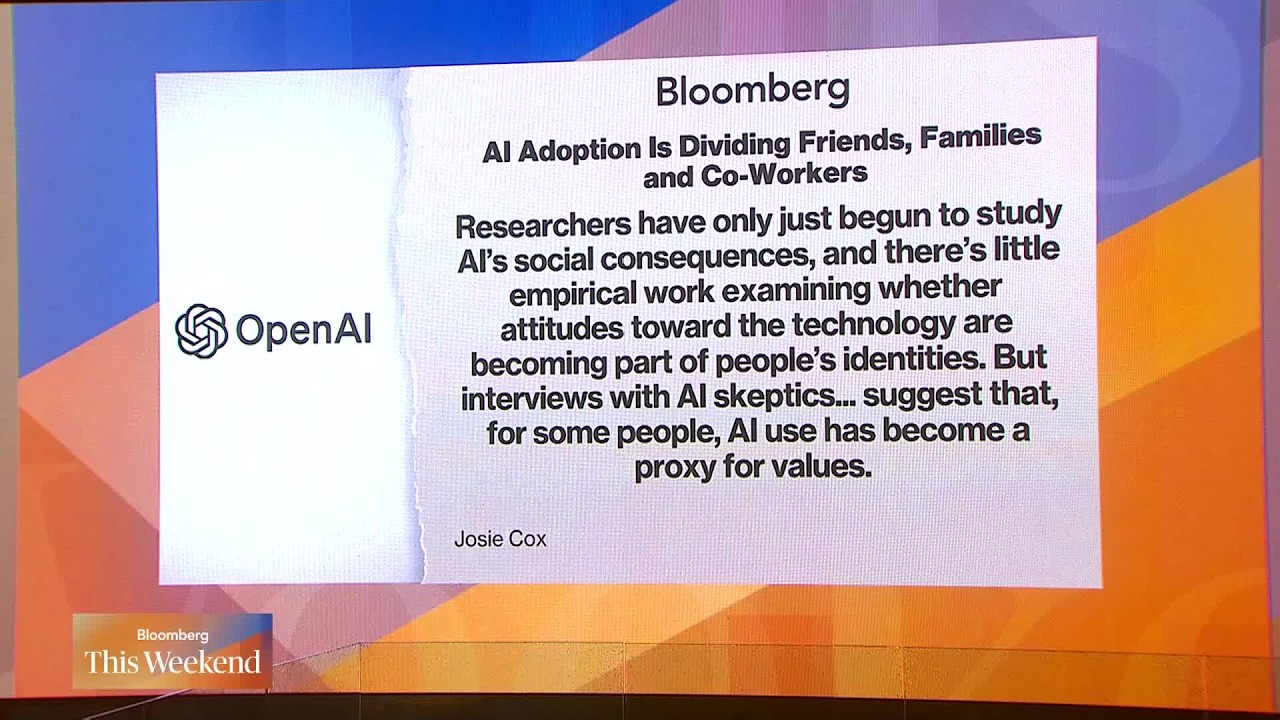
Josie Cox, author of “Women, Money, Power, The Rise and Fall of Economic Equality,” discusses the cultural divide sparked by the rapid adoption of AI in various aspects of life. She highlights how AI’s meteoric rise has permeated work, personal lives, and communication, but also exacerbated existing divides, particularly along gender lines. Early data showed men were more likely to use AI than women, though the gap has somewhat narrowed. Cox emphasizes that AI is both uniting and dividing people, with some vehemently opposing its use for reasons ranging from ethical concerns to fears about creative industries.
A key point Cox makes is that opposition to AI often takes on an almost tribal nature, creating an “us versus them” dynamic. Many people who resist AI do so because it challenges their identity or values, especially in areas involving personal communication. She notes that AI’s role in communication—such as generating messages on dating apps or crafting personal greetings—feels deeply personal and can provoke strong emotional reactions. This reliance on machines for intimate interactions raises questions about the impact on human connection and the broader state of humanity.
Cox references a survey from the dating app Hily, which found that a significant portion of younger generations—64% of Gen Z and 56% of millennials—would not date someone who relies on AI for everyday decisions. While empirical data on AI’s social impact is still limited, this survey suggests a growing backlash and desire for authentic personal connections amid increasing AI integration. Additionally, global distrust in AI has risen sharply over recent years, indicating skepticism is becoming more widespread, though regional differences exist.
Regarding generational attitudes, Cox observes that younger people, who have grown up with the internet, may exhibit more intuitive skepticism toward AI compared to some older individuals who embrace it more readily. She points out that digital literacy plays a crucial role in how different age groups perceive and adopt AI technologies. The evolving dynamics of AI acceptance and resistance among generations remain an area for further research, with institutions like Stanford conducting ongoing studies.
Finally, Cox addresses the workplace implications of AI adoption, noting that some companies are incentivizing or even mandating AI use among employees. This creates pressure on skeptics or “AI refuseniks,” who may fear job insecurity if they resist. Such mandates could lead to issues with productivity, employee engagement, and workforce stability. Cox expresses concern about the consequences of forcing AI adoption, highlighting the complex challenges organizations face as AI becomes increasingly embedded in professional environments.