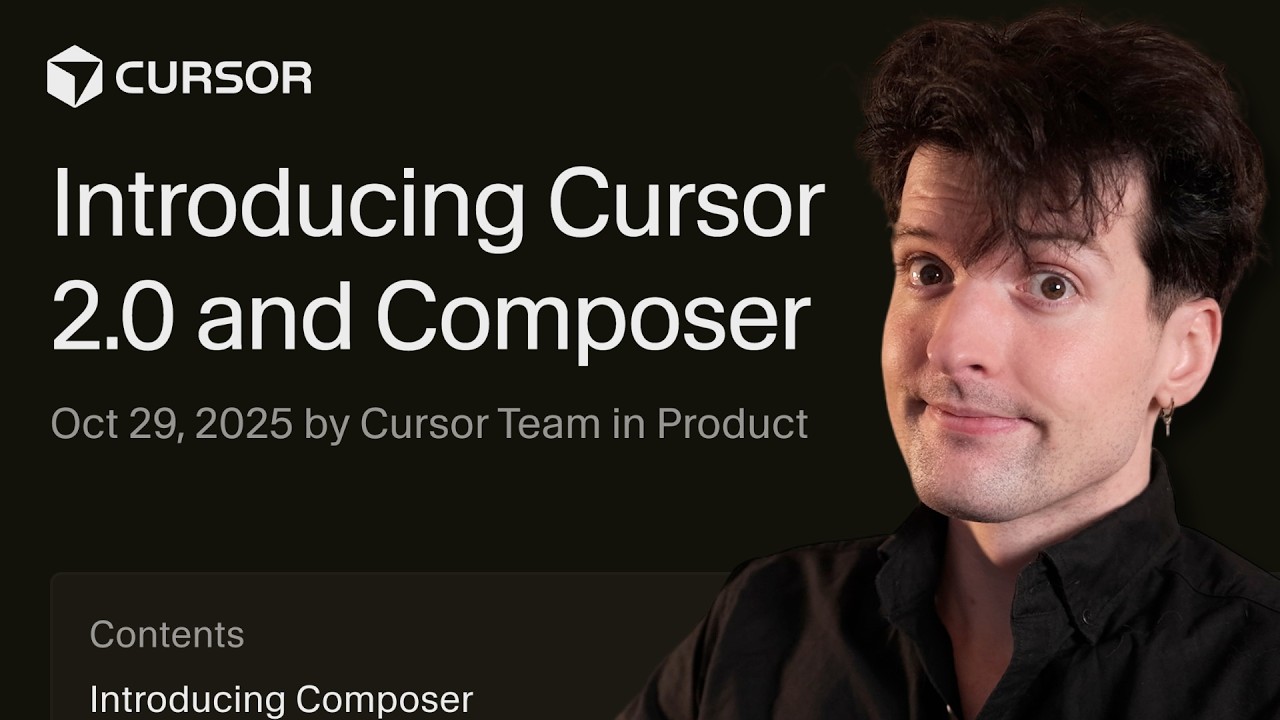
The video introduces Cursor 2.0, a major update to the Cursor coding environment that brings a completely new way to manage coding projects through an “agents mode.” Unlike the traditional editor view, agents mode allows users to run multiple coding agents in parallel, each potentially working on different tasks or models simultaneously. This new interface is designed to focus on outcomes rather than files, making it easier to manage complex projects and workflows. The presenter expresses genuine surprise and enthusiasm for the interface, praising the Cursor team’s dedication to improving the user experience.
A standout feature of Cursor 2.0 is the introduction of Composer, Cursor’s own coding model that is optimized for speed and efficiency. Composer is described as a frontier model that is four times faster than comparable models, capable of completing most tasks in under 30 seconds. This speed is achieved through reinforcement learning and training on real-world software engineering challenges, allowing Composer to handle multi-file editing and complex planning tasks effectively. The presenter demonstrates Composer’s capabilities by upgrading a codebase in real time, showing how it can manage multiple tasks and models concurrently without slowing down.
The update also includes enhanced tools for reviewing and testing code changes. Cursor 2.0 features a new review flow that allows users to see all file changes in a clean, VS Code-style interface, making it easier to approve or modify edits made by agents. Additionally, Cursor now integrates a native browser tool that lets AI agents interact with web pages directly, enabling them to test UI changes and fix layout issues autonomously. This browser integration represents a significant advancement, as it allows the AI to verify its work visually and iterate until the desired result is achieved, reducing the need for manual intervention.
Throughout the video, the presenter highlights the practical benefits of running multiple models in parallel, comparing results to select the best output and speeding up development workflows. They also discuss the use of git work trees to isolate different agent tasks, preventing interference and keeping projects organized. The presenter experiments with various models, including Composer, Haiku, and GPT5, noting differences in speed, accuracy, and UI output quality. Despite some minor bugs and user errors encountered during testing, the overall impression is that Cursor 2.0 significantly improves productivity and coding experience.
In conclusion, Cursor 2.0 is portrayed as a transformative update that redefines how developers interact with AI-assisted coding tools. Its combination of a powerful new model, multi-agent parallelism, improved review and testing workflows, and integrated browser testing sets a new standard for AI-driven development environments. The presenter, who is also an investor in Cursor, is highly impressed and encourages viewers to try the update themselves. They believe this release has the potential to change coding practices and express excitement about the future possibilities it opens up for developers.