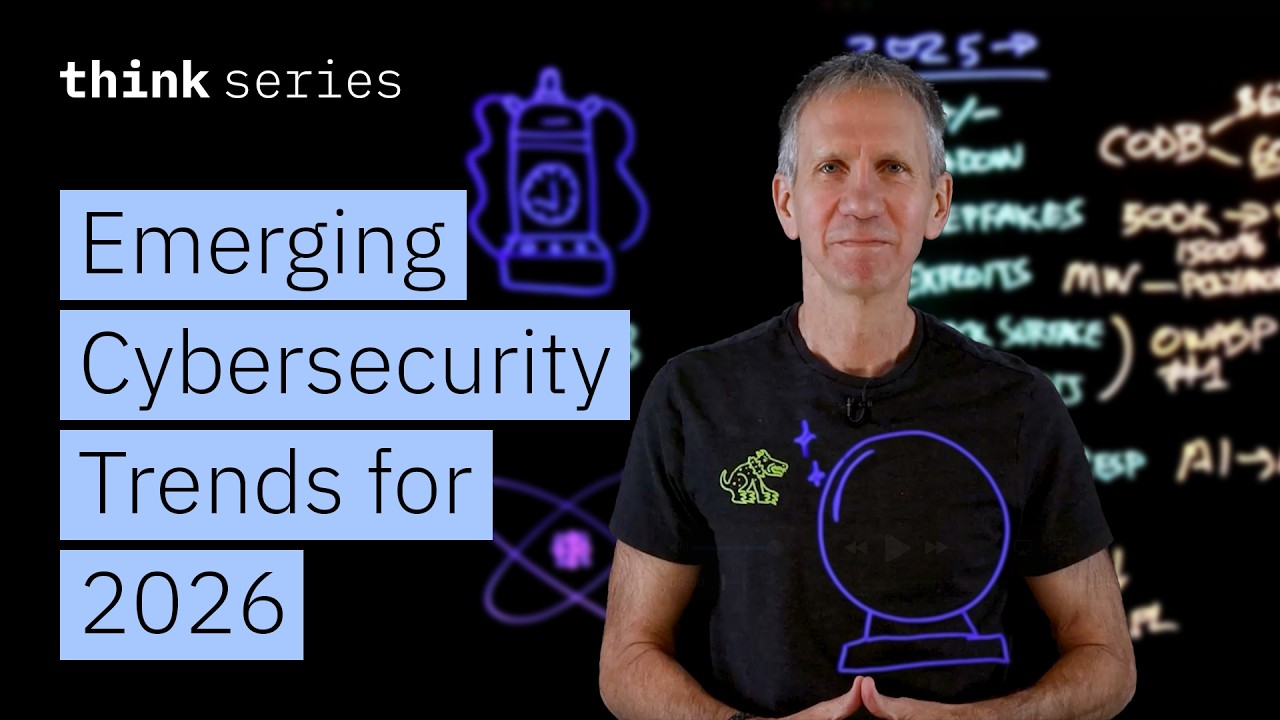
The video from the IBM Technology channel reviews recent cybersecurity trends and offers predictions for 2026 and beyond, focusing heavily on the impact of artificial intelligence (AI). The host reflects on previous predictions, noting that AI has brought both benefits and significant risks to cybersecurity. A major concern is “shadow AI,” where unauthorized AI tools are deployed within organizations, leading to increased costs during data breaches—IBM’s Cost of a Data Breach report found breaches involving shadow AI cost $670,000 more on average. Compounding this, 60% of organizations lack proper AI governance or security policies, leaving them vulnerable.
Deepfakes are highlighted as another escalating threat. The number of deepfake incidents has surged from 500,000 in 2023 to 8 million in 2025, a 1,500% increase. These AI-generated images, audio, and videos are being used not just for entertainment but also for sophisticated cyberattacks and social engineering. The host warns that deepfake detection technology is unlikely to keep pace with the rapid improvements in deepfake generation, suggesting that organizations and individuals must instead focus on training people to critically assess the intent behind suspicious content.
AI is also being used to generate more sophisticated and polymorphic malware, making it harder for defenders to detect and respond to threats. The attack surface for organizations is expanding as AI is integrated into more business processes, with vulnerabilities like prompt injection remaining a top concern according to OWASP’s rankings. On the positive side, AI is also being used defensively, with new tools emerging to detect and counter AI-driven attacks, such as prompt injection detection systems.
A significant emerging trend is the rise of autonomous AI agents. These agents, designed to automate tasks and boost productivity, also amplify risk if hijacked, as they can execute harmful actions at scale and speed. The proliferation of non-human identities (AI agents with system privileges) increases the risk surface, especially if not properly managed. Attackers are also leveraging agents to automate phishing, malware creation, ransomware, and the entire cyberattack kill chain, lowering the skill barrier for cybercriminals while increasing the effectiveness and scale of attacks.
Beyond AI, the video discusses the looming threat of quantum computing, which could eventually break current cryptographic systems. While awareness of quantum-safe cryptography is growing, actual deployment remains limited, and the host urges organizations to act before “Q-Day” arrives. The adoption of passkeys as a more secure, phishing-resistant alternative to passwords is also highlighted, with major companies and IBM itself moving toward this technology. The host concludes by encouraging viewers to share their own predictions, emphasizing that while the future is uncertain, proactive steps can help mitigate emerging cybersecurity risks.