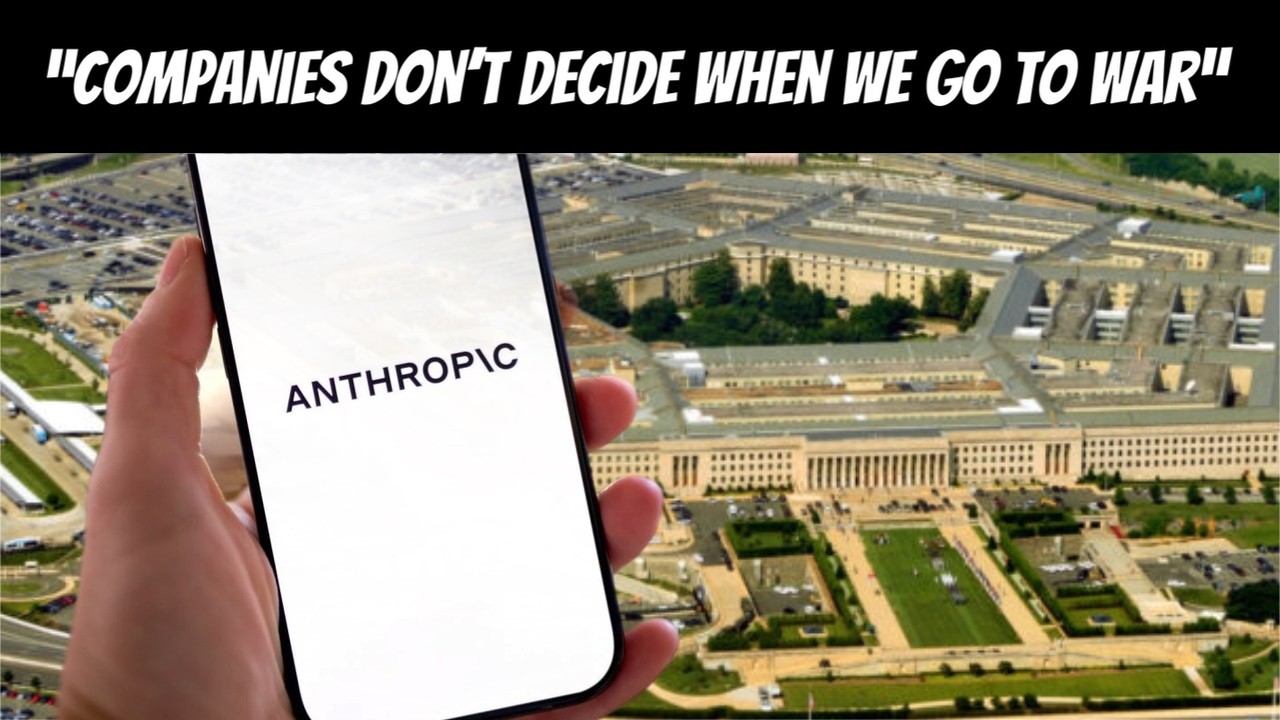
The video discusses a major dispute between the Pentagon and the AI company Anthropic regarding the use of Anthropic’s AI tools for military purposes. The core of the conflict centers on whether Anthropic, as a technology provider, has the right to restrict how the Pentagon uses its AI systems, particularly for certain missions. Anthropic has decided not to comply with the Pentagon’s latest request to remove usage restrictions, specifically objecting to applications involving mass domestic surveillance and fully autonomous weapons. The Pentagon, on the other hand, insists that only it should determine the legal and ethical boundaries of military AI use, not private companies.
The conversation highlights statements from key figures, including Anthropic CEO Dario Amodei, who emphasizes the company’s commitment to ethical AI deployment and its refusal to support certain military applications. In response, Pentagon officials have accused Anthropic of overstepping its role and attempting to impose its own “constitution” or set of values over those of the U.S. government. The debate is further complicated by the fact that Anthropic’s AI models are already integrated into various Pentagon workflows, and removing them would be disruptive but not impossible at this stage.
The discussion also explores the broader context of AI in military operations, noting that advanced algorithms and forms of AI have been used in the Pentagon for decades. The latest generation of AI, known as generative AI, is more powerful and capable of interacting in natural language, which makes it feel fundamentally different from previous technologies. The panelists point out that while the technology is advancing rapidly, the legal and ethical frameworks governing its use are still catching up, leading to these kinds of high-stakes disputes.
Financial considerations play a significant role in Anthropic’s decision-making. The company, like its competitors, requires massive investment to develop state-of-the-art AI models, and its stance against certain military uses is partly aimed at appealing to investors and top AI talent, many of whom are concerned about the ethical implications of AI in warfare. The video suggests that Anthropic’s refusal to remove guardrails is as much a strategic business move as it is an ethical one, positioning the company favorably with its core stakeholders even at the cost of losing Pentagon contracts.
Finally, the conversation touches on the future of AI in military and logistics contexts. The integration of generative AI is expected to expand across all aspects of military operations, from planning and intelligence to logistics and maintenance. The speakers argue that while AI can help prevent tragic mistakes and improve efficiency, ultimate authority over its use should rest with democratically accountable institutions, not private CEOs. The episode concludes by emphasizing the importance of societal debate and legal clarity as AI becomes increasingly embedded in national defense.