The video discusses the rising prominence of Chinese AI models like DeepSeek, Kimi K3, and Qwen 3.8, exploring whether these models are closing the gap with leading American AI systems. The speaker emphasizes that “Chinese models” is an oversimplified term, as these models vary widely in cost, deployment options, openness, and capabilities. The video aims to provide practical guidance on how individuals and companies should evaluate and integrate Chinese AI models based on specific tasks, deployment needs, and cost considerations.
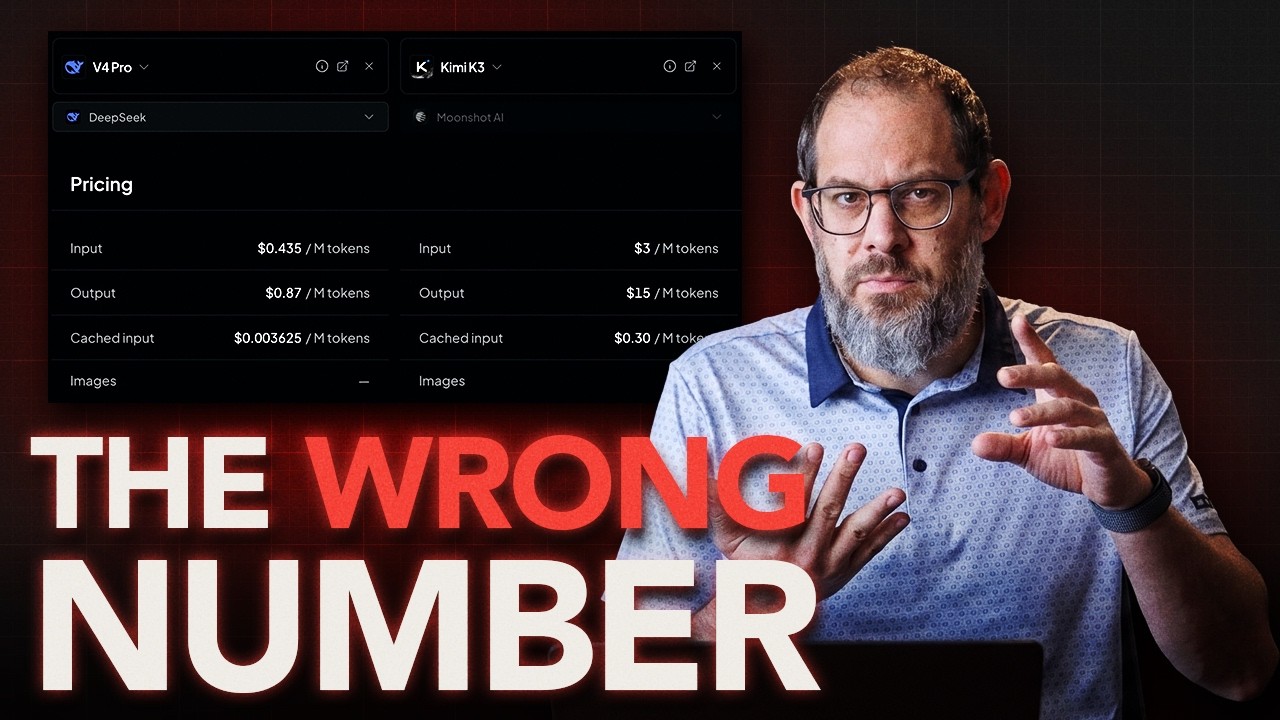
DeepSeek stands out for its extremely low API cost—charging just 87 cents per million output tokens compared to Kimi K3’s $15—making it attractive for high-volume, price-sensitive applications like document processing, code generation, and research pipelines. However, caution is advised when using cheaper models for tasks where ambiguous or unrecoverable errors could have serious consequences. Smaller Chinese models like Qwen variants and distilled versions of DeepSeek are better suited for local, private, or offline use cases where control and privacy are prioritized over raw capability.
The video highlights that Chinese models differ significantly in architecture, licensing, and deployment strategies. For example, DeepSeek uses a mixture of experts approach to optimize inference costs, while models like GLM 5.2 excel in specific tasks such as long-horizon coding but are not universal replacements. The speaker stresses the importance of testing models rigorously against real-world tasks rather than relying solely on benchmarks or token prices, as cost per accepted result is a more meaningful metric. Additionally, data governance and deployment location critically affect risk profiles and compliance.
A significant portion of the discussion centers on the controversial practice of distillation, where smaller “student” models are trained on outputs from larger “teacher” models. Allegations have been made that some Chinese labs used unauthorized or fraudulent means to generate training data from American models, raising legal and ethical questions. This dynamic underscores the complexity of capability transfer in AI and the need for companies to maintain control over their evaluation processes and maintain flexibility to switch providers if necessary.
Finally, the video outlines three deployment options—first-party API, third-party hosting, and self-hosting—each with trade-offs in control, cost, and complexity. Self-hosting requires significant infrastructure and expertise but offers maximum control, while APIs are easier but come with vendor risks. The speaker advises a careful, task-driven approach to selecting Chinese models, emphasizing thorough testing, understanding hardware and licensing requirements, and clarifying data paths and legal jurisdictions. Overall, the recommendation is to use Chinese models selectively and strategically, integrating them as specialists or challengers rather than assuming they are direct substitutes for American frontier models.