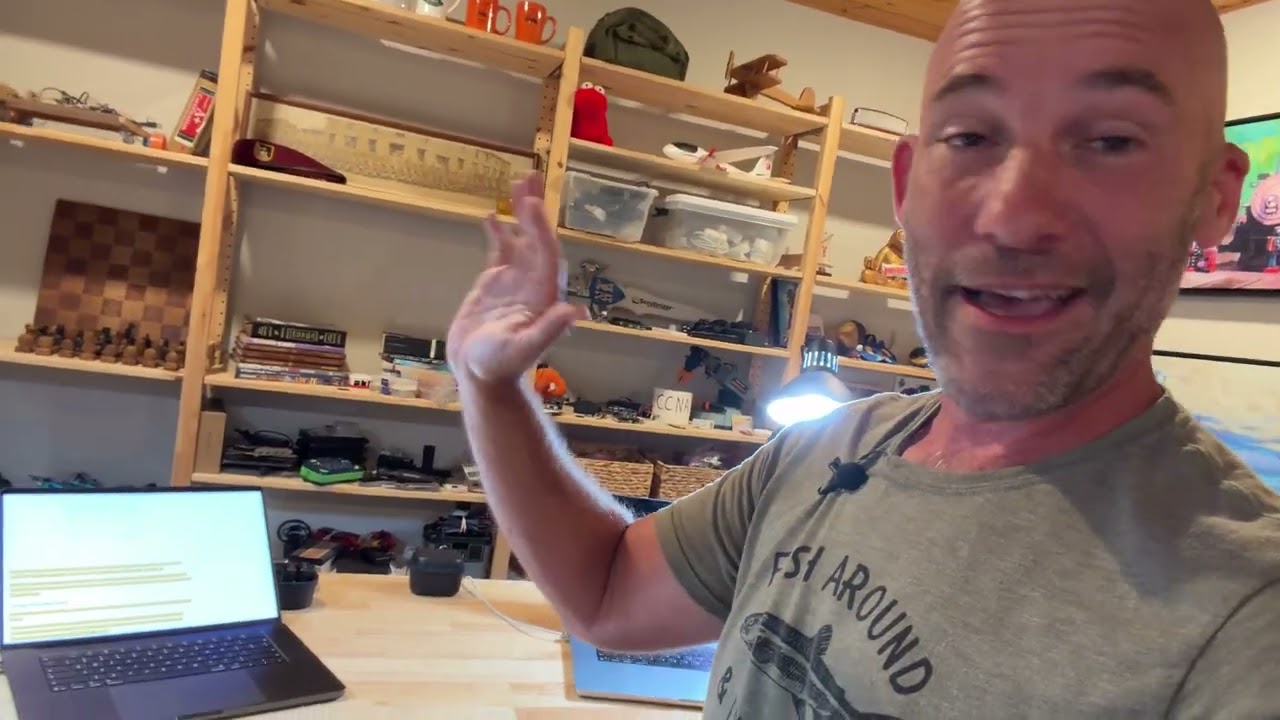
The video highlights China’s steady progress in AI development, exemplified by the release of DeepSeek V4 running on Huawei’s Ascend 950 chips, marking a significant move toward technological self-sufficiency independent of U.S. hardware like Nvidia GPUs. Meanwhile, the U.S. is portrayed as being distracted by political debates and ineffective strategies, allowing China to quietly advance its AI capabilities and reshape the global AI landscape.
The video discusses China’s steady progress in artificial intelligence (AI) development despite criticism and restrictions from the United States. The speaker uses a personal analogy of ignoring futile arguments to illustrate how China continues advancing its AI capabilities without engaging in the political and ideological battles led by the U.S. The core message is that while the U.S. focuses on debating and restricting China’s AI ambitions, China quietly pushes forward, making tangible technological gains.
A significant highlight is the release of DeepSeek V4, a Chinese AI model now adapted to run on Huawei’s Ascend 950 chips. This marks a crucial step toward China’s goal of building a self-sufficient AI ecosystem independent of U.S. technology, particularly Nvidia’s GPUs. DeepSeek V4 is designed to handle complex multi-step tasks with less human input and comes in two versions: a high-performance Pro model and a lighter, more affordable Flash version. Although it may slightly trail behind the latest OpenAI models in some areas, the difference is minimal and arguably insignificant in practical terms.
The adaptation of DeepSeek V4 to Huawei’s Ascend chips signals a shift in China’s AI infrastructure, reducing reliance on foreign hardware. Huawei’s chips now fully support DeepSeek V4, and the collaboration between DeepSeek and Huawei aims to lower barriers for Chinese developers to build AI applications using domestic technology. While Huawei still lags behind Nvidia technologically, this partnership represents meaningful progress toward AI self-sufficiency in China, with expectations that costs will decrease as Huawei’s Ascend 950 supernodes are deployed at scale.
The speaker also critiques the U.S. government’s approach to technology competition and foreign policy, drawing parallels between the AI race and the chaotic, seemingly ineffective strategies in conflicts like those involving Iran. The argument is that the U.S. often claims victory despite evidence to the contrary, focusing more on rhetoric and debate than on actual results. This disconnect is likened to a sports game where one team scores far fewer points but insists it has won, highlighting frustration with the current state of American leadership and strategy.
In conclusion, the video emphasizes that China’s quiet, persistent technological advancements, exemplified by DeepSeek V4 running on Huawei hardware, are steadily moving the ball forward in the AI race. Meanwhile, the U.S. remains caught up in political posturing and ineffective responses. The speaker invites viewers to reflect on these developments and consider the implications for the future of AI competition between the two nations.