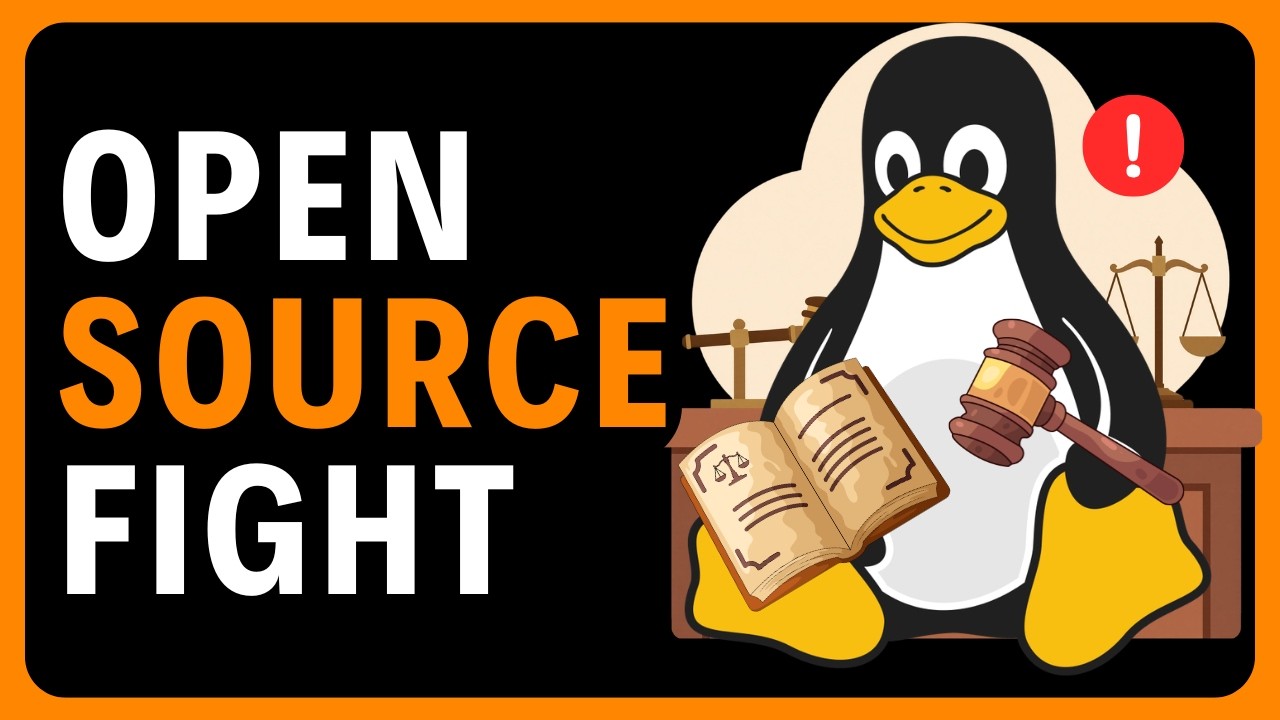
The video examines a controversy in the open-source community where AI was used to rewrite and relicense the Chardet library, raising legal and ethical concerns about whether such AI-assisted rewrites constitute derivative works and can bypass copyleft licenses. It highlights strong opposition from original authors and users, who argue that AI does not provide a legitimate loophole for relicensing, and calls for community discussion on how to address these challenges.
The video discusses a major controversy in the open-source software community regarding the use of AI and large language models (LLMs) to rewrite existing open-source code and relicense it under more permissive terms. The specific case examined is Chardet, a Python library originally licensed under LGPL, which was recently rewritten using AI and released as version 7.0 under the MIT license. This move has sparked debate about whether AI-assisted rewrites constitute derivative works and whether such relicensing is legally or ethically permissible, especially since LGPL requires that modified versions remain under the same license.
Mark Pilgrim, the original author of Chardet, publicly objected to the relicensing, stating that the maintainers had no right to change the license without the consent of all copyright holders. He argued that exposure to the original code, even when using AI tools, means the rewrite is not a clean-room implementation and thus remains a derivative work. Pilgrim warned that allowing such relicensing could undermine copyleft licenses like LGPL and GPL, enabling companies to strip away protections and create proprietary forks based on open-source projects.
The video also presents the perspective of a user from a large company (Nvidia), who expresses concern about the legal risks of using the newly relicensed Chardet. The user predicts that most corporate legal teams would reject the use of version 7.0 due to unresolved copyright issues and the lack of warranty regarding the new license’s validity. The suggestion is made that, instead of forcing the risk onto users, the maintainers should retract the relicensed version and, if desired, release the AI-generated rewrite as a separate fork.
The broader implications of AI-driven rewrites are explored, noting that LLMs have dramatically lowered the cost and effort required to rewrite mature software projects. This has led to fears that vast portions of the open-source ecosystem could be rapidly recreated and relicensed, potentially destabilizing the legal and ethical foundations of open source. The video references ongoing discussions in the Linux community, where maintainers are grappling with how to handle packages developed with LLMs, especially regarding code quality, copyright, and ethical concerns.
Overall, the sentiment in the open-source community appears to be strongly against using AI as a loophole to circumvent existing licenses. Most believe that AI is simply a tool and does not change the legal definitions of derivative works or clean-room implementations. The debate remains unresolved, with no clear legal precedent yet established. The video concludes by inviting viewers to share their thoughts on whether AI-generated code should be eligible for relicensing, what constitutes sufficient proof of a clean-room rewrite, and how the community should address these emerging challenges.