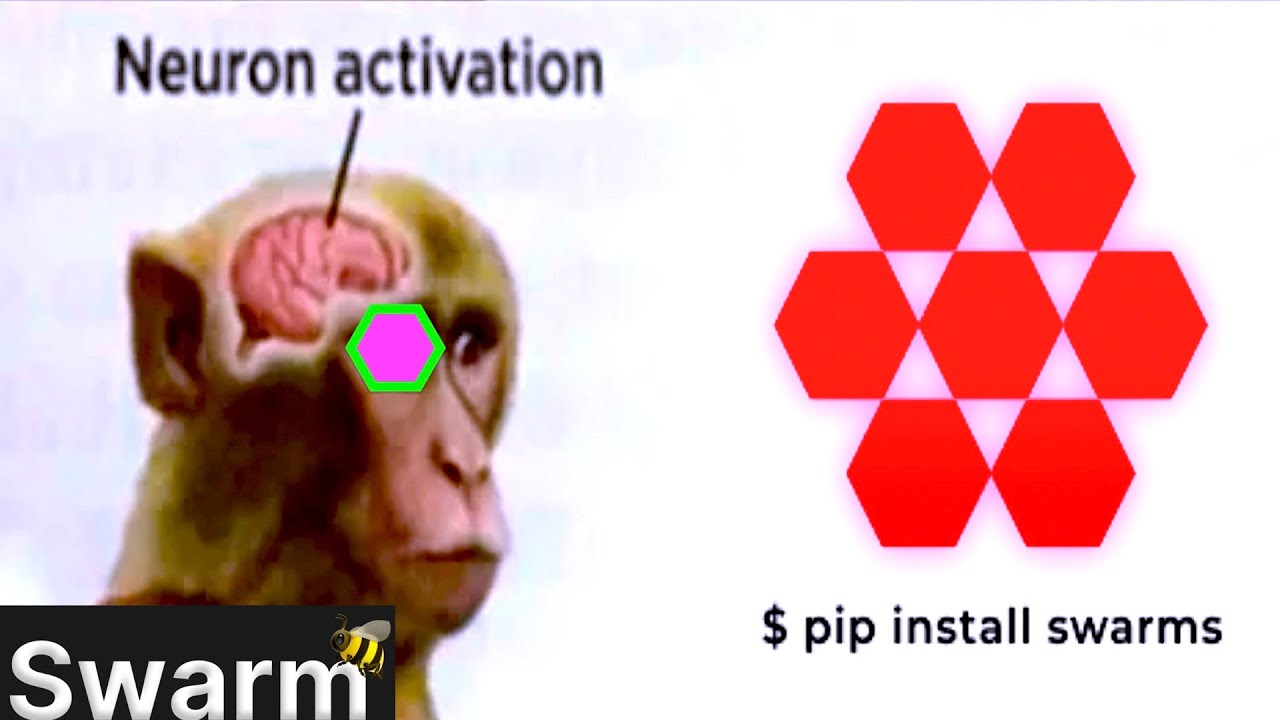
The video discusses the emergence of agentic workflows in AI and highlights concerns over OpenAI’s new “Swarm” framework, which appears to closely resemble an existing open-source project called “Swarms,” leading to accusations of intellectual theft by its creator, Kyle Gomez. The speaker critiques OpenAI’s approach to innovation, suggesting it may undermine smaller developers and raise ethical questions about the appropriation of ideas in the AI space.
The video discusses the emergence of agentic workflows in AI, which involve multiple AI agents collaborating to accomplish tasks that a single large language model might struggle with. This concept is gaining traction across various industries, and open-source tools have been developed to facilitate these workflows. The speaker highlights a recent release from OpenAI called “Swarm,” which aims to provide a framework for agentic workflows using OpenAI APIs. However, concerns arise regarding the similarities between OpenAI’s Swarm and an existing open-source project called “Swarms,” leading to questions about potential intellectual property issues.
OpenAI’s Swarm is described as an experimental and educational project, intended for exploration rather than production use. The framework allows users to quickly set up multi-agent systems with a simple installation process. However, the speaker notes that OpenAI’s release lacks the robustness and support typically expected from production-ready software, raising concerns about its reliability and usability. In contrast, the existing Swarms framework has been in use for over a year and is designed for enterprise-grade applications, making it a more viable option for developers.
The speaker emphasizes the striking similarities between the two frameworks, particularly in naming and functionality. Kyle Gomez, the creator of the Swarms project, has pointed out that OpenAI’s Swarm appears to have borrowed heavily from his work, leading to accusations of intellectual theft. Despite OpenAI’s claims of originality, the speaker argues that the overlaps in design and implementation are too significant to be coincidental, suggesting that OpenAI may have intentionally or unintentionally appropriated elements from the Swarms project.
Kyle Gomez’s frustrations are highlighted, particularly regarding the rapid success of OpenAI’s Swarm on GitHub, which garnered thousands of stars shortly after its release. This success contrasts sharply with the more established Swarms framework, which has been developed with careful attention to detail and usability. The speaker urges viewers to support the original Swarms project, emphasizing its superior quality and production readiness compared to OpenAI’s offering.
The video concludes with a broader critique of OpenAI’s approach to innovation and competition within the AI space. The speaker expresses concern that OpenAI’s strategy may stifle smaller developers and startups by absorbing their ideas and innovations without proper acknowledgment. This situation raises questions about the future of collaboration and open-source development in AI, as well as the ethical implications of larger companies leveraging the work of smaller entities for their gain. The speaker encourages viewers to engage with the topic and share their experiences with agentic workflows and AI development.