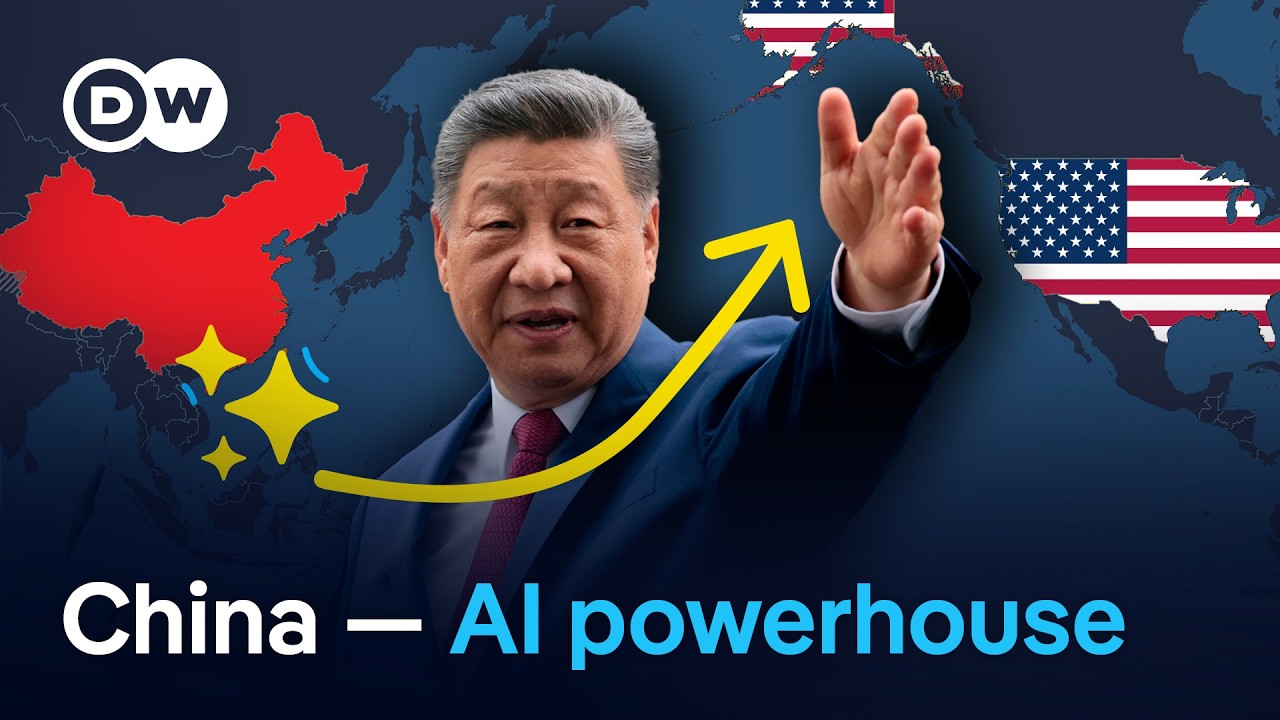
The video discusses the evolving landscape of artificial intelligence (AI) competition between the United States and China, highlighting recent trade data that shows a surge in China’s exports of AI-related hardware despite U.S. efforts to restrict China’s access to advanced technology. For years, the U.S. has imposed export controls on advanced chips and technology to slow China’s progress in cutting-edge AI, particularly to prevent military and intelligence applications that could threaten U.S. national security. However, China’s booming exports of legacy chips, consumer electronics, and AI infrastructure components suggest a more complex reality.
Daniel Remler, a senior fellow in technology and national security, explains that U.S. policy has been successful in its primary goal: slowing China’s development of the most advanced AI models. The surge in China’s exports mainly involves legacy chips and consumer electronics, which, while important for building AI infrastructure globally, are not the advanced chips critical for training large-scale AI systems. Nonetheless, these exports reflect China’s strong industrial growth and decades of investment in its AI industry, which have enabled it to become a key player in the global AI supply chain.
China’s ability to maintain and grow its AI capabilities is partly due to workarounds such as chip smuggling, remote cloud access, and distillation of U.S. AI models. These methods help Chinese firms like Deep Seek and Jerpu develop advanced AI systems despite restrictions. While U.S. policies have slowed China’s frontier AI development, they have unintentionally allowed China to become more competitive in other areas of AI hardware and infrastructure, leveraging its manufacturing strengths and legacy technology.
The discussion also touches on the role of companies like Nvidia, which continue to sell advanced AI chips to China, potentially accelerating China’s AI ambitions. This situation poses a challenge for U.S. policy, which has not tightened controls on such exports in the past year and a half. European governments are also alerted to the risk of Chinese competition in AI hardware, similar to challenges faced in the electric vehicle market. Cooperation between the U.S., Europe, and other allies is seen as crucial to protecting technological leadership and preventing China from gaining access to critical AI technologies.
Finally, Remler outlines three key indicators to watch in assessing whether the U.S. is succeeding in containing China’s AI rise: the performance gap between the best U.S. and Chinese AI models, China’s stockpile of frontier-level computing power (including smuggled chips), and the quality and scale of China’s indigenous chip manufacturing, particularly Huawei’s Ascend line. Currently, the U.S. maintains a steady lead in these areas, but ongoing vigilance, stronger enforcement, and international cooperation are necessary to manage emerging challenges and sustain technological advantage.