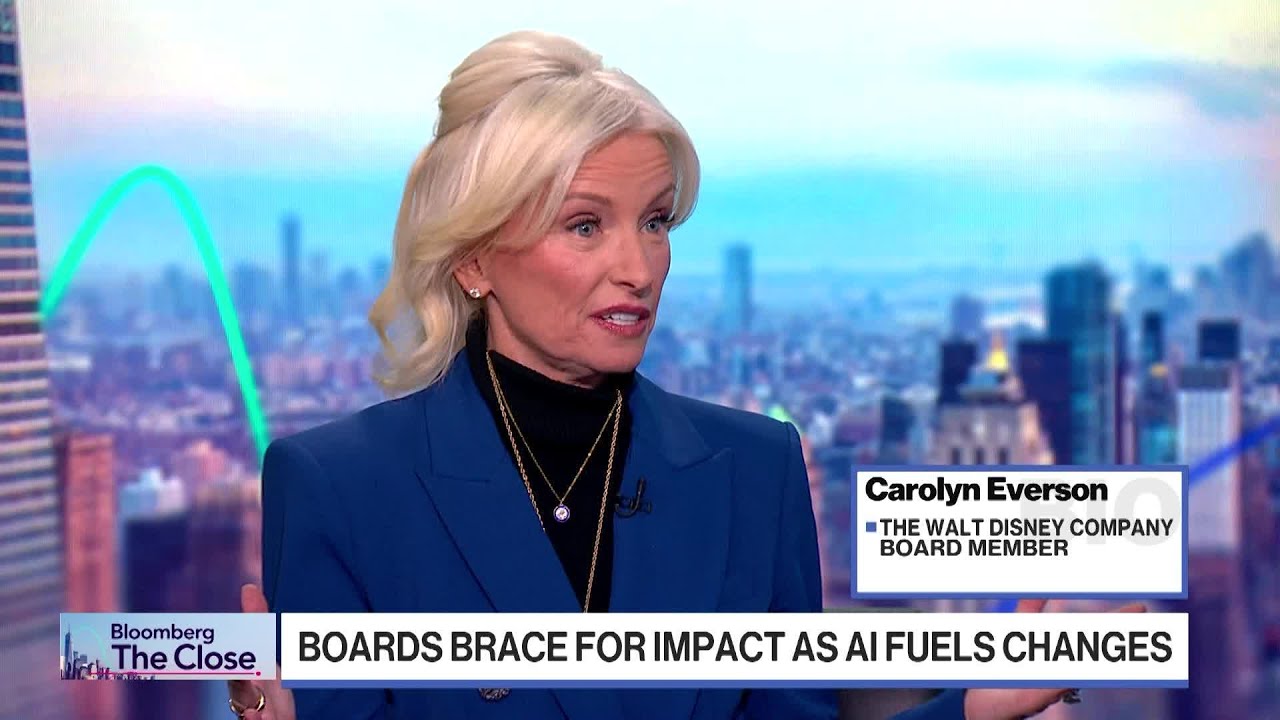
In the discussion, Disney board member Everson highlights the pervasive impact of AI on companies, noting that AI is a consistent topic at every board meeting. While many companies have been experimenting with AI over the past three years, only a small percentage have seen tangible impacts on their profit and loss statements. However, 2026 is expected to be a pivotal year where AI will significantly influence both cost efficiency and revenue growth. Companies are focusing on upskilling their workforce to effectively utilize AI tools and shifting from merely having an AI strategy to developing strategies that operate fully within an AI-driven world, requiring a reimagining of business models and workflows.
Everson emphasizes that AI’s impact on companies is twofold: improving productivity and cost savings, and more excitingly, generating new revenue streams by reaching new customers. She cites examples like Coca-Cola, which is reimagining its marketing workflows using AI to deliver more targeted and resonant campaigns. Despite the use of AI in creating advertisements, the human element remains crucial, especially for brands like Coca-Cola and Disney that rely on emotional connections with consumers. AI enhances human creativity rather than replacing it, ensuring that campaigns maintain their emotional resonance and authenticity.
Addressing concerns about AI replacing human jobs, Everson explains that companies are primarily using AI to automate monotonous tasks, freeing employees to focus on more creative and value-added work. She acknowledges the challenges of workforce transitions but remains optimistic, pointing out that history shows technology creates new opportunities and jobs. The next generation entering the workforce is expected to be AI-native, having grown up with these tools, which will help bridge the current skills gap and drive future innovation.
The conversation then shifts to tariffs and supply chains, where Everson notes that the COVID-19 pandemic exposed vulnerabilities, prompting companies to diversify and improve their supply chains. Tariffs remain a complex and evolving issue, with companies engaging in scenario planning to understand potential impacts. She expresses hope that ongoing dialogue between business leaders and the White House will lead to more normalized tariff rates, balancing the costs between companies and consumers to avoid excessive burdens on either side.
Finally, Everson discusses CEO succession planning, describing it as one of the most critical responsibilities of a board. She shares that Disney is conducting a thorough and ongoing succession process, aiming for a transition in early 2026. Succession planning involves evaluating a broad range of internal and external candidates and extends beyond the CEO to include executive leadership teams. While CEOs provide input on potential successors, the board holds ultimate responsibility for the process. Everson underscores the importance of boards engaging deeply with management teams to identify and develop future leaders, ensuring smooth and effective leadership transitions.