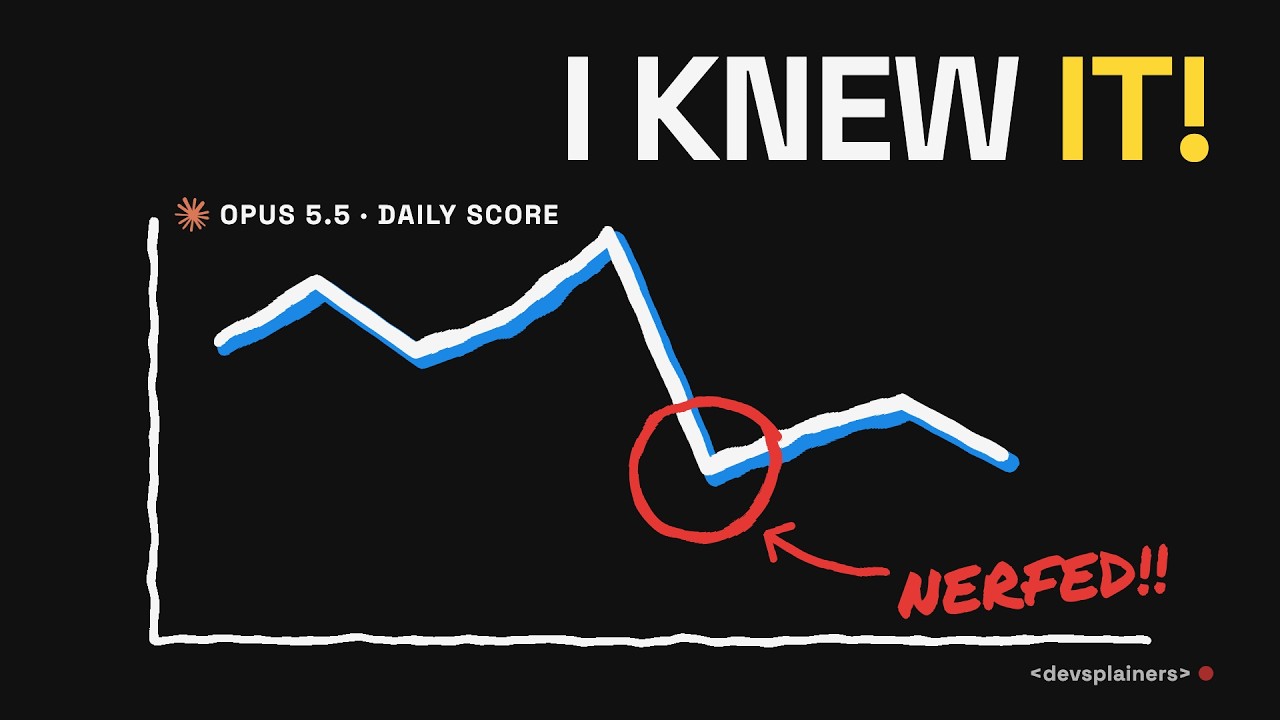
Exactly one week after the release of Anthropic’s Opus 5.5 model, a Reddit thread with nearly 2,700 votes claimed that the model had been “nerfed,” or weakened, making it less intelligent than at launch. However, ongoing daily tests by independent trackers have found no significant degradation in Opus 5.5’s performance. This skepticism towards “nerf” rumors is common, as users often experience a honeymoon period with new models, followed by perceived declines when the model occasionally misses simple tasks. Similar complaints arose after the launches of GPT-6 Astra and Claude, prompting the community to move from anecdotal complaints to systematic evidence gathering through benchmarks.
Anthropic and OpenAI both assert that the core model weights—the fundamental learned parameters—do not change after release. Instead, any behavioral differences stem from changes in surrounding software components such as routers, security classifiers, and sampling logic. Since launch, Anthropic has issued multiple updates to Claude’s code, which can affect user experience without altering the underlying model. For example, some requests may be routed to older fallback models, though Anthropic does not publish data on how often this occurs. This lack of transparency frustrates users who notice changes but cannot pinpoint their cause.
To address these concerns, a physics student created LiveNerf, a daily testing tracker that runs thousands of questions against Opus 5.5 under consistent conditions. The tracker filters out questions that the model always answers correctly or incorrectly, focusing on a small subset that could indicate change. So far, fluctuations in scores have remained within normal statistical noise, with no clear evidence of a sustained decline. Other trackers like Bridge Bench and Margin Lab have reported minor drops or pauses in notifications, but these are often linked to software updates or testing methodology rather than fundamental model degradation.
The perception of nerfs can also be influenced by random chance, rising user expectations, and changes in user settings. For instance, a user’s effort level setting might reset after an update, leading to a less capable experience. Long sessions can degrade performance, and breaking tasks into multiple steps can reduce accuracy. Token usage also correlates with perceived effort and accuracy. Users are encouraged to create their own simple trackers by selecting a set of verified test problems, fixing model versions and settings, and monitoring performance over time to distinguish real changes from normal variation.
In conclusion, while users frequently report that models like Claude and GPT become worse after launch, evidence suggests that the core models remain stable and that perceived declines are mostly due to changes in surrounding software, random fluctuations, or user settings. Laboratories rarely disclose detailed information about these changes, fueling speculation. The best approach is to rely on systematic tracking with consistent tests and settings to objectively assess model performance over time. Users should remain cautious about jumping to conclusions based on anecdotal reports and continue monitoring with their own benchmarks.
Useful Links