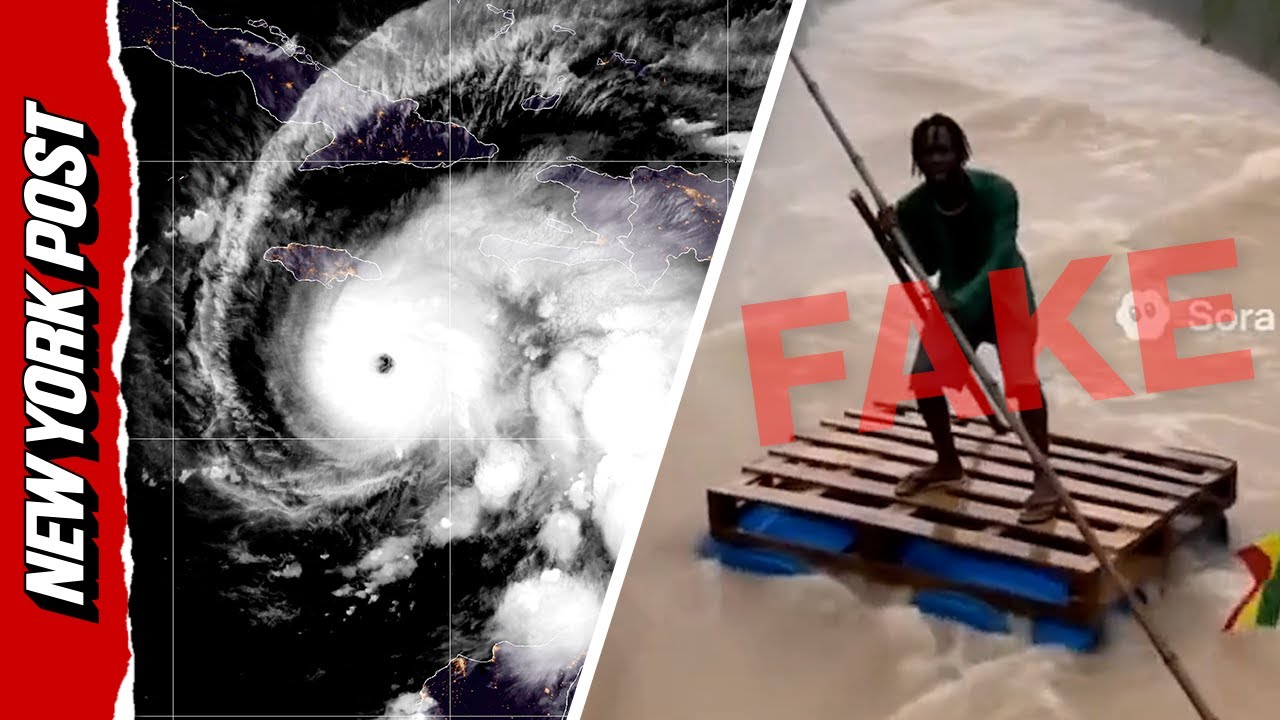
As Hurricane Melissa, a powerful category 5 storm, threatens Jamaica, officials warn that many dramatic videos circulating online showing severe flooding and storm damage are AI-generated deepfakes, urging the public to rely only on official sources for accurate information. The rise of realistic AI-generated content, like those created with the Sora text-to-video generator, highlights the growing challenge of distinguishing real from fake media, especially during critical events.
As Hurricane Melissa, a massive category 5 storm, barrels over Jamaica with winds reaching up to 185 mph, officials are urging the public to be cautious about the information they consume. The hurricane is expected to be the strongest ever to hit the island, bringing terrifyingly powerful winds and sustained torrential rain. Amid the historic storm, dramatic videos have been circulating online, purportedly showing severe flooding at Kingston airport, storm surges, water rushing through city streets, the ominous eye of the hurricane from an airplane window, and even a man surfing floodwaters in a ditch.
However, authorities have warned that many of these videos are not real. Officials have addressed the public through various channels, emphasizing that numerous videos circulating on social media are fake, many of which are AI-generated. They have urged people to rely only on official sources for accurate information about the storm and its impact. The spread of these misleading videos has caused confusion and concern among locals trying to understand the true situation.
Many of the fake videos bear a watermark from Sora, an AI text-to-video generator. These realistic deepfake videos have surged in popularity following the launch of Sora 2 by OpenAI on September 30th. The technology has sparked controversy, as it uses the voices and images of celebrities without proper credit or compensation. Notable figures like Breaking Bad star Bryan Cranston have raised concerns after appearing in unauthorized deepfake videos, such as one showing him taking a selfie with Michael Jackson. OpenAI has even restricted the creation of deepfakes of sensitive figures like Martin Luther King Jr. after backlash from his estate.
Determining whether a video is AI-generated is reportedly quite challenging. A test conducted in Times Square in July demonstrated this difficulty, where locals and tourists were shown images of real influencers alongside AI-generated models. None of the participants could correctly identify all six images, highlighting how convincing AI-generated content has become. This experiment underscores the growing challenge of distinguishing genuine media from fabricated content in the digital age.
Ultimately, the situation with Hurricane Melissa and the spread of AI-generated videos serves as a stark reminder of the old adage: don’t trust everything you see on the internet. As technology advances, it becomes increasingly important for individuals to critically evaluate the authenticity of online content and rely on trusted, official sources for information, especially during emergencies like natural disasters.