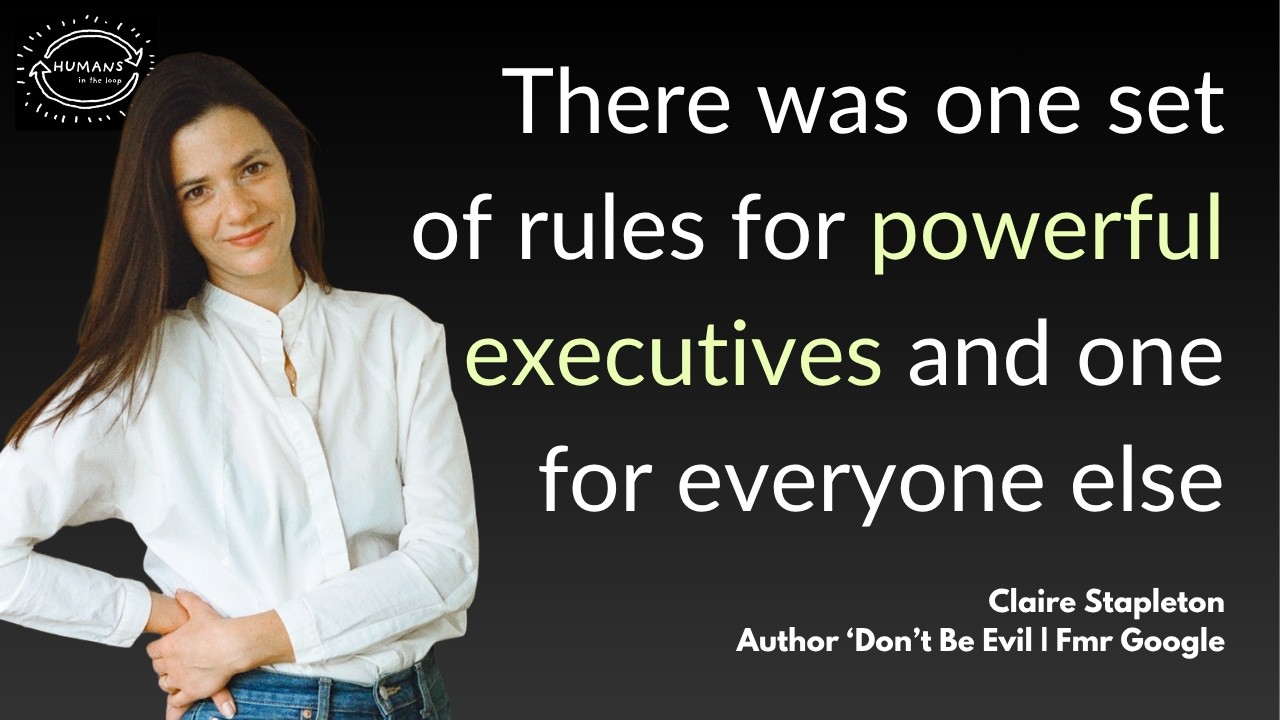
The video chronicles Google’s shift from an idealistic, inclusive startup culture to a competitive, ethically compromised corporate environment marked by leadership’s mishandling of misconduct cases like the Andy Rubin scandal and suppression of employee dissent. It highlights how the company’s original motto “Don’t Be Evil” became increasingly hollow amid internal power struggles, systemic discrimination, and a departure from its founding principles.
The video discusses the transformation of Google’s corporate culture from its early days as a “benevolent empire” with principled, anti-corporate, and inclusive ideals to a more cutthroat environment where executives competed fiercely for attention and resources, likened to a “Game of Thrones” scenario. This shift is highlighted by the company’s response to political pressures, including being among the first major tech companies to engage with the Trump administration, signaling a departure from its original optimistic and ideological outlook.
A pivotal moment in Google’s internal culture was the Andy Rubin scandal, which acted as a catalyst for the Me Too movement within the company. Rubin, the creator of Android, faced credible allegations of misconduct but ultimately left Google with a substantial exit package reportedly worth $90 million. This outcome exposed a double standard within the company, where powerful executives were treated differently from regular employees, leading to widespread employee disillusionment and a sense of injustice.
The video also touches on the origins and internal significance of Google’s motto “Don’t Be Evil,” suggesting that it was part of the company’s lore and culture during a period characterized by perks and offsite events often involving alcohol. This motto initially embodied the company’s ethical aspirations but became increasingly challenged as internal conflicts and ethical compromises surfaced.
Leadership figures such as Larry Page and Sundar Pichai are mentioned in the context of how dissent within the company was managed. The narrative suggests that dissenting voices, especially those raising concerns about misconduct or ethical issues, were often absorbed or silenced, with women who made complaints facing exclusion or being shut out from the company, highlighting systemic issues in handling harassment and discrimination.
Finally, the video references broader cultural and familial dynamics within Google, alluding to concepts like “Kelly’s People” and individuals such as Carol Sandberg, which may relate to internal networks or influential figures shaping the company’s environment. Overall, the video paints a complex picture of Google’s evolution from an idealistic startup to a corporate giant grappling with ethical challenges and internal power struggles.
Useful Links