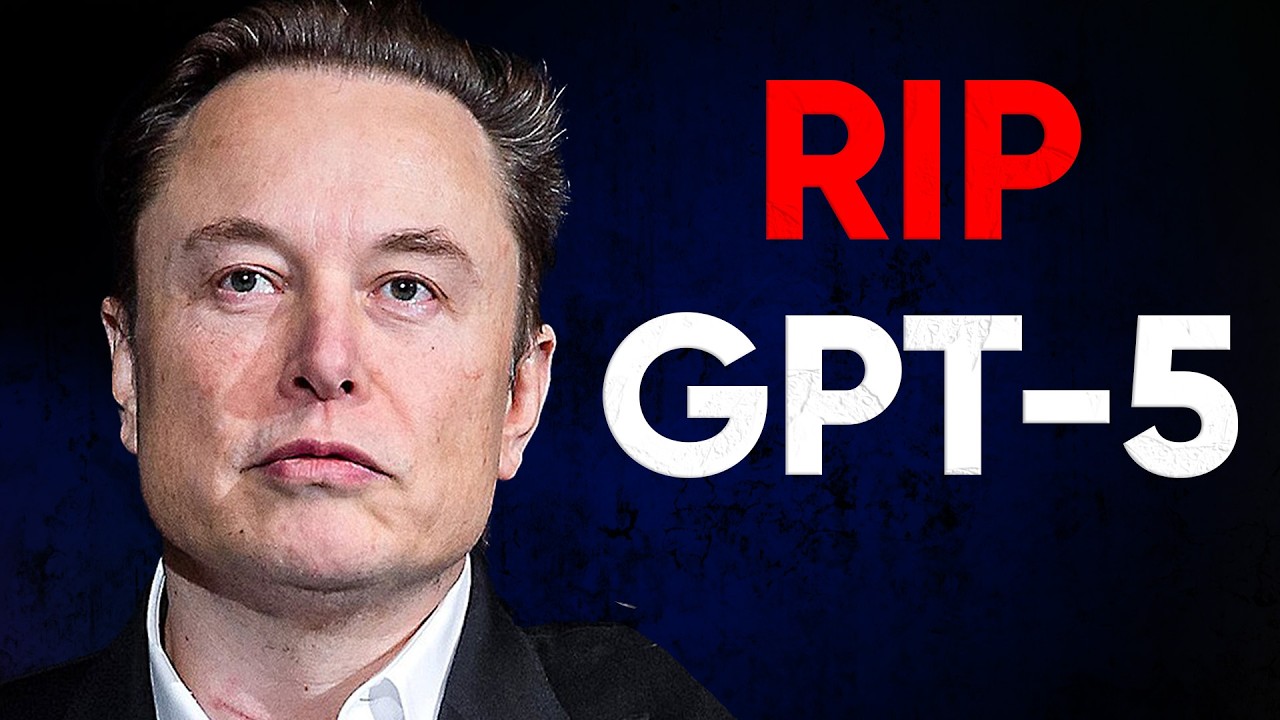
The video discusses the recent developments in AI models, focusing on Grok-5 and its potential to be an Artificial General Intelligence (AGI). Grok-5 was designed to balance performance and cost effectively, but the introduction of Grok-4 Fast, a smaller and faster model, has raised questions about whether Grok-5 was worth the wait. Grok-4 Fast has outperformed other models in programming token production and search benchmarks, achieving impressive results at a fraction of the cost compared to competitors like GPT-5 and Gemini 2.5 Pro. Despite its strengths, the video cautions viewers to consider the nuances behind benchmark comparisons and the impact of Grok-4 Fast being free, which naturally boosts its usage.
A significant highlight is the viral post by Dustin Tran, a former Google DeepMind researcher who recently joined XAI, Elon Musk’s AI company. Tran reflects on his time at DeepMind, noting the shift from skepticism about Google’s AI prospects to Gemini becoming a leader in user preference and scientific achievements. He praises XAI’s approach, emphasizing the importance of compute power, data, and a dedicated team. Tran points out that XAI’s compute resources per researcher are unmatched, enabling faster iteration and innovation. This contrasts with other companies where compute is often split between research and public platform usage, potentially slowing progress.
Elon Musk’s aggressive investment in compute power is a central theme, with XAI reportedly spending around $5 billion on GPUs and planning to invest an additional $20 billion. This massive scale-up in compute capacity is seen as a key factor in accelerating AI development. The video notes that Grok-4 Fast ranks highly on various leaderboards, offering a strong performance-to-cost ratio, and that XAI’s rapid progress is unprecedented in the AI industry. Musk’s bold predictions about Grok-5 potentially achieving AGI by 2026 are discussed, highlighting both optimism and skepticism within the AI community.
The video also explores the challenges in defining and achieving AGI. It contrasts current AI models, which are static and pattern-based, with the dynamic, adaptable nature of human intelligence. AGI would require the ability to continually learn, adapt, and refine its knowledge in real-time, something current models lack. The video references DeepMind’s Demis Hassabis, who suggests that a true AGI would be difficult for experts to find flaws in, even after months of testing. The current limitations in continual learning, long-term memory, and efficient task learning are emphasized as major hurdles that remain unsolved.
In conclusion, while XAI and Grok-5 show promising advancements and a realistic shot at AGI, significant technical challenges remain. The video invites viewers to consider whether AGI will arrive by 2026, 2030, or later, or if the focus should shift away from AGI altogether toward practical AI applications. It acknowledges the impressive progress made but stresses that the path to true general intelligence is still uncertain and complex. The discussion encourages ongoing debate about the future of AI and the realistic expectations for its capabilities.